Owner’s manual
 Error Codes



What size is Kenmore refrigerator model 79576282600?
The Kenmore Elite refrigerator model 79576282600 is a bottom-freezer (bottom-mount) refrigerator in the Kenmore 795.76xx/795.7628x family. For the exact exterior dimensions (width, depth, height) and capacity for your specific color/variant, we recommend checking the 79576282600 owner's manual.
What “size” usually means (and what to check)
When customers ask for “size,” it typically refers to one or more of these measurements:
- Overall width (cabinet and door swing clearance)
- Overall height (including hinge cover)
- Overall depth (with handles, and without handles)
- Capacity (cubic feet, refrigerator plus freezer)
- Installation clearances (space needed around the unit for airflow)
Typical size range for this style of Kenmore bottom-freezer
Most Kenmore bottom-freezer refrigerators in this class fall into these common ranges:
| Measurement | Typical range |
|---|---|
| Width | 30 to 33 inches |
| Height | 67 to 70 inches |
| Depth | 30 to 35 inches |
| Capacity | 20 to 24 cu. ft. |
Why it matters
Accurate dimensions help prevent delivery and fit issues (doorway clearance, cabinet cutout fit, and door swing). They also help you plan for proper airflow so the compressor and condenser can cool efficiently.
Quick tips to confirm your exact dimensions at home
- Measure width at the widest point (often the doors, not the cabinet)
- Measure depth two ways: to the door face, and to the handle front
- Measure height to the top hinge cover
- Allow extra space behind the refrigerator for the water line if you have an ice maker or water dispenser
Last updated: January 2026
What is the average lifespan of a Kenmore Elite refrigerator?
Most Kenmore Elite refrigerators, including model 79576282600, typically last 10 to 15 years. With consistent care (cleaning condenser coils, keeping door gaskets sealing, and maintaining stable temperatures), it’s common to reach the upper end of that range.
Typical lifespan and what affects it
A refrigerator’s life is usually determined by how hard the sealed cooling system and fans have to work, plus how well the doors seal.
- Maintenance habits: clean condenser coils, keep vents clear, replace filters on schedule
- Door sealing: torn or warped gaskets force longer run times
- Room conditions: hot garages and tight clearances shorten life
- Usage: frequent door openings and overpacking reduce airflow
- Repair economics: major sealed-system repairs often drive replacement decisions
What “normal aging” looks like
These are common age-related symptoms and what they often point to.
| Symptom | Common cause | What to check first |
|---|---|---|
| Warm fridge, freezer OK | Airflow issue or frost buildup | Vents, fan noise, frost on back wall |
| Frost/ice buildup | Defrost system problem | Defrost heater, sensor, drain |
| Water under fridge | Clogged/iced drain | Drain tube and drain pan area |
| Doors not closing well | Worn gasket or alignment | Gasket condition, hinge/bushing wear |
Maintenance that helps you reach 15 years
We recommend following the cleaning and care guidance in the 79576282600 owner’s manual.
- Vacuum/brush condenser coils regularly (more often with pets)
- Clean and inspect door gaskets; wipe spills so they seal smoothly
- Keep food from blocking air vents inside the refrigerator and freezer
- Confirm temps stay near 37°F (fresh food) and 0°F (freezer)
- Address small issues early (odd noises, minor leaks, intermittent cooling)
Why it matters
A refrigerator that runs longer to hold temperature uses more energy and puts extra wear on the compressor, fans, and defrost system. Simple upkeep can reduce run time and extend overall service life.
Last updated: January 2026
What are the common problems with Kenmore Elite refrigerators?
On the Kenmore Elite refrigerator model 79576282600, the most common problems we see are poor cooling, frost buildup, water leaks, ice maker issues, and unusual noises. Many of these trace back to airflow restrictions, dirty condenser coils, door sealing problems, or defrost system faults; start with the basics in the 79576282600 owner's manual.
Most common symptoms and what usually causes them
- Not cooling well (fresh food or freezer too warm): blocked air vents, doors opened often, controls not set correctly, dirty condenser coils
- Too cold or freezing food in the refrigerator section: control settings too cold, items placed in the direct airstream
- Frost or ice buildup: door not closing fully, gasket not sealing, defrost system problem (heater, sensor)
- Water under the refrigerator or in the freezer: defrost drain restriction, drain tube issues
- Noisy operation: normal operating sounds, fan noise, or vibration from leveling/installation
Quick checks we recommend first (fast, no parts)
- Confirm door closure: push doors firmly shut; check for packages blocking the door.
- Check airflow: keep items from blocking vents; move food out of the airstream.
- Adjust temperatures correctly: change one setting at a time and wait 24 hours between adjustments.
- Clean condenser coils: dirty coils reduce heat transfer and make the compressor work harder.
- Level the refrigerator: wobble and poor door closing often come from an unlevel cabinet.
Common problems and best next step
| Problem you notice | What to check first | Parts that are often involved |
|---|---|---|
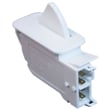
| Door pops open or light acts up | Door alignment, door closure, switch function | Refrigerator door push-button switch 6600JB1010A, door gasket (if torn) |
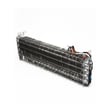
| Frost buildup, warm temps after a few days | Door seal, defrost pattern, airflow | Refrigerator defrost heater 5300JB1100J, refrigerator defrost sensor assembly 6615JB2005C |
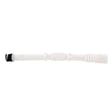
| Puddles or water leaks | Defrost drain path, drain tube routing | Refrigerator drain tube 5251JA3003D |
Why it matters
Cooling, defrosting, and door sealing all work together. A small issue like blocked vents or dirty condenser coils can cause temperature swings, excess frost, higher energy use, and food spoilage if it is not corrected early.
Last updated: January 2026