Owner’s manual
 Error Codes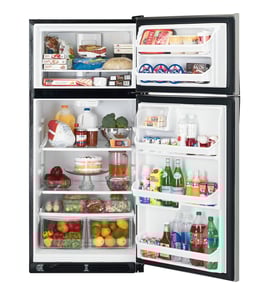



What is the most common problem with a GE refrigerator?
The most common problem we see with GE refrigerators like model GTE18GSHMRSS is a cooling complaint (refrigerator not cold enough or freezer warming), usually caused by restricted airflow, dirty condenser coils, or a fan issue. Ice maker “not making ice” is another frequent issue; it must be connected to water and turned on.
Quick checks we recommend first
- Confirm the freezer is set cold enough; many ice makers need the freezer at 15°F or colder to produce ice.
- Make sure the refrigerator is connected to a water supply before expecting ice production.
- Verify the ice maker is switched ON only after the water line is connected and the water is turned on.
- Keep air vents clear and avoid overpacking; blocked vents reduce circulation.
- Cover food; uncovered containers add moisture and increase frost load.
- Clean condenser coils (dust buildup commonly reduces cooling performance).
For model-specific operating details and troubleshooting charts, use the GTE18GSHMRSS owner's manual.
Most common symptoms and likely causes
| Symptom | Most likely cause | What to check next |
|---|---|---|
| Fridge warm, freezer OK | Airflow restriction | Vents blocked by food, frost buildup |
| Fridge and freezer warm | Heat not being removed | Dirty condenser coils, condenser fan problem |
| No ice | Not ready to make ice | Water line not connected, ice maker OFF, freezer not cold enough |
| Frost buildup | Moisture and airflow issues | Door left ajar, vents blocked, high humidity food load |
Parts that often relate to these problems (when a repair is needed)
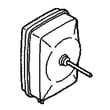
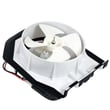
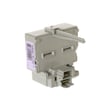
- Evaporator fan not running or noisy: refrigerator evaporator fan motor WR60X31522
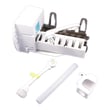
- Ice maker not producing after water is connected and temps are correct: GE refrigerator ice maker kit WR30X10093
- Door not closing issues that lead to warm temps or frost: inspect gaskets and door alignment
Why it matters
Cooling and ice maker problems are usually airflow, temperature, or water-supply related. Fixing the root cause quickly helps prevent food spoilage, excessive frost, and longer compressor run times.
Last updated: February 2026
What is the average lifespan of a GE refrigerator?
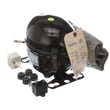
Most GE refrigerators last 12 to 15 years. For a GE top-mount refrigerator like model GTE18GSHMRSS, consistent temperatures, clean condenser airflow, and good door sealing are what most often determine whether you reach that typical lifespan; see the GTE18GSHMRSS owner's manual for care and cleaning guidance.
Typical lifespan by refrigerator style
Refrigerator design affects workload and wear on the compressor, fans, and defrost system.
| Refrigerator type | Typical lifespan | Notes |
|---|---|---|
| Top-mount (top-freezer) | 12 to 15 years | Simple design, usually strong longevity |
| Side-by-side | 10 to 14 years | More features, more door openings |
| French door | 9 to 13 years | More components (icemaker, dispenser, controls) |
What helps your GE refrigerator reach its full lifespan
We see these maintenance habits make the biggest difference:
- Keep the doors sealing tightly; warm air intrusion drives longer run times
- Maintain steady settings (avoid frequent temperature changes)
- Leave space for airflow around the cabinet so heat can dissipate
- Clean spills promptly to prevent odors and blocked drains
- Address unusual noises early (fan rubbing, clicking, buzzing)
- If you have an icemaker, keep the water supply steady and leak-free
Quick “repair or replace” rule of thumb
Use this simple guide when deciding what to do as the unit ages.
| If your refrigerator is… | Usually makes sense to… |
|---|---|
| Under 8 years old | Repair common failures (fans, thermostat, door switch) |
| 8 to 12 years old | Compare repair cost vs. condition and performance |
| Over 12 years old | Replace if cooling is inconsistent or repairs are frequent |
Why it matters
A refrigerator that runs longer than necessary (from poor airflow, weak gaskets, or frequent door openings) puts extra strain on the sealed system and cooling fans. Fixing small issues early often prevents expensive breakdowns later.
Last updated: February 2026
What are the dimensions of an 18 cu ft refrigerator?
Most 18 cu. ft. top-freezer refrigerators are about 65 to 68 inches tall, 28 to 30 inches wide, and 30 to 33 inches deep. For your GE GTE18GSHMRSS top-mount refrigerator, confirm the exact height (with hinges) and depth (with handles) in the GTE18GSHMRSS owner's manual.
Typical 18 cu. ft. size ranges (what to expect)
These ranges cover most 18 cu. ft. top-freezer designs across GE and similar brands:
- Height: 65 to 68 in. (often varies most with hinge style)
- Width: 28 to 30 in. (common cutout fit range)
- Depth: 30 to 33 in. (handles can add noticeable depth)
- Door swing clearance: plan extra space so doors open fully
- Ventilation space: leave room around the cabinet for airflow
Installation clearances to plan for
Even if the cabinet fits, you still need breathing room for air circulation and easier hookups. The GE manual calls out these typical minimum clearances:
| Location | Minimum clearance |
|---|---|
| Sides | 3/4 in. |
| Top | 1 in. |
| Back | 2 in. |
How we recommend measuring (so it fits the first time)
Measure your space first, then compare to the refrigerator’s spec dimensions in the manual.
- Measure width at the front and back of the opening (walls are not always square)
- Measure height to the lowest overhead cabinet or trim
- Measure depth from the back wall to the front edge of counters
- Add space for handles and door swing
- Confirm you can still pull the unit out for cleaning and service
Why it matters
A refrigerator that is even 1 inch too deep or too tall can prevent proper installation, restrict door opening, and reduce airflow. Correct clearances help the GE GTE18GSHMRSS cool efficiently and make future maintenance easier.
Last updated: February 2026
Why has my GE ice maker stopped making ice?
On your GE GTE18GSHMRSS top-mount refrigerator, an ice maker usually stops making ice because it is switched OFF, the freezer is not cold enough (it must reach about 15°F or colder), or water is not reaching the ice maker. Use the steps in the GTE18GSHMRSS owner's manual to confirm the ice maker and water supply are set correctly.
Quick checks that fix most “no ice” problems
- Confirm the ice maker power switch is set to ON.
- Make sure the refrigerator is connected to the water supply and the shutoff valve is fully open.
- Check the water supply line for kinks, pinches, or freezing.
- Verify nothing is blocking the ice maker feeler arm (it must move freely).
- Allow time after changes: a new install or warm start can take 12 to 24 hours to begin making ice, and up to 48 hours to fill the bin.
Temperature and airflow: the most common root cause
The manual notes the ice maker fills with water only after the freezer cools to about 15°F (-9°C). If the freezer is warmer than that, the ice maker can pause.
| What you notice | Likely cause | What to do |
|---|---|---|
| No ice, freezer feels “soft” | Freezer not cold enough | Set colder, limit door openings, wait 24 hours |
| Ice is slow, cubes small | Temperature swings or frequent openings | Keep vents clear, reduce openings |
| Ice maker cycles but no water sound | Water supply or valve issue | Check supply line, then test valve |
Water supply and valve checks
If the freezer is cold enough and the ice maker is ON, focus on water delivery.
- Confirm household water pressure is present at the shutoff.
- Inspect the fill tube area for ice blockage.
- If water is not entering during a fill, a failing inlet valve is common; for this model, see the refrigerator water inlet valve WR57X39965.
Why it matters
A non-working ice maker is often a symptom of a bigger issue (warm freezer, restricted airflow, or weak water flow). Fixing the underlying cause helps protect food temperatures and prevents repeated ice maker failures.
Last updated: February 2026