Owner’s manual


What is the capacity of a Kenmore Model 11028892790 washer?
The Kenmore washer model 11028892790 is a traditional top-load, agitator-style washer; its exact tub capacity (in cubic feet) varies by version and is best confirmed in the 11028892790 owner's manual. As a practical guide, most Kenmore direct-drive top-load washers of this style run about 3.2 to 3.5 cu. ft.
How to confirm capacity for model 11028892790
We recommend using the model-specific literature because capacity is sometimes listed by series or feature package.
- Check the specifications section for “capacity” or “basket volume”
- Look for wording such as “super capacity” or “extra large capacity”
- If the manual lists only load guidance, use the load-size guidance below
- Match the manual to your exact console and tub style (washers can look different)
What that capacity means for real-world loads
Capacity is most useful for deciding load size and avoiding out-of-balance spinning.
- 3.2 cu. ft.: typically handles a “large” mixed load (everyday clothes)
- 3.5 cu. ft.: typically handles bulkier items a bit more easily (towels, jeans)
- Comforters: usually queen is possible only if it moves freely; do not pack the basket
Quick load guidance table
| Load type | Best practice in this washer style | What to watch for |
|---|---|---|
| Mixed clothes | Fill loosely, keep items below the top of the basket ring | Poor turnover, detergent residue |
| Towels/jeans | Mix sizes, do not overload | Thumping, slow spin |
| Bulky item | Wash one bulky item with a few small items | Off-balance, incomplete spin |
Why it matters
Using the right load size helps the agitator clean effectively, reduces vibration, and protects drive components like the motor coupling and clutch.
Last updated: January 2026
How to hard reset kenmore washer?
To hard reset your Kenmore washer model 11028892790, unplug it (or switch off the breaker) for about 2 minutes, then restore power and set the timer knob to a normal cycle. This clears many temporary control and cycle issues; use the 11028892790 owner's manual for model-specific operating steps.
Quick hard reset steps (recommended)
- Turn the washer OFF by pushing the timer knob in.
- Unplug the power cord (or turn the breaker OFF).
- Wait 2 minutes.
- Restore power.
- Set the Cycle Selector (timer) to a cycle and pull the knob out to start.
- If the washer was mid-cycle, reselect your settings (water level, temperature, speeds).
If it still will not run or spin
A “reset” will not fix a failed safety switch or a no-drain condition. These checks solve most no-start/no-spin complaints on this style of Kenmore top-load washer:
- Confirm the lid closes firmly; the washer will not spin with a failed lid switch.
- Make sure the tub drains; a clog or failed pump can stop the cycle.
- Listen for the motor running; if it runs but the washer will not agitate/spin, the drive coupling can be the issue.
- Verify the timer advances; a stalled timer can leave the washer stuck.
| Symptom after reset | Most common cause | Part to check |
|---|---|---|
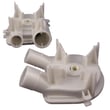
| Won’t spin, won’t drain | Drain problem | Washer drain pump WP3363394 |
| Won’t spin, lid must be shut | Lid safety circuit | Washer lid switch WP3949238 |
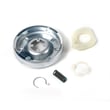
| Motor runs, no agitation/spin | Drive connection failure | Coupling 285753A |
Why it matters
A hard reset clears temporary electrical “hang-ups” after a power interruption, but mechanical failures (lid switch, drain pump, coupling, timer) require troubleshooting and, when needed, part replacement.
Last updated: January 2026
How to tell if a washer impeller is bad?
On Kenmore washer model 11028892790, a “bad impeller” usually shows up as poor wash action or poor draining. This model is a top-load, agitator-style washer, so the most useful checks are for weak agitation (agitator dogs/cam) or a failing drain pump rather than an impeller itself; use the 11028892790 owner's manual for safety and troubleshooting guidance.
Quick symptoms to look for
- Clothes come out barely moved or still dirty (weak agitation)
- Washer drains slowly, leaves water in the tub, or won’t drain (drain problem)
- You can spin the agitator top freely with little to no “ratcheting” feel (agitator dogs worn)
- You hear motor running but the tub does not move as expected (drive/coupling issue)
- Burning rubber smell or intermittent movement (coupling slipping)
What to check first (fast, no tools)
- Unplug the washer and do not reach into the tub if anything is moving (basic safety is covered in the 11028892790 owner's manual).
- Agitation test: With the tub empty, start a normal wash and watch for strong back-and-forth agitation.
- Drain test: Advance to drain/spin and listen for the pump; water should evacuate quickly.
Common parts that cause “impeller-like” problems on this model
If agitation is weak or one-directional, the agitator’s internal wear parts are common culprits:
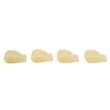
- Agitator dog 80040 (often causes slipping/poor agitation)
- Agitator cam (controls the agitator’s directional action)
If the washer won’t drain or drains slowly:
Symptom-to-likely-cause guide
| What you observe | Most likely area | Typical next step |
|---|---|---|
| Agitator moves but doesn’t “grab” clothes | Agitator dogs/cam | Inspect/replace dogs/cam |
| Motor runs, washer won’t agitate/spin | Motor coupling/clutch | Inspect coupling/clutch |
| Water remains in tub after drain | Drain pump/hoses | Check for clogs, then pump |
Why it matters
Misdiagnosing an “impeller” issue can lead to replacing the wrong part. On 11028892790, wash performance problems usually trace to the agitator drive parts, while standing water points to the drain system.
Last updated: January 2026
What is the average lifespan of a Kenmore washer?
A Kenmore washer typically lasts 10 to 15 years. For Kenmore model 11028892790 (a classic top-load, agitator-style washer), we usually see lifespans toward the higher end when the washer is leveled, not overloaded, and maintained using the care steps in the 11028892790 owner's manual.
Typical lifespan ranges (what most owners see)
- Top-load washers (like 11028892790): about 12 to 15 years
- Front-load washers: about 10 to 12 years
- Heavy use (large families, daily loads): often closer to 8 to 12 years
- Light use (few loads per week): often closer to 14 to 15 years
What usually ends a washer’s life
Most “end-of-life” failures come down to a few high-wear systems:
- Drive system wear (coupler, clutch, gearcase)
- Drain problems (pump wear, clogs, slow draining)
- Fill problems (inlet valve screens clogged, valve failure)
- Spin issues (drive block wear, out-of-balance stress)
- Leaks (tub gasket or seal wear)
Common parts owners replace to extend life
| Symptom | Commonly involved part | Example part for this model |
|---|---|---|
| Won’t spin or agitate | Motor coupling | Coupling 285753A |
| Won’t drain | Drain pump | Washer drain pump WP3363394 |
| Won’t start or stops mid-cycle | Lid switch | Washer lid switch WP3949238 |
How to help your Kenmore washer reach 15 years
- Keep the washer level to reduce vibration and suspension wear
- Avoid overloading; it strains the drive system and clutch
- Use the right detergent amount to reduce residue buildup
- Check pockets and wash small items in a bag to prevent pump clogs
- Address new noises early (grinding, squealing, banging) before secondary damage
Why it matters
A washer that is maintained and repaired early often avoids “cascade failures” where one worn part (like a coupling or pump) leads to bigger damage (like a gearcase or tub-related repair). Following the operating and care guidance in the manual helps protect the drive, spin, and drain systems.
Last updated: January 2026