Installation guide
 Owner’s manual
 Error Codes


Is it worth fixing a KitchenAid dishwasher?
For a KitchenAid KDTE104DSS0 dishwasher, repair is often worth it when the problem is a common wear item (leak at the door, won’t drain, poor cleaning) and the fix is limited to a part replacement or maintenance. If multiple major components are failing, replacement can make more sense.
Quick way to decide (repair vs replace)
Use this checklist first; it keeps the decision practical and model-focused.
- Repair is usually worth it if the dishwasher still fills, washes, and drains but has one clear issue (leak, noisy rack, weak drain, poor drying).
- Lean toward replacement if you have repeated breakdowns, heavy rust/corrosion, or multiple expensive symptoms at once (won’t run plus leaking plus not draining).
- Repair is a strong candidate when the fix is a seal, hose, latch, or drain pump and the tub is in good shape.
- Replacement is more likely when the repair involves major electrical or motor-related failures and you are also seeing other age-related issues.
For model-specific operating checks and troubleshooting steps, use the KDTE104DSS0 user manual.
Common “worth fixing” repairs on KDTE104DSS0
These are frequent, targeted fixes that typically restore normal operation without rebuilding the whole dishwasher.
| Symptom | Likely area | Example compatible part for this model |
|---|---|---|
| Water leaking at the door | Door seal or lower door seal | Dishwasher door seal W11177741 or dishwasher door seal, lower WPW10497235 |
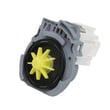
| Won’t drain or leaves water in tub | Drain pump or drain hose routing/clog | Dishwasher drain pump WPW10348269 |
| Door won’t latch or stops mid-cycle | Door latch | Dishwasher door latch WPW10653840 |
Why it matters
A dishwasher like the KDTE104DSS0 is designed with serviceable components (seals, pumps, latches, hoses). Fixing a single failed part can restore performance and prevent secondary damage (like leaks affecting flooring or cabinets).
Before you spend money on parts
We recommend doing these low-cost checks first because they can mimic “major” failures:
- Confirm the door is fully closed and the cycle is actually starting.
- Run hot water at the sink before starting a cycle (helps cleaning and cycle timing).
- Check and clean the filter system periodically (poor cleaning and odors often trace back to this).
- Verify the drain path is clear (sink/disposer connection and hose routing).
If you’re dealing with installation-related issues (drain hose routing, air gap, leveling), reference the KDTE104DSS0 installation guide.
Last updated: January 2026
What is the most common problem with a KitchenAid dishwasher?
For the KitchenAid KDTE104DSS0 dishwasher, we cannot rank a single “most common” failure from model-specific documentation alone. What we do see most often in troubleshooting for this model are everyday complaints like dishes not getting clean, water not draining, and cycles not starting, which are frequently tied to loading, filtration, and water supply.
Common issues we troubleshoot on KDTE104DSS0
The KDTE104DSS0 use & care guide calls out these problem areas repeatedly:
- Food soils remain on dishes (often linked to loading, filters, spray arm rotation, water temperature)
- Water remains in the tub / won’t drain (drain hose routing, disposer connection, clogs)
- Dishwasher does not run (door not latched, Start/Resume not pressed after opening, power issues)
- Detergent remains in dispenser (dispenser blocked by tall items)
- Not drying well (rinse aid use and dry option selection)
Quick checks (no tools)
Use the troubleshooting and filtration guidance in the KDTE104DSS0 user manual.
- Clean the filter system if dishes feel gritty or look dirty after a cycle.
- Confirm nothing blocks spray arms from spinning freely.
- Avoid blocking the detergent dispenser with cookie sheets or cutting boards.
- Run hot water at the sink before starting; the manual notes performance depends on incoming water temperature.
When it becomes a parts issue
If the basic checks don’t change the symptom, a component may be involved.
| Symptom | What to inspect next | Example compatible part |
|---|---|---|
| Water remains in tub / won’t drain | Drain path, pump operation | Dishwasher drain pump WPW10348269 |
| Poor fill or no fill | Water supply, inlet valve | Dishwasher water inlet valve W11175771 |
| Weak wash or poor circulation | Wash motor/circulation | Dishwasher pump and motor assembly WPW10605057 |
Why it matters
Most “common” dishwasher complaints are really water flow problems (wash pressure, filtration, temperature) or drain flow problems (restrictions in the drain path). Fixing those early helps prevent odors, repeat cycles, and unnecessary part replacement.
Last updated: January 2026
What is the average lifespan of a KitchenAid dishwasher?
KitchenAid doesn’t publish a single “average lifespan” for the KitchenAid KDTE104DSS0 dishwasher in the model’s documentation, so we can’t confirm a model-specific number. In general home use, many dishwashers run roughly 9–14 years, and consistent care often helps you stay on the longer end.
What we can confirm for KDTE104DSS0
The KDTE104DSS0 documentation focuses on operation, care, and troubleshooting rather than a defined service-life target. In the KDTE104DSS0 use and care manual, KitchenAid specifically calls out routine maintenance items that help keep performance consistent.
- The dishwasher uses a triple filtration system (upper filter assembly and lower filter)
- Filter cleaning frequency depends on loads per week and how you prep dishes
- Hard water mineral buildup is addressed with recommended cleaning and monthly maintenance
- Proper detergent type and correct dosing are emphasized to avoid suds and residue
- Incoming hot water temperature guidance is 120°F (49°C) for best results
KDTE104DSS0 filter-cleaning schedule (from the manual)
This is a practical maintenance item that can affect cleaning results and day-to-day reliability.
| Loads per week | If you scrape and rinse | If you do not scrape or rinse |
|---|---|---|
| 1–3 | Once per year | Every two months |
| 4–7 | Once per year | Once per month |
| 8–12 | Twice per year | Every two weeks |
What typically affects real-world lifespan (general guidance)
These are common factors across many KitchenAid dishwashers; they’re not a guaranteed lifespan predictor for KDTE104DSS0.
- Water hardness and mineral scale
- How often the dishwasher runs (daily vs. occasional)
- Whether filters and spray paths are kept clear
- Using automatic dishwasher detergent (not hand soap)
- Fixing leaks or drain problems promptly
Helpful troubleshooting resources
If you’re seeing symptoms that could shorten service life (leaks, not draining, won’t start, error codes), use model-appropriate guidance before replacing parts.
Why it matters
Because KDTE104DSS0 doesn’t list an “expected lifespan,” the best way to protect your investment is to follow the model’s care and maintenance guidance; it reduces performance problems that can lead to repeat cycles and unnecessary wear.
Last updated: January 2026