Owner’s manual
 Error Codes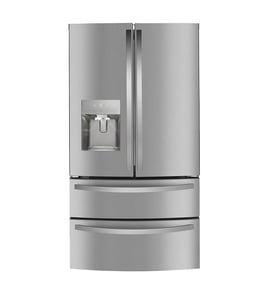



What is the average lifespan of a Kenmore Elite refrigerator?
Most Kenmore Elite refrigerators, including model 25344723110, typically last 10 to 15 years with normal household use; consistent maintenance (cleaning condenser coils, keeping door gaskets sealing, and avoiding overloading) helps push life toward the high end of that range.
What affects lifespan the most
- Condenser coil cleanliness: Dust buildup makes the compressor run hotter and longer.
- Door seal condition: Air leaks create frost and longer run times.
- Room conditions: Hot garages and tight clearances shorten component life.
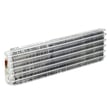
- Defrost system health: Frost buildup strains airflow and cooling performance.
- Usage habits: Frequent door openings and warm food loads increase run time.
Maintenance checklist we recommend
Use the 25344723110 owner's manual for model-specific care steps and safety guidance.
- Vacuum or brush condenser coils regularly (more often with pets).
- Confirm doors close fully and the cabinet is level.
- Keep vents inside the refrigerator and freezer unblocked.
- Set temperatures to typical targets: 37°F fresh food, 0°F freezer.
- Defrost and unplug before servicing internal panels or components.
Common “end-of-life” symptoms and likely areas
| Symptom | What it often points to | Example part on this model page |
|---|---|---|
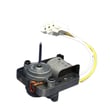
| Warm freezer, fan noise changes | Evaporator fan or airflow issue | Freezer evaporator fan motor 297309000 |
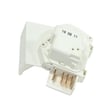
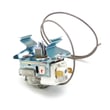
| Heavy frost on back wall | Defrost system problem | Defrost timer 5304518034 |
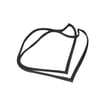
| Door won’t seal, sweating around door | Worn gasket | Refrigerator door gasket (black) 5304507206 |
Why it matters
A refrigerator near the end of its typical lifespan often shows up as higher temperatures, more frost, and longer run times. Addressing airflow, defrost, and sealing issues early can prevent food spoilage and reduce stress on the compressor.
Last updated: January 2026
How to find out fridge model?
For Kenmore Elite refrigerator model 25344723110, the model number is on the serial plate inside the fresh food compartment, located on the left interior wall. Open the refrigerator door and look along the left wall for the model and serial number label; our 25344723110 owner's manual shows this location.
Where to look first (fast checklist)
- Open the refrigerator (fresh food) door, not the freezer door
- Look on the left inside wall for a rectangular label/plate
- Check near the crisper area and side wall at eye level
- Write down both the model number and serial number
- Take a clear photo of the label for parts lookup and service
What the label typically includes
| Label item | What it’s used for |
|---|---|
| Model number (example: 25344723110) | Matching the correct parts diagrams and replacement parts |
| Serial number | Identifying production details for service and support |
| Purchase date (you fill in) | Warranty records and maintenance history |
Tips if you can’t spot the plate right away
- Use a flashlight; labels can be low-contrast against the liner.
- Wipe the area with a damp cloth; dust can hide the print.
- Check for a label that starts with 253. (common Kenmore prefix for this style).
- If the label is damaged, use the model family from any paperwork and confirm using the 25344723110 owner's manual.
Why it matters
We use the exact model number to match door bins, gaskets, controls, and cooling-system parts to your refrigerator’s configuration. Even small model-number differences can change which parts fit.
Last updated: January 2026
How do I find out the cubic feet of my Kenmore refrigerator?
For your Kenmore Elite refrigerator model 25344723110, the fastest way to get cubic feet (capacity) is to look it up by model number in the specifications section of the 25344723110 owner's manual. If you need a backup method, we can calculate capacity by measuring the interior and converting cubic inches to cubic feet.
Option 1: Use the model documentation (recommended)
Capacity is typically listed with other key specs (dimensions, electrical requirements, features) in the manual.
- Find the model tag inside the fresh food compartment (often on a side wall or ceiling)
- Match the tag to 25344723110
- Check the specifications/capacity section in the 25344723110 owner's manual
- Use the listed capacity when ordering shelves, bins, or planning food storage
Option 2: Calculate cubic feet yourself
Use this when you cannot access the listed capacity or you want an estimate of usable interior space.
- Empty the compartment you are measuring (refrigerator section, freezer section, or both)
- Measure width x depth x height of the usable interior space in inches
- Multiply to get cubic inches
- Divide by 1,728 to convert to cubic feet
Quick conversion table
| What you have | What to do | Result |
|---|---|---|
| Inches (W x D x H) | Multiply | Cubic inches |
| Cubic inches | Divide by 1,728 | Cubic feet |
Measuring tips for a more realistic number
- Measure to the inside walls, not the door bins
- Subtract space taken by fixed components (light housing, vents, icemaker bucket area)
- Measure refrigerator and freezer separately, then add them for total capacity
Why it matters
Cubic feet helps us compare refrigerator sizes accurately and plan storage. It also helps when choosing organization parts like a refrigerator door gallon bin 240338001 that must fit your specific door layout.
Last updated: January 2026
What are the common problems with Kenmore Elite refrigerators?
Common problems we see on the Kenmore Elite refrigerator model 25344723110 include not cooling well, running too long, frost or moisture buildup, odors, door sealing issues, and unusual fan or compressor noises. Many fixes start with basic checks and cleaning steps in the 25344723110 owner's manual.
Most common symptoms and what usually causes them
- Not cooling or weak cooling: dirty condenser coil, evaporator fan issue, temperature control set incorrectly, door not sealing
- Runs too much/too long: frequent door openings, warm food load, door slightly open, worn or dirty gasket
- Frost/ice buildup: defrost system problem (timer, heater, thermostat), door left open, air leak at gasket
- Moisture inside or outside: hot/humid conditions, door not sealing, door opened too often
- Bad smells: spills, uncovered strong-odor foods, overdue cleaning
- Door will not close: cabinet not level, bins/shelves interfering, gasket not seating
Quick checks we recommend first (safe DIY)
- Unplug the refrigerator before any inspection or cleaning; pull the plug by gripping it firmly (not the cord).
- Confirm the temperature control is not set to OFF.
- Check the power source: loose plug, tripped breaker, blown fuse, or a GFCI outlet that is tripping.
- Inspect door sealing: look for gaps, dirt on the gasket, or the door sitting slightly open.
- Clean the interior with warm water and mild detergent; for odors, use warm water with baking soda.
Parts that commonly relate to these problems on model 25344723110
| Symptom | Common suspect part | Example part for this model |
|---|---|---|
| Frost buildup, warm freezer | Defrost control component | Defrost timer 5304518034 |
| Frost buildup, no defrost | Defrost heater | Defrost heater 216730700 |
| Frost buildup, defrost stops early | Defrost thermostat | Refrigerator defrost bi-metal thermostat 216731001 |
| Warm temps, weak airflow | Evaporator fan motor | Freezer evaporator fan motor 297309000 |
| Condensation, poor sealing | Door gasket | Refrigerator door gasket (black) 5304507206 |
Why it matters
Cooling complaints often trace back to airflow or door sealing. A slightly open door or dirty/worn gasket can make the refrigerator run longer, create moisture, and lead to frost, which then reduces cooling even more.
Related DIY help
- If your refrigerator displays an error, use Kenmore 253 series french door refrigerator error codes to narrow down the failure faster.
- For sealing and condensation issues, follow the steps in how to fix a fridge door seal.
Last updated: January 2026