Installation guide
 Owner’s manual
 Error Codes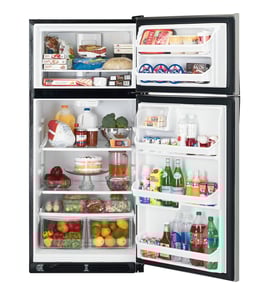



How many years does a refrigerator usually last?
Most refrigerators usually last 10 to 18 years; simple top-freezer units like the Frigidaire FFTR1821QS5A commonly reach the 15-year range with basic maintenance, steady temperatures, and good airflow around the cabinet. For model-specific care and operating guidance, use the FFTR1821QS5A owner's manual.
Typical lifespan by refrigerator style
In general, fewer features means fewer failure points.
| Refrigerator type | Typical lifespan | Notes |
|---|---|---|
| Top-freezer (top-mount) | 12 to 18 years | Often the longest-lasting style |
| Side-by-side | 10 to 15 years | More components and airflow paths |
| French door | 10 to 12 years | More doors, seals, and controls |
| Built-in premium units | 15 to 20+ years | Higher cost, often heavier-duty parts |
What shortens (or extends) refrigerator life
These are the biggest real-world factors we see affecting longevity.
- Dirty condenser area or restricted airflow; forces longer run times
- Warm kitchen or tight enclosure; raises compressor workload
- Door seal leaks; causes temperature swings and frost issues
- Overloading shelves and bins; stresses rails, drawers, and supports
- Power interruptions/surges; hard on compressor start components
- Infrequent cleaning; leads to odors and moisture problems
Maintenance habits that help a top-mount last longer
The FFTR1821QS5A manual emphasizes safe cleaning practices; always unplug before cleaning and avoid harsh cleaners on plastics and gaskets.
- Keep temperatures steady and avoid frequent control changes
- Clean spills promptly and deep-clean compartments at least twice a year
- Keep foods covered to reduce odors and moisture load
- Make sure the cabinet sits level to reduce vibration and noise
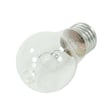
- If the light is out, replace it with the correct bulb (example: refrigerator light bulb 316538904)
Why it matters
A refrigerator that runs longer than necessary (from warm air leaks, poor airflow, or unstable settings) wears the compressor and fans faster, and it also increases energy use. Following the care steps in the manual helps you get the full expected lifespan.
Last updated: February 2026
What is the most common problem with a Frigidaire refrigerator?
The most common problem we see with Frigidaire refrigerators like model FFTR1821QS5A is a cooling complaint, such as the refrigerator section warming up, frost or ice buildup affecting airflow, or temperatures not holding steady. Many of these issues trace back to airflow, defrost, or basic maintenance and control settings.
Most common symptoms customers report
- Refrigerator is warm but freezer seems OK
- Frost buildup on the freezer back wall or on evaporator cover
- Temperature swings (too warm or too cold)
- Unusual operating sounds (fan noise, buzzing, clicking)
- Ice maker not producing ice on models equipped with ice service
Quick checks that fix many “cooling problem” calls
Start with the basics in the FFTR1821QS5A owner's manual.
- Confirm the controls are not set to “0” (off) and allow 24 hours after changes for temperatures to stabilize
- Make sure doors close fully and gaskets seal all the way around
- Avoid overpacking; blocked vents reduce airflow between freezer and fresh food sections
- If the unit was just plugged in or moved, let it run with doors closed for at least 8 hours before loading food
- If installed in a cold space (like a garage), keep ambient temperature above 55°F for normal operation
Parts commonly involved when cooling is poor
If the basics check out, these are frequent culprits on top-mount refrigerators:
| Problem pattern | Common cause | Example part for FFTR1821QS5A |
|---|---|---|
| Freezer cold, fridge warm | Weak/no airflow from freezer | Refrigerator evaporator fan motor 242077705 |
| Frost/ice buildup, airflow blocked | Defrost system issue | Refrigerator defrost heater 242044008 |
| Temps inconsistent | Sensor/thermistor drifting | Refrigerator temperature sensor 240597220 |
Why it matters
Cooling and frost issues are usually airflow-related; when cold air cannot move from the freezer to the refrigerator section, food temperatures rise and the compressor may run longer than normal. Catching a fan, defrost, or sensor problem early helps protect food and reduces strain on the sealed system.
Last updated: February 2026
What are signs of a failing refrigerator?
Common signs your Frigidaire FFTR1821QS5A refrigerator is failing include warming temperatures, unusual noises or vibration, water leaks, and repeated frost or ice buildup. We recommend checking basic power and temperature control settings first, then using the troubleshooting steps in the FFTR1821QS5A owner's manual.
Quick signs to watch for
- Food spoils faster than normal (fresh food section not staying cold)
- Freezer frost or ice buildup that keeps coming back
- New or louder noises, rattling, or vibration (especially if the cabinet is not level)
- Water leaking or puddles near the refrigerator
- Interior light issues (light not working even though the unit is plugged in)
- Back of the refrigerator feels hotter than usual and cooling performance drops
What to check first (fast, no tools)
- Confirm power and controls: Make sure the plug is fully seated and the temperature controls are not set to “0” (cooling off). The manual notes that setting controls to “0” stops cooling but does not disconnect power to lights and other components.
- Give temperatures time to stabilize: After adjusting controls, allow 24 hours for temperatures to stabilize.
- Listen for normal vs. abnormal sounds: Some dripping into the drain pan during defrost and some condenser airflow noise can be normal.
- Level the cabinet: If the refrigerator is noisy or vibrating, leveling and a solid floor often fix it.
Common symptom-to-cause guide
| Symptom | Most common cause | What we do next |
|---|---|---|
| Refrigerator too warm | Control set too warm, door not sealing, airflow issue | Adjust control, check door seal, allow 24 hours |
| Freezer too warm | Control set too warm, defrost/airflow issue | Adjust control, check for frost blocking vents |
| Noisy or vibrating | Not level, weak floor, normal operating sounds | Level cabinet, compare to “normal sounds” section |
| Light not working | Bulb or stuck light switch | Replace bulb, press/release switch |
When a part is a likely fix
If you confirm the temperatures are set correctly and the unit still warms up, these parts commonly relate to cooling complaints:
- Evaporator fan not running or noisy: refrigerator evaporator fan motor 242077705
- Frost buildup from defrost problems: refrigerator defrost heater 242044008
- Temperature sensing issues: refrigerator temperature sensor 240597220
Why it matters
Catching early failure signs helps prevent food loss and can reduce strain on major components like the compressor. Simple checks (controls, leveling, airflow) often solve symptoms that look like a “dying” refrigerator.
Last updated: February 2026