Error Codes



Are bottom mount fridges better?
A bottom-mount refrigerator like the KitchenAid KBRC36MHS01 is “better” when you use the fresh-food section most often; it keeps everyday items at eye level and puts the freezer down low. It is a strong choice for convenience and organization, especially in busy kitchens.
Why many people prefer bottom-mount designs
- Fresh food is easier to see and reach (less bending for daily use).
- Wider refrigerator shelves make it simpler to store platters and meal prep containers.
- Freezer drawers can hold bulky items and help reduce “lost” food in the back.
- Temperature stability in the refrigerator section is often easier to maintain with fewer long door-open moments.
Trade-offs to consider
- You bend more to access frozen foods (drawers, bins, lower baskets).
- Freezer drawers can feel heavier when fully loaded.
- Built-in models like KBRC36MHS01 can be more complex to service; keeping airflow paths clear matters.
Quick comparison
| Feature | Bottom-mount refrigerator | Top-freezer refrigerator |
|---|---|---|
| Most-used items | Easier access (refrigerator at eye level) | Harder access (refrigerator lower) |
| Freezer access | More bending | Easier access |
| Organization | Strong for fresh-food storage | Strong for simple layouts |
Why it matters
Most households open the refrigerator far more than the freezer. Putting the refrigerator compartment up top reduces daily strain and makes it easier to keep food visible, which helps cut down on waste.
Keeping performance strong (especially on built-in units)
- Do not block interior vents; airflow keeps temperatures even.
- Keep door seals clean so the unit does not run longer than necessary.
- If cooling seems uneven or noisy, the evaporator fan system is a common place to check; see how to fix your evaporator cooling fan.
Last updated: February 2026
How to remove bottom grill from KitchenAid refrigerator?
On the KitchenAid KBRC36MHS01 built-in refrigerator, the bottom grill (toe kick) typically snaps onto the lower frame. We remove it by gripping the grill at the ends and pulling straight forward to release the retaining clips; reinstall by aligning it on the lower frame and pressing until it snaps in.
Quick steps
- Unplug the refrigerator or switch off power at the breaker (recommended).
- Open the doors for better access and lighting.
- Grip the toe kick at both ends (use gloves to protect your hands).
- Pull straight forward; avoid twisting so the clips do not crack.
- If it feels stuck, work one side loose, then the other, using steady pressure.
- To reinstall, align the tabs/clips with the lower frame and press evenly until it clicks in.
If the grill will not come off
Most “won’t budge” issues are caused by hidden fasteners, paint buildup, or the grill catching on the frame.
| What you see | Most likely cause | What we do |
|---|---|---|
| Grill flexes but will not release | Clips are tight | Pull straight out with even pressure on both ends |
| One side releases, other side stuck | Clip hung up | Re-seat the loose side, then pull both sides together |
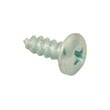
| No movement at all | A screw is installed on your unit | Check along the bottom edge for screws such as screw WP489478 |
| Grill comes off but will not snap back | Clip/tab misaligned | Align to the frame first, then press in evenly |
Why it matters
Removing the toe kick correctly prevents broken mounting clips and helps you safely access lower components for cleaning, leveling checks, and inspection for airflow restrictions.
Related DIY help
If you are removing the grill to troubleshoot cooling or airflow, we recommend how to fix your evaporator cooling fan.
Last updated: February 2026
Why is my KitchenAid refrigerator leaking at the bottom?
A bottom leak on your KitchenAid KBRC36MHS01 built-in refrigerator is usually caused by a clogged/iced defrost drain, a misaligned or overflowing drain pan, or a water supply line connection that is seeping. Fixing the drain path and checking the water line stops most “leaking at the bottom” complaints.
Quick checks that solve most bottom leaks
- Look for water under the freezer area first; that often points to a defrost drain issue.
- Check the drain pan area for cracks, shifting, or overflow; clean and reseat it.
- Inspect the water supply line and fittings (especially after moving the refrigerator) for slow drips.
- If you have an ice maker, check for fill tube icing or overfilling symptoms.
- Make sure doors close fully; warm air intrusion increases frost and drain clogs.
Most common causes and what to do
| What you see | Most likely cause | What we recommend |
|---|---|---|
| Water inside the freezer, then a puddle later | Defrost drain clogged with ice/debris | Thaw the drain area, flush with hot water, clear the drain opening |
| Puddle appears after ice maker runs | Water line seep, fill issue, or ice maker leak | Check fittings, tubing condition, and ice maker area for drips |
| Water only after heavy humidity or frequent door openings | Excess frost leading to drain icing | Improve door sealing habits; reduce warm-air entry |
| Water near the front toe-kick | Drain pan shifted or overflowing | Clean pan, verify it sits flat and centered |
Parts that can be involved on this model
If you confirm the leak is tied to ice production (drips near the ice maker area, odd ice size, or overfilling), these model-matched parts are common suspects:
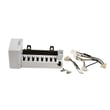
- Ice maker assembly - refrigerator ice maker by whirlpool 4317943 (complete ice maker replacement)
- Refrigerator ice maker thermostat WP627985 (controls harvest timing; failures can contribute to odd cycling)
Why it matters
Water at the bottom is not just a mess; it can lead to floor damage, ice buildup in the freezer, and reduced cooling efficiency. Addressing a defrost drain restriction or a slow water-line seep early prevents repeat leaks.
Helpful DIY guidance
For step-by-step help diagnosing and preventing water-related leaks, use our DIY article: how to get rid of refrigerator puddles.
Last updated: February 2026
What is the bottom part of the fridge called?
On your KitchenAid KBRC36MHS01 bottom-mount refrigerator, the “bottom part” most people mean is the compressor compartment (the machinery area near the lower rear). That area typically houses the compressor, start components, and sealed-system tubing that keep the refrigerator cold.
What you might be referring to (common “bottom parts”)
Depending on what you’re seeing or hearing, the bottom area can mean different components:
- Compressor: the pump that circulates refrigerant (cooling system)
- Start device/overload: helps the compressor start and protects it from overheating
- Condenser area: where heat is released (often near the compressor compartment)
- Drain pan area: where defrost water evaporates
- Bottom hinge/closer hardware: on bottom-mount doors
Quick guide: symptom to likely “bottom” component
| What’s happening | Bottom-area part that’s often involved | What to check first |
|---|---|---|
| Fridge not cooling, clicking | Compressor start device/overload | Listen for repeated click every few minutes |
| Loud hum or won’t cool | Compressor | Confirm fans run and vents are not blocked |
| Water under fridge | Drain pan or drain system | Look for a cracked pan or clogged drain |
| Door won’t close smoothly | Door closer/hinge area | Check for sagging door or loose fasteners |
Parts on this model that match the “bottom area”
If you’re troubleshooting the machinery compartment, these KBRC36MHS01 parts are commonly associated with the lower rear section:
Why it matters
Calling out the right “bottom part” helps you diagnose faster. A compressor-compartment issue points to cooling-system components (compressor, overload, drier), while a bottom-door issue points to hinges, stops, or closer springs.
Last updated: February 2026
What is the most common problem with KitchenAid refrigerators?
For KitchenAid refrigerators like model KBRC36MHS01, the most common issues we see are ice maker problems (no ice, slow ice, small cubes) and cooling/temperature problems (warm fridge, freezer OK, or uneven temps). These are often tied to airflow, defrost, or water-supply related faults.
Most common symptoms and what they usually point to
- Ice maker not making ice: water supply issue, ice maker module failure, or thermostat problem
- Slow ice production: restricted water flow, low freezer temp, or ice maker wear
- Warm refrigerator section: weak evaporator airflow or frost buildup on the evaporator
- Frost on back wall or poor airflow: defrost system problem
- Water puddles or ice on freezer floor: clogged/iced drain path
- Clicking or humming with no cooling: compressor start components or compressor issue
Quick checks we recommend first (no tools)
- Confirm freezer is set cold enough (most units make ice best around 0°F).
- Make sure the ice maker shut-off arm is down and not blocked.
- Listen for the evaporator fan; it should run when the compressor is running.
- Check door seals for gaps and make sure doors close fully.
- Clean condenser area (dust buildup commonly causes warm temps and long run times).
Common parts involved on KBRC36MHS01
| Problem area | What fails most often | Example part on this model |
|---|---|---|
| Ice maker stops or cycles wrong | Ice maker assembly or thermostat | Ice maker assembly - refrigerator ice maker by whirlpool 4317943, refrigerator ice maker thermostat WP627985 |
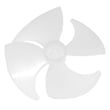
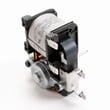
| Warm temps, weak airflow | Evaporator fan motor or blade | Refrigerator evaporator fan motor WP4389155, refrigerator evaporator fan blade WP2169142 |
| Frost buildup, temp swings | Defrost control/timer | Defrost timer WP2183400 |
Why it matters
Ice maker and temperature complaints usually share the same root causes: airflow and heat removal (fan, coils, defrost) or water delivery (supply, filtration, valve). Fixing the underlying cause prevents repeat failures and food spoilage.
Helpful DIY guidance
- For airflow and fan-related cooling issues, follow how to fix your evaporator cooling fan.
- For ice maker troubleshooting patterns and prevention, use common refrigerator ice maker problems and solutions.
Last updated: February 2026