Error Codes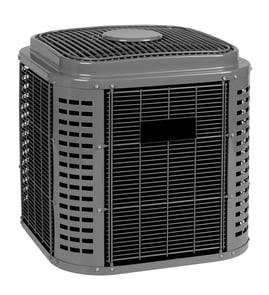

How many tons is a 48000 BTU AC unit?
A 48,000 BTU air conditioner is 4 tons of cooling capacity (because 1 ton equals 12,000 BTU per hour). For a York central air conditioner like model H2DB048S06A, “048” in the model family often aligns with a 48,000 BTU (4-ton) class unit.
Quick conversion (BTU to tons)
Use this simple formula:
- Tons = BTU ÷ 12,000
- 48,000 ÷ 12,000 = 4 tons
- This is a nominal rating; actual delivered capacity can vary with outdoor temperature, airflow, and duct conditions.
What “4 tons” means for your system
A 4-ton central AC is typically paired with matching components so the system runs efficiently:
- Outdoor condenser capacity matches the indoor evaporator coil
- Blower airflow is set correctly (commonly around 1,600 CFM at 400 CFM per ton)
- Refrigerant charge and metering device are correct for the coil
- Ductwork can handle the airflow without excessive static pressure
Common sizing reference table
| Cooling capacity | BTU per hour | Typical airflow target |
|---|---|---|
| 3 tons | 36,000 | ~1,200 CFM |
| 4 tons | 48,000 | ~1,600 CFM |
| 5 tons | 60,000 | ~2,000 CFM |
Why it matters
If the tonnage is mismatched to the indoor coil, blower setup, or ductwork, you can see short cycling, poor humidity control, coil icing, higher energy use, and uneven cooling. Confirming the correct capacity helps you choose compatible parts and keep your York system running as designed.
Helpful DIY skill for AC electrical checks
If you are troubleshooting a no-cool or no-start issue, electrical testing is often part of the process. Our guide on how to use a multimeter to test electrical parts video helps you check common items like contactors, capacitors, and fuses safely.
Last updated: February 2026
What are the 5 main components of AC?
The 5 main components in a central AC system (including your York H2DB048S06A) are the compressor, condenser coil, evaporator coil, expansion device, and refrigerant lines. Together, they move heat from inside your home to the outdoors.
The 5 components and what each one does
- Compressor (outdoor unit): Pumps refrigerant through the system and raises its pressure and temperature.
- Condenser coil (outdoor unit): Releases heat to outdoor air as the refrigerant condenses back to a liquid.
- Evaporator coil (indoor unit): Absorbs heat from indoor air as refrigerant boils into a vapor.
- Expansion device (TXV or fixed orifice): Drops refrigerant pressure so it can absorb heat in the evaporator.
- Refrigerant lines (suction and liquid lines): Carry refrigerant between the indoor coil and outdoor unit.
Quick reference table
| Component | Typical location | Common symptoms when failing |
|---|---|---|
| Compressor | Outdoor condensing unit | Hums but will not start, trips breaker, poor cooling |
| Condenser coil | Outdoor condensing unit | High head pressure, warm air indoors, unit runs long |
| Evaporator coil | Indoor air handler or furnace plenum | Icing, weak airflow, poor cooling, water leaks |
| Expansion device | Near indoor coil | Coil icing, hunting temperatures, uneven cooling |
| Refrigerant lines | Between indoor and outdoor units | Oil residue at joints, hissing, loss of cooling |
Why it matters
When any one of these components is restricted, leaking, or electrically failing, the system cannot move heat efficiently. That shows up as longer run times, higher energy use, icing, or no cooling.
What we recommend checking first (safe homeowner checks)
- Replace or clean the air filter to prevent coil icing and airflow problems.
- Make sure the outdoor coil is clear of leaves, lint, and grass clippings.
- Confirm the thermostat is set to Cool and the temperature is set below room temperature.
- Check that the supply vents are open and not blocked.
- If the outdoor unit will not run, check the disconnect and home breaker (reset once if tripped).
For electrical testing (capacitor, contactor, compressor circuit), use a meter and follow safe practices; our how to use a multimeter to test electrical parts video walks through the basics.
Last updated: February 2026
What size AC is needed for a 1200 sq ft house?
For a 1,200 sq ft house, most homes need about 21,000 to 24,000 BTU/hr of cooling (roughly 1.75 to 2 tons). The right size depends on your climate, insulation, windows, and ductwork; an oversized system can short-cycle and remove less humidity.
Quick sizing rule of thumb
A common starting point is 18 to 20 BTU per sq ft for an average, well-insulated home.
- 1,200 sq ft × 18 BTU = 21,600 BTU/hr
- 1,200 sq ft × 20 BTU = 24,000 BTU/hr
- 12,000 BTU/hr = 1 ton (so this range is about 1.8 to 2.0 tons)
What can push the size up or down
Use these factors to decide whether you should be closer to the low end or high end of the range:
- Hotter climates or long cooling seasons: size trends higher
- Poor insulation or air leaks: size trends higher
- Lots of west-facing windows or skylights: size trends higher
- High ceilings or open floor plans: size trends higher
- Heavy shade and tight, well-insulated construction: size trends lower
Why correct sizing matters
Correct sizing helps your system run long enough to dehumidify, maintain steady temperatures, and reduce wear on major components like the compressor and capacitor.
Sizing cheat sheet (typical)
| Home size (sq ft) | Typical BTU/hr range | Approx. tons |
|---|---|---|
| 1,000 | 18,000 to 20,000 | 1.5 to 1.7 |
| 1,200 | 21,000 to 24,000 | 1.75 to 2.0 |
| 1,500 | 24,000 to 30,000 | 2.0 to 2.5 |
Model-specific note for York H2DB048S06A
York model H2DB048S06A is commonly associated with a 48,000 BTU (4-ton) class outdoor unit; that capacity is typically larger than what a 1,200 sq ft home needs unless the home has unusually high heat gain (very hot climate, poor insulation, major sun exposure) or a larger conditioned area than the stated square footage.
Helpful next step
- Confirm your conditioned square footage (only cooled areas)
- Check insulation and window exposure
- Have a load calculation performed before changing equipment size
For general DIY electrical testing that often comes up during AC troubleshooting, we recommend reviewing how to use a multimeter to test electrical parts video.
Last updated: February 2026