Owner’s manual
 Error Codes



What is special about DV328AEW?
The Samsung DV328AEW dryer is special for its extra-large capacity (about 7.3 cu. ft.) and its wide selection of automatic drying cycles that use a moisture-sensing control (often described as a “fuzzy logic” algorithm) to help prevent over-drying and reduce wrinkles. For cycle details and features, use the owner's manual.
Key features you will notice
- Extra-large capacity drum designed for bigger loads
- Multiple automatic cycles (including everyday cycles like Normal, Heavy Duty, and Towels)
- Moisture-sensing control that adjusts drying time based on dampness
- “My Cycle” memory that saves your last custom cycle settings
- Rack Dry support for items that should not tumble (when using an optional rack)
Common “special” use cases (and what to use)
| What you are drying | Recommended approach | Why it helps |
|---|---|---|
| Extra-large loads | Use an automatic sensor cycle | Helps prevent over-drying while finishing the load |
| Delicates or items that should not tumble | Use Rack Dry with Time Dry | Keeps items stationary while warm air circulates |
| Bulky items (comforters) | Add a couple of dry towels | Shortens dry time and improves tumbling |
| Rubber-backed items | Use Air Fluff (no heat) | Avoids heat damage and reduces fire risk |
Why it matters
Capacity and sensor-based cycles are the two biggest day-to-day differences you feel as an owner. They help you dry more laundry per load and reduce re-drying, which saves time and wear on fabrics.
If performance seems “not special” anymore
If the dryer runs but dries slowly or unevenly, these checks fix most issues:
- Clean the lint screen before every load
- Confirm strong airflow at the outside vent hood
- Avoid overloading; leave room for tumbling
- Use the correct cycle and temperature for the fabric
- If heat is inconsistent, test heating and safety components (for example, the Samsung dryer heating element DC47-00019A or the dryer high-limit thermostat DC47-00018A)
Last updated: February 2026
What does DV328AEW represent?
DV328AEW is the Samsung model number that identifies your specific dryer. We use it to match the correct parts list, wiring and installation details, and troubleshooting information for your exact dryer configuration; it is not a code with a separate symbolic meaning.
What the model number tells us
For Samsung dryers like DV328AEW, the model number is the key identifier used for:
- Looking up the correct replacement parts (heating, drum, door, controls)
- Confirming electrical and gas connection requirements during installation
- Finding the right operating and safety instructions
- Checking troubleshooting steps and information codes
- Avoiding ordering the wrong part for a similar-looking dryer
For model-specific details, use the owner's manual.
DV328AEW vs. DV328AEW/XAA-01
You may see the model written with a suffix such as “/XAA-01”. That suffix is a version identifier (often tied to production run or region) that helps narrow down exact part compatibility.
| What you see | What it means | Why it matters |
|---|---|---|
| DV328AEW | Base model number | Identifies the dryer family |
| DV328AEW/XAA-01 | Model plus version code | Helps match the exact parts and diagrams |
Why it matters when ordering parts
Even small version differences can change which part fits. Common examples on this Samsung dryer include:
- Heating parts such as the Samsung dryer heating element DC47-00019A
- Temperature sensing parts such as the dryer thermistor DC32-00007A
- Drum drive parts such as the Samsung dryer drum belt 6602-001655
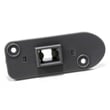
- Door closing parts such as the dryer door strike DC66-00395A
Quick tip for finding the right model tag
Most dryers list the model on a label inside the door opening or on the cabinet opening near the door.
Why it matters
Using the exact DV328AEW model identification helps us keep your repair safe and accurate, especially for electrical terminal block connections and (if applicable) gas hookup and leak-check steps.
Last updated: February 2026
Why are used DV328AEW so cheap?
Used Samsung DV328AEW dryers often sell cheaply because they are an older model, buyers factor in the cost of common wear repairs (belt, rollers, heat components), and many listings include venting or maintenance issues that make drying slow. Checking the unit’s condition and airflow usually explains the price.
What typically drives the low used price
- Age and depreciation: older dryers drop in value quickly, even if they still run.
- Wear-and-tear parts: drum support rollers and the drum belt are normal maintenance items.
- Heating complaints: “no heat” or “takes too long to dry” listings often trace back to heat or airflow problems.
- Venting problems: crushed, long, or clogged ducts reduce performance and raise operating temperatures.
- Unknown history: heavy use, poor cleaning, or repeated overheating lowers buyer confidence.
Quick checks before you buy (or right after you bring it home)
Use these checks to decide whether it is a bargain or a project:
- Confirm the drum turns smoothly; squealing or thumping points to roller wear.
- Run a timed dry cycle and verify strong airflow at the outside vent.
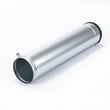
- Inspect the exhaust duct; use metal duct only (plastic or non-metal flex is a fire hazard).
- Check door closure; a weak latch or seal can leak air and extend dry times.
- If it runs but does not heat, inspect common heat-limit safety parts and the heating circuit.
Common “cheap dryer” symptoms and likely causes
| Symptom in listing | What it often means | Parts that commonly relate |
|---|---|---|
| Loud squeal/thump | Drum support wear | Samsung dryer drum support roller DC97-16782A |
| Drum not turning | Belt or belt switch issue | Samsung dryer drum belt 6602-001655 |
| No heat/overheats | Heat circuit or safety cutoff opened | Samsung dryer heating element DC47-00019A, dryer high-limit thermostat DC47-00018A |
| Long dry times | Restricted venting, lint buildup | Follow venting guidance in the owner's manual |
Why it matters
A DV328AEW that is “cheap” because of vent restriction can become a reliable dryer after proper ducting and cleaning. A DV328AEW that is “cheap” because it overheated repeatedly may need multiple heat and drum-drive parts to restore safe, consistent drying.
Last updated: February 2026