Owner’s manual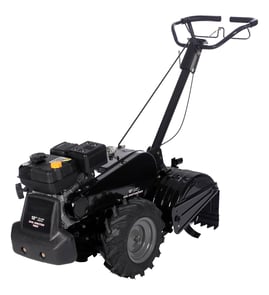



What tiller is made in the USA?
Some tillers are made in the USA, but Craftsman model 917299080 is best supported by matching the tiller you are considering to its data plate and documentation, then confirming the manufacturing origin with the brand. For safe operation and correct maintenance specs, use the 917299080 owner's manual.
USA-made tiller brands you will commonly see
These brands are widely known for offering at least some tiller models made in the United States (availability varies by model year and configuration):
- Mantis
- Northwest Tillers
- Power Dog
- MacKissic (Merry Tiller)
- Land Pride
How to confirm a tiller is made in the USA (quick checklist)
We recommend verifying origin by model, not just by brand name.
- Check the product data plate for the model number and serial number
- Look for a “Made in …” statement on the data plate or engine label
- Compare the model number to the documentation and parts list
- Ask the manufacturer to confirm the country of origin for that exact model
- If the tiller has a separate engine brand (Honda, Briggs and Stratton, etc.), check the engine label separately
Why it matters
Country of origin can affect parts sourcing, service support, and what components are considered normal wear items. For example, the Craftsman 917299080 manual notes that wear items such as tines, spark plugs, air cleaners, and belts are expected to wear during normal use, so having the correct model identification helps you buy the right replacements.
Helpful comparison: “Made in USA” claim vs what to verify
| What you see | What it usually means | What to verify before buying |
|---|---|---|
| “Brand is American” | Brand ownership or marketing | Data plate country of origin for that model |
| “Assembled in USA” | Final assembly location | Where major components are made |
| “Made in USA” | Manufacturing origin claim | Model-specific confirmation from manufacturer |
Last updated: February 2026
Where is the model number on a Craftsman rear tine tiller?
On the Craftsman rear-tine tiller model 917299080, the model number is printed on the tiller’s model label. For this model, the manual identifies it as “TILLER MODEL NUMBER 917.299080”; on the machine, the label is typically placed on the tine shield/tine guard area or on the front section of the frame. See the 917299080 owner's manual.
Common places to check on a rear-tine tiller
Look for a sticker or metal tag; wipe off dirt and oil so the characters are readable.
- Tine shield (tine guard) near the tines
- Main frame, right side (near the wheel area)
- Front of the tiller frame (forward of the engine)
- Handle support/control panel area
- Engine area (note: engine numbers are different from the tiller model number)
What the label usually looks like
Most Craftsman tillers use a rectangular label with the model number and sometimes a serial number.
| You see this | What it means | What to do |
|---|---|---|
| 917.299080 (with a dot) | Same model as 917299080 | Use it to match parts and diagrams |
| Engine model/type code | Engine identification only | Use it for engine-specific parts |
| Partial number or worn label | Incomplete ID | Clean the area and re-check nearby spots |
Why it matters
Using the correct model number (917299080) ensures we match the right Craftsman parts list and diagrams for items like the drive belt, clutch cable, and tine hardware. That prevents ordering a belt or cable that fits a different rear-tine tiller version.
Last updated: February 2026
Are Craftsman rear tine tillers any good?
Yes. Craftsman rear-tine tillers like model 917299080 are a solid choice for homeowners who need strong digging power and good traction in tougher soil. Like any tiller, long-term satisfaction depends on using the correct tilling technique and keeping up with routine maintenance in the 917299080 owner's manual.
What “good” usually means for a rear-tine tiller
Rear-tine tillers are built for heavier work than most front-tine models. In real-world use, a “good” rear-tine tiller typically delivers:
- Strong bite in compacted or rocky soil (less bouncing and skipping)
- Better control and stability because the wheels help drive the machine
- Deeper, more consistent tilling when you do multiple passes
- Easier row cultivation when wheels are set correctly
- Better results when tines are sharp and not bent or worn
Common complaints and what to check first
Most performance complaints trace back to setup, wear items, or technique. We see these issues most often:
- Tiller pulls or lunges forward: tines can catch in hard ground; reduce depth and speed, and do not restrain the handlebars
- Poor tilling or shallow digging: worn or bent tines; check tine condition and spacing
- Drive feels weak or slips: belt or cable tension issue; inspect the drive system and adjust as needed
- Tines or wheels do not move correctly: drivetrain wear, belt problems, or control cable out of adjustment
If you suspect belt wear or slippage, the husqvarna rear-tine tiller drive belt 591372401 is a common wear item on this model.
Quick “is it worth it?” checklist
| If you need to… | A Craftsman rear-tine tiller is usually a good fit when… |
|---|---|
| Break new ground | You can make slower, shallow passes and let the machine work |
| Maintain a garden yearly | You keep tines sharp and replace wear items as needed |
| Till rocky soil | You expect occasional shear pin breaks (they protect the transmission) |
| Get clean soil mixing | You avoid over-speeding and keep the tilling depth reasonable |
Why it matters
Rear-tine tillers can feel “bad” when they are overloaded or worn because the tines and drive system take the brunt of the work. Keeping tines in good shape and following safe operating practices improves performance and reduces breakage.
Last updated: February 2026