Installation guide
 Owner’s manual
 Error Codes


How to remove bottom grille on GE refrigerator?
On the GE CFE29TSDCSS bottom-mount refrigerator, the bottom grille (base grille) typically comes off by releasing its retaining clips and then pulling the grille forward and away from the cabinet. We recommend using the removal method shown in the CFE29TSDCSS installation guide so you avoid cracking the grille or bending the mounting tabs.
Before you start
- Unplug the refrigerator or switch off power at the breaker (you will be working near wiring and moving parts).
- Protect the floor with cardboard or a towel to prevent scratches.
- If you need more clearance, roll the refrigerator forward slightly (keep the water line from kinking).
- Use a flashlight to locate the clip points along the top edge of the grille.
How to remove the bottom grille (base grille)
- Stand in front of the refrigerator and locate the seam between the grille and the cabinet.
- Grip the grille near the left and right ends.
- Pull the grille straight outward to release the clips.
- If it feels stuck, work side-to-side: pull one end outward slightly, then the other end, until it releases.
- Set the grille aside on a soft surface.
If the grille is screwed on
Some GE base grilles use screws in addition to clips.
- Look underneath the grille ends for fasteners.
- Remove screws with a Phillips screwdriver or nut driver (match the head style).
- Pull the grille forward after the screws are out.
| What you see | What it usually means | What to do |
|---|---|---|
| Grille flexes but will not pop free | Clips still engaged | Pull outward near each end, then the center |
| Grille will not move at all | Screws or hidden tabs | Check underneath for screws, then retry |
| Tabs look bent or broken | Grille not seating correctly | Replace the grille or straighten tabs carefully |
Why it matters
Removing the bottom grille correctly gives you access for cleaning (condenser area) and helps prevent broken tabs that can cause rattles, poor fit, or air flow issues.
If you need replacement parts for your GE CFE29TSDCSS, order from the parts list for this model or search by model number on Sears PartsDirect.
Last updated: February 2026
What are the disadvantages of a bottom freezer refrigerator?
Bottom-freezer refrigerators like the GE CFE29TSDCSS put fresh food at eye level, but the tradeoffs are mostly cost, ergonomics, and service access. You typically bend more for frozen items, manage deeper freezer drawers, and may deal with more involved drawer, door-gap, and drain/defrost maintenance over time.
Common disadvantages (what we see most often)
- More bending and lifting: frozen foods sit low, and heavy items (meat, bulk bags) come out of a deep drawer.
- Harder freezer organization: stacked bins can hide items; you may need to pull baskets out to reach the bottom.
- Heavier door and drawer handling: the freezer drawer and slides can feel heavy and awkward when loaded.
- Potential for door-gap and alignment issues: drawer alignment matters for sealing and smooth operation.
- Defrost and drain-related messes: when a drain path ices up, you can see frost buildup or water puddles.
- Often higher upfront cost: compared with many top-freezer designs.
Quick comparison: bottom freezer vs top freezer
| Feature | Bottom freezer | Top freezer |
|---|---|---|
| Fresh food access | Easier (eye level) | More bending |
| Freezer access | More bending | Easier |
| Freezer storage | Deep drawer, stacked bins | Shelved compartment |
| Common annoyance | Drawer organization, alignment | Fresh-food bending |
Tips to reduce the downsides
- Keep heavy frozen items in the upper basket to avoid awkward lifting.
- Use bins or dividers so small items do not disappear under larger packages.
- If the freezer drawer looks uneven, follow the freezer door gap adjustment steps in the installation guide.
- If you notice warm temps or odd cycling, check airflow and consider common cooling components such as the refrigerator fan motor assembly WR60X26866 and refrigerator temperature sensor WR55X10025.
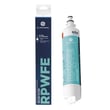
- For water or ice issues, start with routine maintenance like replacing the refrigerator water filter RPWFE.
Why it matters
Most “disadvantages” show up as daily-use friction (bending, organization) or performance symptoms (poor sealing, frost, puddles). Addressing drawer alignment, airflow, and filter maintenance early helps your GE CFE29TSDCSS run more efficiently and keeps food temps stable.
You can order replacement parts for your GE CFE29TSDCSS from the parts list for this model, or search by model number on Sears PartsDirect.
Last updated: February 2026
What is the most common problem with GE refrigerators ice maker?
On the GE CFE29TSDCSS, the most common ice maker problem is no ice or slow ice production caused by a restricted water supply, most often a clogged water filter or air in the water line after a filter change or installation. Use the CFE29TSDCSS owner's manual troubleshooting steps to confirm water flow and settings.
Quick checks we recommend first
- Confirm the ice maker is turned on.
- Make sure the household shutoff valve is fully open.
- Check for a kinked or pinched water supply line behind the refrigerator.
- If you recently replaced the filter, dispense water for at least 5 minutes to purge air.
- Replace the filter if water flow is weak or the filter is overdue.
- If you use reverse osmosis (RO) and the refrigerator also has a filter, install the bypass plug to prevent hollow cubes.
Most common causes and what they look like
| Symptom | Most likely cause | What to do next |
|---|---|---|
| No ice | Water filter restricted | Replace the refrigerator water filter RPWFE and purge air by dispensing water for 5 minutes |
| Small or hollow cubes | Low pressure or RO plus fridge filter | Verify supply pressure, and use the bypass plug if on RO |
| Slow ice production | Air in line after service | Purge air by dispensing water for 5 minutes |
| Ice maker seems “on” but still no ice | Freezer not cold enough | Confirm freezer temperature and airflow; address cooling issues first |
Why it matters
Ice makers are simple, but they depend on steady water flow and proper freezer temperatures. A partially clogged filter or trapped air can reduce fill volume, which quickly turns into “no ice,” small cubes, or an underfilled bin.
Parts that commonly solve ice and water supply issues
- Refrigerator water filter RPWFE (most common restriction point)
- Refrigerator water filter bypass (useful for RO systems or quick diagnosis)
- Water inlet valve (if water supply is good but the ice maker is not filling)
For more prevention tips that reduce clogs and fill problems, follow how to prevent water dispenser and ice maker problems. You can also order model-specific replacement parts from the parts list for GE CFE29TSDCSS, or search by model on Sears PartsDirect.
Last updated: February 2026