 Installation guide
 Owner’s manual


How to hard reset kenmore washer?
To hard reset your Kenmore washer model 11027322600, unplug it (or switch off the breaker) for 2 minutes, then restore power and start a normal cycle. This clears many temporary control and cycle issues without replacing parts; confirm any model-specific steps in the 11027322600 owner's manual.
- Turn the cycle knob to Off.
- Unplug the washer (or turn the circuit breaker Off).
- Wait 2 minutes.
- Restore power.
- Lift and close the lid once, then select a cycle and pull the cycle control knob to start.
These checks fix the most common “won’t start” symptoms that look like a reset problem.
- Make sure the lid is fully closed; a failed lid switch can stop agitation and spin.
- Verify the outlet has power (test with a lamp) and the breaker is not tripped.
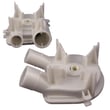
- If the tub will not drain, the washer may not advance; check for a clog at the pump.
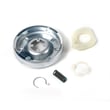
- If the motor runs but the basket will not move, the motor coupling can be worn.
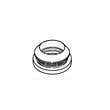
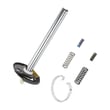
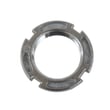
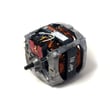
Helpful parts for this model:
| What you see | What the reset helps | What usually needs attention |
|---|---|---|
| Random stopping or stuck in a cycle | Clears a temporary control hang | Power supply, timer, lid switch |
| Won’t spin but drains | Sometimes | Lid switch, clutch, drive block |
| Won’t drain | Rarely | Drain pump, hose clog |
A hard reset is the fastest safe first step because it rules out a temporary electrical or cycle-control glitch before you spend time diagnosing mechanical parts like the clutch, drive motor, or drain pump.
Last updated: January 2026
What is the life expectancy of a Kenmore washer?
Most Kenmore washers, including model 11027322600, typically last 10 to 15 years with normal household use and basic maintenance. Heavy use, frequent overloading, and poor installation (power, leveling, drainage) can shorten lifespan; timely repairs can extend it.
- 10 to 15 years: common for most Kenmore top-load washers
- 7 to 10 years: heavy-use households (large loads, daily cycles)
- 15+ years: lighter use plus consistent care and prompt part replacement
| Usage pattern | What you can expect | What helps most |
|---|---|---|
| Light (few loads/week) | Longer life | Keep loads balanced, avoid overfilling |
| Average (4 to 7 loads/week) | Typical life | Clean, level, and fix small issues early |
| Heavy (daily, bulky loads) | Shorter life | Reduce load size, address vibration and draining fast |
We recommend focusing on the items that most often cause early failure in a Kenmore washer:
- Keep loads balanced to reduce wear on the suspension and drive system
- Avoid overloading, especially with towels, blankets, and jeans
- Use the correct detergent amount; excess suds can stress draining and spinning
- Confirm safe power and grounding practices listed in the 11027322600 installation guide
- Fix “won’t drain” or “won’t spin” symptoms quickly to prevent motor and transmission strain
When performance drops, replacing a worn part is often what gets a washer back to reliable operation:
- Washer motor coupling 285753A (common wear item tied to agitation and spin)
- Washer drain pump WP3363394 (helps prevent standing water and slow drains)
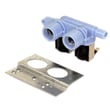
- Washer lid switch assembly WP8318084 (can stop spin if the washer thinks the lid is open)
A washer usually fails early from avoidable stress: unbalanced loads, repeated overfilling, and running with a minor leak or drain problem. Keeping the washer properly installed and addressing symptoms early is the simplest way to reach the full 10 to 15 year lifespan.
Last updated: January 2026
What is the capacity of Kenmore 11027322600?
The Kenmore washer model 11027322600 is a top-load, direct-drive style washer; these typically fall in the about 2.5 to 3.5 cu. ft. capacity range. For the exact capacity for your specific unit, use the specifications information in the 11027322600 owner's manual.
Use the manual to match the capacity to your exact model number and configuration.
- Open the 11027322600 owner's manual and look for “Specifications” or “Product features”
- Check for terms like “basket volume”, “tub capacity”, or “capacity”
- If multiple versions are listed, match the full model number 11027322600
- If capacity is not shown as cu. ft., use the manual’s load size guidance (small, medium, large) as the practical equivalent
These ranges help you choose realistic load sizes without overfilling.
| Washer type | Typical capacity range | What that means in use |
|---|---|---|
| Traditional top-load, direct-drive (Kenmore 110 style) | 2.5 to 3.5 cu. ft. | Best results when the tub is loosely filled, not packed |
| Large-capacity top-load (newer designs) | 3.8 to 5.0+ cu. ft. | Handles bulkier loads with more room for turnover |
Capacity affects cleaning and spin performance. Overloading reduces water and detergent circulation, increases out-of-balance spinning, and adds strain to drive components.
Common symptoms include weak agitation, slow spin, or a burning rubber smell.
- Reduce load size and redistribute items evenly
- Avoid packing heavy items (towels, jeans) on one side
- If agitation or spin is still weak, inspect the washer motor coupling 285753A for cracking or wear
Last updated: January 2026





