Owner’s manual
 Error Codes


What are common problems with Jenn Air refrigerators?
Common problems we see on Jenn-Air refrigerators like model JFC2089BEP00 include warm temperatures (fridge warm or freezer warm), ice maker not making ice, water leaking, and unusual noises. These issues are often tied to airflow restrictions, dirty condenser coils, door seal leaks, or a failing fan motor or control.
- Fridge warm, freezer OK: blocked air vents, evaporator fan issue, frost buildup from a defrost problem
- Freezer warm, fridge warm: dirty condenser coil, condenser airflow problem, compressor or sealed-system issue
- Ice maker not working: water supply problem, inlet valve issue, ice maker assembly failure
- Water under the fridge or in the crisper: clogged/iced drain tube, loose water line connection
- Buzzing, rattling, or grinding: fan blade hitting ice, worn fan motor, loose panels
Use these checks before replacing parts; they solve many “not cooling” and “leaking” complaints.
- Confirm temperature settings and allow 24 hours after changes
- Make sure air vents inside the fresh food section are not blocked by food packages
- Clean the condenser area (dust buildup commonly causes poor cooling)
- Inspect door gaskets for gaps, tears, or areas not sealing
- Listen for the evaporator fan; it should run when the compressor is running (door switch may need to be pressed)
| Symptom | Common part involved | Example part for JFC2089BEP00 |
|---|---|---|
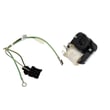
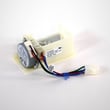
| Fridge warm or noisy airflow | Evaporator fan motor or blade | Refrigerator evaporator motor W11024089 or refrigerator evaporator fan blade WP2169142 |
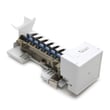
| Ice maker not making ice | Ice maker assembly, water valve | Refrigerator ice maker assembly W10884390 or refrigerator water inlet valve assembly WPW10420083 |
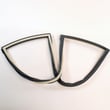
| Door not sealing, sweating, warm spots | Door gasket | Whirlpool refrigerator door gasket (gray) (model-specific options vary) |
Cooling, ice production, and leak issues often start small but can lead to food spoilage, ice buildup, or water damage. Catching airflow and sealing problems early also reduces compressor run time and energy use.
For model-specific operating details (controls, airflow locations, and care steps), follow the JFC2089BEP00 owner's manual.
Last updated: January 2026
What is the life expectancy of a Jenn Air refrigerator?
Most Jenn-Air refrigerators have a typical life expectancy of 10 to 20 years. For your JFC2089BEP00 bottom-mount refrigerator, regular maintenance and quick repair of wear items (like door gaskets and ice maker components) are the biggest factors that help it reach the upper end of that range; see the JFC2089BEP00 owner's manual for model-specific care guidance.
A refrigerator’s service life depends less on the badge and more on how hard key systems work (sealed system, airflow, defrost, and door sealing).
- Door seal condition: air leaks force longer run times and can shorten compressor life
- Condenser cleanliness: dirty coils raise operating temperatures and energy use
- Ice maker and water system health: leaks and clogs can cause repeat failures
- Ventilation and room temperature: tight cabinets and hot garages increase stress
- Usage habits: frequent door openings and warm food loads increase run time
We recommend these practical steps for a bottom-mount refrigerator like the JFC2089BEP00:
- Clean condenser area regularly (more often with pets)
- Keep doors closing squarely; avoid overloading door bins
- Set stable temperatures (avoid extreme cold settings unless needed)
- Confirm freezer air vents are not blocked by packages or baskets
- Address frost buildup, unusual noises, or water leaks promptly
These examples help you separate normal wear from bigger system issues.
| Repair type | What you might notice | Typical impact on lifespan |
|---|---|---|
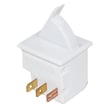
| Wear item (seal, switch, fan) | Warm spots, lights not working, airflow noise | Often worth repairing |
| Ice and water components | No ice, slow fill, leaking | Often worth repairing |
| Sealed system or compressor | Not cooling, constant running, clicking | Higher-cost decision |
If you’re chasing warm temperatures caused by air leaks, replacing a worn gasket such as the whirlpool refrigerator door gasket (gray) W10443320 can reduce run time and help protect the sealed system.
A refrigerator that runs longer and hotter than designed (usually from dirty condenser coils or a leaking door gasket) wears out the compressor and evaporator system faster. Keeping airflow and sealing in good shape is the simplest way to extend service life.
Last updated: January 2026
Which is better top mount or bottom mount fridge?
A bottom-mount refrigerator like the Jenn-Air JFC2089BEP00 is better when you want everyday fresh-food items at eye level and easier organization; a top-mount is better when you want a simpler layout and typically lower purchase cost. The best choice depends on how you use your refrigerator most.
- Bottom-mount: fresh food is easier to reach; freezer is a pull-out drawer
- Top-mount: freezer is at eye level; fresh food is lower
- Bottom-mount often feels more organized (baskets, drawers)
- Top-mount often has fewer moving parts in the freezer area
- Either style can be efficient; real-world energy use varies by size, features, and door-seal condition
| Feature | Top-mount (freezer on top) | Bottom-mount (freezer on bottom) |
|---|---|---|
| Fresh-food access | You bend more | You bend less |
| Freezer access | Easier for frequent freezer use | Easier for bulk frozen storage (drawer/baskets) |
| Organization | Usually simpler shelving | Often more bins, pull-outs, and zones |
| Typical buyer fit | Budget, basic needs | Convenience, frequent fresh-food use |
- Choose bottom-mount if you open the refrigerator section many times a day, cook often, or want better visibility of produce and leftovers.
- Choose top-mount if you rely heavily on frozen foods, want a straightforward design, or prefer fewer drawer-style freezer components.
The “better” style is the one that reduces door-open time and makes food easier to see and reach. That helps temperature stability, reduces wasted food, and can lower wear on components like door gaskets and the evaporator fan system.
- Keep door seals clean and sealing tightly; air leaks force longer run times
- Avoid overpacking vents; blocked airflow causes warm spots and frost issues
- Set stable temperatures and give the unit time to recover after loading groceries
- Use the care and temperature guidance in the JFC2089BEP00 owner's manual
Last updated: January 2026