Installation guide
 Owner’s manual
 Error Codes

What is the average lifespan of a Kenmore washer?
A Kenmore washer typically lasts 10 to 15 years. With normal household use and basic care (proper loading, correct detergent, and routine cleaning), many Kenmore top-load washers like model 11015952401 reach that range before major repairs become more common.
Typical lifespan and what affects it
Most washer life comes down to mechanical wear, water quality, and how heavily the machine is used.
- Loads and frequency: Daily use shortens lifespan compared to a few loads per week.
- Overloading: Strains the drive system, clutch, and suspension.
- Drain performance: Slow draining makes pumps work harder and can leave water behind.
- Spin balance: Chronic out-of-balance loads wear suspension parts faster.
- Basic maintenance: Cleaning and checking hoses helps prevent avoidable failures.
What your 11015952401 warranty suggests about durability
Your Kenmore 11015952401 documentation includes longer coverage on certain major components, which aligns with a washer designed for years of service. Details vary by purchase date and terms, so confirm specifics in the owner's manual.
| Component (examples) | Coverage type in documentation | What it means for lifespan |
|---|---|---|
| Wash basket | Limited lifetime (basket) | Basket corrosion is less likely to be the first end-of-life issue |
| Plastic tub | Limited 10-year | Tub failures are less common early on |
| Gearcase parts | Limited 5-year | Drive system is built for extended use |
Signs your washer is nearing end-of-life
These symptoms often point to wear in common service parts.
- Agitator moves poorly or “slips” (often linked to agitator dog 80040)
- Won’t spin or makes a grinding/rattling sound (drive coupling or clutch wear)
- Won’t drain or leaves water in the tub (possible washer drain pump WP3363394)
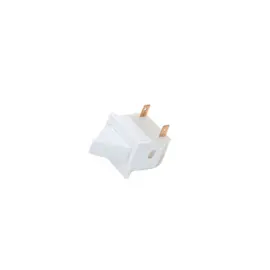
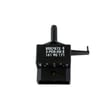
- Won’t start or stops when the lid is opened/closed (possible washer lid switch assembly WP8318084)
- Excessive shaking or banging (suspension or load balance issues)
Why it matters
Knowing the 10 to 15 year average helps you decide whether to maintain, repair, or replace. If your washer is within that range, targeted repairs using the correct Kenmore parts can restore reliable washing and spinning without guesswork.
Last updated: February 2026
Is it worth repairing a Kenmore washing machine?
Yes, it’s usually worth repairing a Kenmore washer when the problem is a common wear item (like a lid switch or drain pump) and the machine is otherwise in good condition. For the Kenmore 11015952401, repairs are often cost-effective because many failures are straightforward and parts are readily available; use the owner's manual to match symptoms to safe, recommended service steps.
Quick way to decide
We use these practical checkpoints to decide repair vs. replace:
- Repair when the washer won’t drain, won’t start, or won’t agitate but the tub and cabinet are solid.
- Repair when the fix is a single part and labor is reasonable (typical examples: washer lid switch assembly WP8318084, washer drain pump WP3363394).
- Repair when the washer is under 10 years old and has been reliable.
- Replace when multiple major systems are failing (spin, drain, and fill issues together).
- Replace when the repair estimate is about half the cost of a comparable new washer.
Common repairs that are often “worth it” on this model
These are frequent, fixable causes of poor washing or no-operation symptoms:
| Symptom | Likely area | Example part to check |
|---|---|---|
| Won’t start or stops mid-cycle | Lid safety circuit | Lid switch assembly |
| Won’t drain | Drain system | Drain pump |
| Agitates poorly or clothes stay on top | Agitator drive | Agitator dog |
| No agitation/spin but motor runs | Drive connection | Motor coupling |
Model-matched examples from our parts list include the agitator dog 80040 and washer motor coupling 285753A.
Why it matters
A targeted repair can restore cleaning performance and extend the washer’s usable life without the cost and hassle of replacement. The manual also emphasizes basic safety, like not servicing the washer unless the instructions specifically recommend it and you have the skills to do the work.
Safety and planning tips before you repair
- Unplug the washer before accessing internal components.
- Do not reach into the tub or agitator area while anything is moving.
- If the washer has been unused for a long period, follow the manual’s guidance about running hot water to clear any accumulated gas before use.
- Confirm the symptom first (fill, agitate, drain, spin) so you only replace what’s needed.
Last updated: February 2026
How to identify a Kenmore washer model?
For Kenmore washer model 11015952401, the model number is printed on the model and serial number label located under the washer lid. Write the full model number and serial number exactly as shown; that is what we use to match the correct parts diagrams and repair information.
Where to find the model and serial label
Check these common locations on Kenmore washers:
- Under the washer lid (along the rim of the opening) for many top-load designs, including 11015952401
- Inside the door opening around the door frame on many front-load designs
- Back panel near the power cord or control area on some models
- Behind the control console on a few older configurations
What the model number looks like
Kenmore washer model numbers often start with 110 followed by more digits. Always use the complete number, not just the first three digits.
| Example on label | What it means | What we recommend |
|---|---|---|
| 11015952401 | Exact washer model | Record it exactly as printed |
| Serial number (varies) | Production run identifier | Record it too for best parts matching |
| Worn or missing label | ID is hard to confirm | Check alternate label locations listed above |
Tips to avoid ordering the wrong part
- Take a clear photo of the label before it fades further
- Copy every digit in the model number (no spaces)
- Keep the serial number with your records
- Use the model number to confirm fit before replacing common items like the washer lid switch assembly WP8318084 or washer drain pump WP3363394
Why it matters
Kenmore washers can look similar across multiple series, but internal components and revisions vary. Using the exact model and serial information prevents mismatched parts and saves time during troubleshooting and repair.
Last updated: February 2026