 Installation guide
 Owner’s manual
 Error Codes




What is the average lifespan of a Frigidaire dishwasher?
Most Frigidaire dishwashers, including model FDB989GFC2, typically last 9 to 12 years with normal household use. Consistent cleaning, correct detergent use, and addressing leaks or draining problems quickly are the biggest factors in reaching the high end of that range; see the FDB989GFC2 owner’s manual for care and operating guidance.
What affects dishwasher lifespan the most
- Water quality and hardness (hard water speeds up scale buildup on the heater and internal parts)
- How often you run it (daily use wears pumps, seals, and racks faster)
- Cleaning and maintenance habits (filters, spray paths, and door sealing surfaces)
- Heat and drying performance (a struggling heater can shorten cycle performance and increase wear)
- Small leaks left uncorrected (water damage and corrosion can end a dishwasher early)
Quick maintenance checklist (best return for the effort)
- Run hot water at the sink before starting a cycle so the dishwasher fills with hotter water.
- Keep the tub edge and door sealing surfaces clean; replace a worn lower door seal such as the gasket 809006501 if you see drips at the bottom of the door.
- If you have hard water, use rinse aid and consider a home water softener (the manual notes this can help when conditions persist).
- Don’t overload; good water circulation reduces strain on the circulation system.
- Fix draining issues quickly (kinks, clogs, or a failing drain path can overwork the pump).
Typical lifespan expectations (what to plan for)
| Usage pattern | Typical lifespan | What usually fails first |
|---|---|---|
| Light (2 to 3 loads/week) | 10 to 13 years | Door seals, rack wear, minor leaks |
| Average (4 to 7 loads/week) | 9 to 12 years | Drain issues, heater performance, seals |
| Heavy (1 to 2 loads/day) | 7 to 10 years | Pumps, heater, leaks, rack deterioration |
Why it matters
Knowing the expected lifespan helps you decide whether to repair or replace. If your FDB989GFC2 is near the 9 to 12 year mark and you’re seeing leaks, poor cleaning, or drying problems, replacing common wear parts (like a door gasket) can be a cost-effective way to extend service life.
Last updated: February 2026
Can I look up Frigidaire parts by model number?
Yes. For your Frigidaire dishwasher model FDB989GFC2, looking up parts by the full model number is the most accurate way to match compatible replacement parts, diagrams, and repair instructions, especially for fit-critical items like door seals, valves, and racks.
How to find the model number on the dishwasher
On most Frigidaire dishwashers, the model and serial tag is located on the tub frame around the door opening (often along the side or top edge). Use the complete model number exactly as shown.
- Open the door and look around the inner frame of the tub opening
- Write down the full model number (letters and numbers)
- Keep the serial number too (helpful for production changes)
- Use the model number to cross-check parts before ordering
What you can do once you have the model number
When you search FDB989GFC2, you can narrow results to parts that are designed for your exact dishwasher configuration.
| What you’re trying to fix | What to search by | Example part for this model |
|---|---|---|
| Door leaking at the bottom | Model number + door seal | Gasket 809006501 |
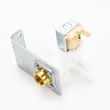
| Dishwasher not filling | Model number + inlet valve | Water valve 154637401 |
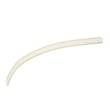
| Not draining or slow drain | Model number + drain hose | Dishwasher drain hose 154225602 |
| Poor drying or water not heating | Model number + heater | Heater 154665201 |
Why it matters
Dishwasher parts are not “one size fits all.” Small differences in tub design, control style, and rack configuration can change which gasket, float switch, or heating element fits. Using FDB989GFC2 prevents ordering a look-alike part that will not seal, mount, or connect correctly.
Helpful references for this model
- Use the FDB989GFC2 owner’s manual for model-specific operation details and care guidance.
- Use the FDB989GFC2 installation guide to confirm installation requirements (leveling, connections, and securing), which can also affect performance and leaks.
Last updated: February 2026
What is the most common problem with a Frigidaire dishwasher?
The most common Frigidaire dishwasher problem we see on models like FDB989GFC2 is poor cleaning performance caused by loading issues, low incoming water temperature, low water pressure, or spray-arm blockage. Leaks and no-start symptoms are also common, but cleaning complaints happen most often in everyday use.
Most common symptoms and what usually causes them
- Food soils left on dishes: items blocking spray arms, nesting dishes, or the top-rack funnel blocked
- Cloudy film or spots: hard water, too much detergent, or water temperature too low
- Detergent left in the cup: old detergent, dispenser blocked by dishes, or cycle not completing
- Leaks: too much detergent or rinse aid causing foam, or the dishwasher not level
- Won’t fill or fills slowly: household water supply issue or a failing inlet valve
Quick checks we recommend first (fast, no parts)
- Confirm hot water is reaching the dishwasher; incoming water should be at least 120°F.
- Verify household water pressure is in the typical dishwasher range; the manual lists 20 to 120 psi.
- Reload to prevent nesting and keep tall items from stopping spray arms from turning.
- Use fresh automatic dishwasher detergent; measure for your water hardness.
- If you see suds or overflow, wipe up spilled rinse aid and reduce detergent.
When a part is the likely fix
If the basics check out, these parts commonly solve the “usual suspects”:
| Symptom | Common part to inspect | Example for FDB989GFC2 |
|---|---|---|
| Leaking at the door | Door seal | Gasket 809006501 |
| Not filling | Water inlet valve | Water valve 154637401 |
| Not draining well | Drain path and hose routing | Installation guide |
Why it matters
Most “dishwasher problems” are really wash-condition problems (water temperature, pressure, loading, detergent). Fixing those first restores cleaning and prevents repeat issues like detergent residue, spotting, and leaks.
For cycle options, loading guidance, and the troubleshooting list (including “food soils left on dishes” and “dishwasher leaks”), use the FDB989GFC2 owner’s manual.
Last updated: February 2026
What are the commonly replaced parts in a dishwasher?
In a Frigidaire FDB989GFC2 dishwasher, the most commonly replaced parts are the ones that control water flow, sealing, heating, and draining. Wear, mineral buildup, and small leaks typically show up first in door seals, inlet valves, drain components, and heating parts; racks and wheels also break from daily use.
Most common dishwasher parts that get replaced
- Door seals and gaskets (leaks at the bottom or corners of the door)
- Water inlet valve (won’t fill, fills slowly, or overfills)
- Drain hose and drain-side parts (won’t drain, standing water)
- Heating parts (poor drying, cool water, long cycles)
- Rack hardware (wheels, adjusters, rack damage)
Model-relevant examples for FDB989GFC2
These are examples of high-wear items we often see replaced on this model:
| Symptom | Likely part category | Example part for this model |
|---|---|---|
| Water on floor at door | Door seal / gasket | Gasket 809006501 |
| Not filling or weak fill | Water inlet | Water valve 154637401 |
| Not draining | Drain path | Dishwasher drain hose 154225602 |
| Not drying well | Heating circuit | Heater 154665201 |
| Rack won’t roll smoothly | Rack hardware | Dishwasher wheel 5304532229 |
Why these parts fail first
Dishwashers clean by spraying hot water and detergent through spray arms, then pumping water through the filter area and out the drain. That means seals, valves, pumps, and heaters see heat, detergent, and constant water movement every cycle. Details on how the wash system works and where key components are located are in the FDB989GFC2 owner’s manual.
Quick checks that can prevent repeat failures
- Confirm incoming water is hot enough (many dishwashers perform best around 120°F)
- Make sure spray arms can rotate freely and are not blocked by tall items
- Keep the tub gasket area wiped clean so the door can seal
- Check that the overfill protector float moves up and down freely
- Inspect the drain path (including any air gap, if installed) for clogs
Why it matters: Replacing the right part the first time saves money and prevents secondary damage, like leaks that can affect wiring connections or cabinet flooring.
Last updated: February 2026
Can I replace dishwasher parts myself?
Yes. On the Frigidaire FDB989GFC2 dishwasher, we can usually replace many common parts ourselves if we shut off power and water first and follow the step-by-step instructions in the FDB989GFC2 installation guide. Simple mechanical items (seals, wheels, hoses) are the best DIY starting point.
What you can typically replace yourself
These repairs are usually straightforward with basic hand tools:
- Door sealing parts such as the gasket 809006501 (helps stop leaks at the door)
- Rack rollers and guides (for racks that wobble or fall off track)
- Drain hose routing and air gap cleaning (for slow or no drain)
- Float and overfill protector cleaning (for overfilling or odd fill behavior)
- Basic cleaning and maintenance around the tub gasket area and glass trap
DIY safety and prep checklist
Before you remove panels or disconnect hoses, we recommend:
- Turn off power at the breaker (not just the control panel)
- Shut off the dishwasher water supply valve
- Protect hands with gloves; sheet metal edges can be sharp
- Keep towels and a shallow pan ready for water in hoses
- Avoid pulling the drain hose off the tub connection; reroute it without removing it
- Check for kinks in the water and drain hoses after reassembly
Quick guide: DIY-friendly vs. technician-level
| Repair type | Typical difficulty | Why |
|---|---|---|
| Door seal, rack wheels, minor leaks | Easy | Mostly mechanical, minimal disassembly |
| Drain issues from hose routing or air gap | Easy to moderate | Often a blockage or kink |
| Water fill problems | Moderate | Involves supply line checks and inlet components |
| Electrical diagnosis or wiring in junction box | Advanced | Shock risk and troubleshooting complexity |
Why it matters
A careful DIY repair can stop leaks, restore draining, and prevent repeat problems. The installation instructions also call out common causes of poor performance, like kinked hoses, unflushed water lines (which can clog screens), and an unlevel dishwasher.
Last updated: February 2026





