Get free shipping on your order, with any water filter subscription. Find my filter

Open Hamburger Menu
Sears Parts Direct
Tips to find your model number
Roper RTW4641BQ0 washer

Roper RTW4641BQ0 washer Parts

Here are the diagrams and repair parts for Roper RTW4641BQ0 washer, as well as links to manuals and error code tables, if available.

By Schematic
By Part
SELECT DIAGRAM
?

This is the number corresponding to the part on the diagram / schematic

Browse Parts for RTW4641BQ0 Washer

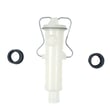
  • Washer Start/run Capacitor for Roper RTW4641BQ0 - Part W11158830

    Gearcase, motor and pump parts diagram

    Washer Start/run Capacitor

    Part #W10390451

    Replaced by #W11158830

    Info Icon
    Manufacturer substitution
    This part replaces W10390451. Substitute parts can look different from the original.
    In Stock
    $89.89
    48% OFF Was : $172.69Info Icon
    Minus Item
    Qty
    Plus Item
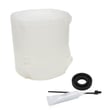
  • Hose Clamp for Roper RTW4641BQ0 - Part WP356138

    Top and cabinet parts diagram

    Hose Clamp

    Part #356138

    Replaced by #WP356138

    Info Icon
    Manufacturer substitution
    This part replaces 356138. Substitute parts can look different from the original.
    In Stock
    $36.09
    Minus Item
    Qty
    Plus Item
  • Energy Guide for Roper RTW4641BQ0 - Part W10063015

    Top and cabinet parts diagram

    Energy Guide

    Part #W10063015

    The manufacturer no longer makes this part, and there's no substitute part

  • Installation Instructions for Roper RTW4641BQ0 - Part W10240509

    Top and cabinet parts diagram

    Installation Instructions

    Part #W10240509

    The manufacturer no longer makes this part, and there's no substitute part

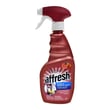
  • Affresh Kitchen And Appliance Cleaner for Roper RTW4641BQ0 - Part W10355010

    Optional parts (not included) diagram

    Affresh Kitchen And Appliance Cleaner

    Part #W10355010

    The manufacturer no longer makes this part, and there's no substitute part

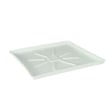
  • Washer Drain Protector for Roper RTW4641BQ0 - Part 367031

    Optional parts (not included) diagram

    Washer Drain Protector

    Part #367031

    The manufacturer no longer makes this part, and there's no substitute part

  • Bushing for Roper RTW4641BQ0 - Part W10256551

    Basket and tub parts diagram

    Bushing

    Part #W10256551

    The manufacturer no longer makes this part, and there's no substitute part

  • Ball - Vert for Roper RTW4641BQ0 - Part W10560146

    Basket and tub parts diagram

    Ball - Vert

    Part #W10560146

    The manufacturer no longer makes this part, and there's no substitute part

  • Technical Sheet for Roper RTW4641BQ0 - Part W10468340

    Top and cabinet parts diagram

    Technical Sheet

    Part #W10468340

    The manufacturer no longer makes this part, and there's no substitute part

  • Washer Owner's Manual for Roper RTW4641BQ0 - Part W10420470

    Top and cabinet parts diagram

    Washer Owner's Manual

    Part #W10420470

    The manufacturer no longer makes this part, and there's no substitute part

Roper Washer RTW4641BQ0 FAQs

Common problems on Roper washers like model RTW4641BQ0 include not draining or spinning, excessive vibration or loud noises, not filling, leaks, and poor cleaning. We start with load and installation checks (leveling, balanced loading, water supply) before testing parts such as the lid lock, drain pump, belt, and inlet valve.

Most common symptoms and what they usually point to

  • Won’t drain or won’t spin (clothes still wet): load too tight or unbalanced, small items stuck in the drain path, or a failing pump
  • Loud clicking, metallic noise, gurgling, or humming: items in pockets, normal drain sounds, or the washer shifting due to an unbalanced load
  • Won’t fill or fills slowly: hot and cold faucets not both on, kinked hoses, or clogged inlet screens
  • Stops mid-cycle or won’t start: lid not closed or lid lock issue
  • Shakes or walks during spin: washer not level, feet not firmly on the floor, or weak suspension

Quick checks we recommend first (no parts needed)

  1. Confirm the washer is plugged into a grounded outlet and has power (reset breaker if needed).
  2. Make sure the lid is fully closed; the washer pauses during some cycle phases.
  3. Load dry items in loose heaps around the basket wall; avoid tightly packing and avoid single-item loads.
  4. Turn both hot and cold faucets on; straighten any kinked inlet hoses.
  5. Check pockets and use garment bags for small items to help prevent drain restrictions.

Parts that commonly solve these problems on RTW4641BQ0

Symptom Common part to inspect What it affects
Won’t start or stops Washer lid lock assembly W10404050 Confirms lid is locked so the washer can run/spin
Won’t drain/spin Washer drain pump assembly WPW10276397 Pumps water out so the washer can spin properly
Won’t agitate/spin well Washer drive belt WPW10006384 Transfers motor power to the drive system
Shakes excessively Washer damper W10780045 Helps control tub movement during spin

Why it matters

Most “major” washer complaints are caused by installation and loading issues (leveling, balanced loads, water supply). Fixing those first prevents repeat failures and helps you avoid replacing parts that are still good.

For cycle behavior, loading guidance, and troubleshooting steps specific to RTW4641BQ0, use the RTW4641BQ0 owner’s manual.

Last updated: January 2026

Yes, Roper washers are good if you want a simple, budget-friendly top-load washer that focuses on basic washing performance. For the Roper RTW4641BQ0, the design is intentionally no-frills; good results depend on correct loading, proper water supply, and routine maintenance.

What “good” usually means for a Roper washer

Roper washers are built around straightforward cycles and fewer features. That typically translates to dependable day-to-day washing when the machine is installed correctly and used as recommended in the owner's manual.

Common strengths

  • Simple controls and easy operation
  • Solid basic cleaning for everyday loads
  • Fewer features to troubleshoot compared with feature-heavy models
  • Parts support is usually strong for wear items (belt, actuator, lid lock)

Common complaints (often fixable)

  • Noisier operation than premium models
  • Unbalanced loads if items are bulky or loaded unevenly
  • Cooler “hot” and “warm” washes than older washers (energy-saving temperature control)
  • Rinsing issues if too much detergent is used

Quick checks that improve performance on RTW4641BQ0

These steps address the most common “not washing well” or “acting weird” complaints.

  • Confirm both hot and cold hoses are connected and turned on (and not reversed)
  • Check inlet valve screens for clogs and remove hose kinks
  • Measure detergent carefully; excess suds can cause poor operation and rinsing
  • Load by distributing items evenly around the basket (avoid tight tangles)
  • Close the lid and allow time for the lid to unlock after spin stops

When a “good washer” starts needing parts

If the washer will not start, will not spin, or stops mid-cycle, a worn or failed component is often the real issue, not the brand.

Symptom Common area to inspect Example part for this model
Won’t lock or won’t start Lid lock system Washer lid lock assembly W10404050
Won’t agitate or spin correctly Drive system Washer drive belt WPW10006384
Won’t shift between agitate and spin Shifter/actuator Washer actuator WPW10006355

Why it matters

Choosing a “good” washer is really about matching expectations. Roper models like RTW4641BQ0 prioritize straightforward washing over extra features; using the right load size, detergent amount, and hose setup makes a bigger difference than most people expect.

Last updated: January 2026

The Roper washer RTW4641BQ0 has a 3.6 cu. ft. wash basket capacity. This is the tub volume used to describe how much laundry the top-load washer can handle per load; confirm the spec in the RTW4641BQ0 owner's manual.

What “3.6 cu. ft.” means for real loads

A 3.6 cu. ft. agitator top-load washer is sized for everyday family laundry and medium-to-large mixed loads.

  • Load items loosely so water and detergent circulate around fabrics
  • Keep the top of the load below the tub rim; the lid should close without pushing
  • For bulky items (comforters, jackets), wash 1 large item at a time and add a few small items to balance
  • If the washer bangs or walks during spin, reduce load size and redistribute
  • Use the correct water level and cycle for the fabric type (see cycle guidance in the manual)

Quick capacity comparison

Washer style Typical capacity What it’s best for
Traditional top-load with agitator (like RTW4641BQ0) 3.2 to 3.8 cu. ft. Mixed loads, towels, jeans
High-efficiency top-load (impeller) 4.0 to 5.5 cu. ft. Larger loads, bulky items

Why it matters

Capacity directly affects cleaning and spin performance. Overloading a 3.6 cu. ft. basket reduces agitation, can leave detergent residue, and increases out-of-balance spinning that stresses suspension parts like the washer damper W10780045.

Last updated: January 2026

Most common symptoms to help you fix your washers

Choose a symptom to see related washer repairs.

Main causes: clogged drain hose, house drain clogged, bad drain pump, water-level pressure switch failure, bad control b…

Main causes: broken lid switch or lid lock, bad pressure switch, broken shifter assembly, faulty control system…

Main causes: worn agitator dogs, bad clutch, broken motor coupler, shifter assembly failure, broken door lock, suspensio…

Main causes: water heater failure, bad water temperature switch, faulty control board, bad water valve, faulty water tem…

Main causes: lack of electrical power, wiring failure, bad power cord, electronic control board failure, bad user interf…

Main causes: no water supply, bad water valves, water-level pressure switch failure, control system failure, bad door lo…

Main causes: unbalanced load, loose spanner nut, worn drive block, broken shock absorber or suspension spring, debris in…

Main causes: leaky water inlet valve, faulty water-level pressure switch, bad electronic control board…

Main causes: bad lid switch or door lock, bad timer or electronic control board, wiring failure, bad water inlet valve a…

Repair guides for electric ranges

How to replace an oven temperature sensor on an electric range

How to replace an oven temperature sensor on an electric range

These step-by-step instructions guide you through replacing an oven temperature sensing probe.…

Repair time and Difficulty

 15 minutes or less
How to replace an electric range oven control board

How to replace an electric range oven control board

If the electronic oven control board isn't powering the bake and broil functions, you can replace it in less than half a…

Repair time and Difficulty

 15 minutes or less
How to replace a range surface element control switch

How to replace a range surface element control switch

The surface element control switch lets you turn the stovetop elements on and off, and to set the heat level. These step…

Repair time and Difficulty

 15 minutes or less

Effective articles & videos to help repair your washers

Use the advice and tips in these articles and videos to get the most out of your washer.

How auto-load sensing washers work (and when they don't)

How auto-load sensing washers work (and when they don't)

Your washer barely fills or seems stuck in sensing mode? Find out how auto-load sensing and Precise Fill features work, …

How to remove the main control board and user interface from a Maytag Epic Z front-load washer

How to remove the main control board and user interface from a Maytag Epic Z front-load washer

Get step-by-step instructions for removing the main electronic control board and the control panel from a Maytage Epic Z…

Using a wiring schematic to trace a current video

Using a wiring schematic to trace a current video

Find out what’s wrong with your appliance by following a circuit.…

Parts & More

Dishwasher
Dryer
Front-Engine Lawn Tractor
Furnace
Garage Door Opener
Gas Cooktop
Gas Range
Gas Snowblower
Miter Saw
Parts
Refrigerator
Snowblower Attachment
Speaker
Top-Mount Refrigerator
Toys & Games
Wet/Dry Vacuum