 Owner’s manual

Can I replace dishwasher parts myself?
Yes. On the Jenn-Air JDB4000AWS dishwasher, we can usually replace simple, non-plumbing parts (like rack stops, a door handle, or a latch) with basic tools and careful disassembly. Always shut off power at the breaker and turn off the water supply before starting; follow the steps in the owner's manual.
Good DIY repairs vs. repairs to schedule
Many dishwasher fixes are straightforward; others involve water connections, electrical testing, or leak risk.
- Good DIY candidates: rack stops, door strike, door handle, rinse-aid cap
- Use extra caution: anything involving hoses, clamps, or the fill system
- Often best for a technician: heating and control-related diagnosis, persistent leaks, repeated breaker trips
Parts on this model that are commonly DIY-friendly
If your symptom matches a worn or broken mechanical part, replacement is usually the fastest path.
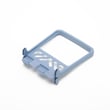
- Rack stop WPW10261227 (rack won’t stay on the track)
- Dishwasher door handle WPW10130695 (handle loose or broken)
- Door strike WP99002644 (door won’t latch consistently)
- Latch WPW10275768 (door won’t stay closed or cycle won’t start)
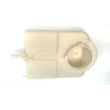
- Dishwasher rinse-aid dispenser cap WP99002614 (rinse aid leaks or cap won’t seal)
Quick safety and prep checklist
Before you remove panels or disconnect anything, we use this checklist.
- Turn OFF the dishwasher circuit breaker
- Turn OFF the dishwasher water supply valve
- Take photos of wire and hose routing before removal
- Keep screws grouped by location (inner door vs. frame)
- Run a short test cycle after reassembly and check for leaks
DIY difficulty guide (typical)
| Repair type | Typical difficulty | Main risk |
|---|---|---|
| Door hardware (handle/strike/latch) | Easy | Misalignment causing no-start or leaks |
| Rack hardware (rack stops/retainers) | Easy | Track damage if forced |
| Water inlet or drain hose work | Medium | Leaks from loose clamps or routing |
| Heating or sensor troubleshooting | Medium to hard | Misdiagnosis, electrical testing |
Why it matters
A correct DIY repair saves time and restores cleaning and drying performance, but a rushed repair can cause door leaks or water damage. The manual also includes important safety guidance (for example, hot water and safe loading practices) that helps prevent repeat problems.
Last updated: February 2026
What are the parts of the dishwasher?
A Jenn-Air JDB4000AWS dishwasher is built around a wash system (spray arms, pump, filters), a fill and drain system (water inlet valve, drain hose), and door components (latch, strike, seal, handle). These parts work together to wash, heat, and dry your dishes.
Main dishwasher parts (what they do)
- Heating system: heats wash water and supports drying; avoid touching the heater after a cycle because it stays hot
- Wash system: spray arms, circulation pump/impeller, chopper, and filter components that move water and break up food soil
- Fill system: water inlet valve that lets water into the tub at the start of a cycle
- Drain system: drain hose and pump path that push used water out
- Door system: latch and strike to keep the door shut, plus the door seal to help prevent leaks
- Racks and rack hardware: upper and lower racks, rack stops, and basket(s) that hold dishes in place
Common JDB4000AWS parts you can replace
These are examples of parts listed for this model that customers replace often:
- Heater element W10283681
- Dishwasher water inlet valve W11082871
- Dishwasher drain hose WP99002652
- Latch WPW10275768
- Dishwasher door seal WP99002589
- Dishwasher door handle WPW10130695
Quick reference table
| System | What you may notice when it fails | Example part for JDB4000AWS |
|---|---|---|
| Heating/drying | Dishes stay wet; no heat | Heater element (W10283681) |
| Filling | Dishwasher does not fill or fills slowly | Water inlet valve (W11082871) |
| Draining | Water left in bottom of tub | Drain hose (WP99002652) |
| Door/latch | Won’t start or stops when door moves | Latch (WPW10275768) |
| Leak protection | Drips at the door edges | Door seal (WP99002589) |
Why it matters
Knowing which system a symptom belongs to helps you troubleshoot faster and order the right replacement part. For example, poor drying often points to the heating system and rinse aid use, while standing water points to the drain system.
Helpful tips from the manual
- Load so items do not block spray arms from spinning freely.
- Use rinse aid regularly to improve drying and reduce spotting.
- Disconnect power before servicing internal components.
For diagrams, loading guidance, and safety notes specific to this dishwasher, use the owner's manual.
Last updated: February 2026
What is the thing at the bottom of my dishwasher?
In a Jenn-Air JDB4000AWS dishwasher, the “thing” you often notice at the bottom of the tub is the heating element. It heats the wash water and helps with drying; it also gets very hot during and right after a cycle (see the owner's manual).
What you might be seeing at the bottom
Depending on where you’re looking and what’s installed on your model, the bottom area can include several components.
- Heating element: a metal loop/rod near the base that heats water and boosts drying
- Filter and sump area: where water is pulled in and food soil is collected
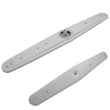
- Wash arm base: the lower spray arm hub and feed tube connection
- Standing water: a small amount can be normal at the end of a cycle on some designs
- Food particles: larger debris can settle and should be removed periodically
Safety first (important)
The manual specifically warns about the heating element location and temperature.
- Disconnect power before servicing or reaching into the base area
- Do not touch the heating element during or immediately after a cycle
- Let the dishwasher cool before inspecting the bottom of the tub
Quick checks to identify it
Use these simple cues to confirm what you’re looking at.
| What it looks like | Most likely part | What it does |
|---|---|---|
| Metal loop/rod running along the bottom | Heating element | Heats water; improves drying |
| Plastic screen/plate area near the center | Filter/sump components | Traps soil; protects pump |
| Plastic arm that spins | Lower wash arm | Sprays water to clean dishes |
If your dishwasher is not drying well or cycles seem to run long with heating delays, the heater circuit is one area we check. For replacement, match the part to your model; the correct heater for this model is the heater element W10283681.
Why it matters
Knowing what’s normal at the bottom of the tub helps prevent accidental burns and helps you troubleshoot symptoms like poor drying, odor, or leftover debris more accurately.
Last updated: February 2026
Why is my Jenn-Air dishwasher leaking from the bottom?
If your Jenn-Air JDB4000AWS dishwasher is leaking from the bottom, the most common causes are oversudsing, the dishwasher not being level, or a leak in a water-carrying part such as the drain hose, inlet valve, or door sealing surfaces. Stop the cycle and address the leak right away to protect flooring.
Quick checks that fix many bottom leaks
- Confirm you are using only automatic dishwasher detergent; hand soap causes suds and overflow.
- Measure detergent carefully (use less in soft water); suds can push water out of the tub.
- Check that the dishwasher is level; a tilt can direct water toward the front or corners.
- Inspect the door sealing area for debris; wipe the inner door edge and tub lip.
- Make sure the rinse-aid cap is tight so it does not seep and create excess suds.
For model-specific use and care guidance (including detergent and overflow tips), follow the owner's manual.
Parts to inspect on the JDB4000AWS
Leaks from the bottom often trace back to a hose connection, valve seep, or a door leak that runs down into the base.
| What to check | What you may notice | Related part on this model |
|---|---|---|
| Drain path | Water appears after draining; damp under sink | Dishwasher drain hose WP99002652 |
| Fill system | Leak during fill; slow drip even when off | Dishwasher water inlet valve W11082871 |
| Door sealing surfaces | Water at front corners; moisture along door edge | Dishwasher door seal WP99002589 |
| Latch and strike alignment | Door not pulling tight; intermittent leaks | Door strike WP99002644 and latch WPW10275768 |
Why it matters
A bottom leak is not just a puddle; it can warp flooring, damage cabinets, and lead to corrosion in the dishwasher base. Fixing oversudsing, leveling, and small hose or seal leaks early prevents bigger repairs.
When the leak happens helps pinpoint the cause
- Only during fill: focus on the inlet valve and fill connections.
- Mostly during wash: check door seal area and spray-related splashing from loading issues.
- Mostly during drain: inspect the drain hose routing and clamps.
For a step-by-step troubleshooting walkthrough, use our dishwasher leaks video.
Last updated: February 2026





