 Installation guide
 Owner’s manual


What is the life expectancy of a Whirlpool WTW8700EC0 washer?
A Whirlpool WTW8700EC0 top-load washer typically lasts 10 to 14 years with normal household use. Lifespan depends most on load size, cycle frequency, leveling, and routine care; staying on top of vibration, draining, and filling issues helps you reach the upper end of that range (see the WTW8700EC0 owner's manual).
Most Whirlpool top-load washers in this class land in the 10 to 14 year range. These factors move the needle the most:
- Heavy weekly volume (multiple loads per day) shortens life faster than occasional use
- Overloading stresses the drive system, clutch, and suspension
- Poor leveling increases vibration and wear on the tub suspension
- Hard water and detergent overuse can contribute to residue and odor issues
- Ignoring early symptoms (slow drain, weak fill, loud spin) often leads to bigger repairs
If your WTW8700EC0 is getting noisier, shaking more, or struggling to spin or drain, these model-matched parts are common suspects:
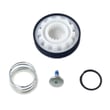
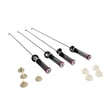
- Damper assembly, tub suspension (set of 4-includes suspension bushings and suspension balls) W11130356 (excessive shaking, off-balance)
- Washer drain pump WPW10581874 (won’t drain, slow drain, water left in tub)
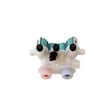
- Washer water inlet valve W11165546 (won’t fill, fills slowly, hot or cold water issues)
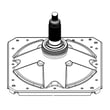
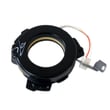
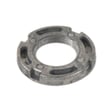
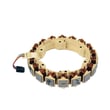
- Slider W10734521 and clutch coil W10754448 (spin problems, grinding or slipping symptoms)
Use this as a practical rule of thumb for a WTW8700EC0:
| Washer age | If it needs one moderate repair | If it needs multiple major repairs |
|---|---|---|
| 0 to 5 years | Repair usually makes sense | Repair (unless repeated failures) |
| 6 to 10 years | Repair if overall condition is good | Compare total cost to replacement |
| 11 to 14 years | Repair if it’s a single clear failure | Replacement often makes more sense |
Knowing the typical life expectancy helps you plan: you can budget for a repair (like a drain pump or suspension kit) and avoid secondary damage from continued use when the washer is vibrating, not draining, or not filling correctly.
Last updated: February 2026
Can too much detergent cause an E3 error?
Yes. In a Whirlpool WTW8700EC0 washer, using too much detergent can create excess suds that confuse the water-level sensing system and interfere with draining; that can trigger an E3-type overflow or drain-related error and stop the cycle.
- Press Pause/Cancel to stop the cycle.
- If the tub is full, run Drain/Spin (or a drain-only option if available).
- Run a Rinse/Spin with no detergent to clear leftover suds.
- Use HE detergent only and measure carefully (especially with soft water).
- If you used pods, switch to liquid or powder temporarily so you can reduce the dose.
Most high-efficiency top-load washers like the WTW8700EC0 need far less detergent than older machines.
| Load size | Typical HE detergent starting point | When to use less |
|---|---|---|
| Small | 1 to 2 teaspoons | Soft water, lightly soiled |
| Medium | 1 to 2 tablespoons | Concentrated detergent |
| Large | 2 to 3 tablespoons | High-efficiency “2X/3X” formulas |
For the exact dispenser and cycle guidance for your washer, follow the WTW8700EC0 owner's manual.
After you correct detergent use, repeated E3-type errors usually point to a drain or water-level sensing problem.
Check these common causes:
- Kinked, crushed, or partially clogged drain hose (see washer drain hose W11244231)
- Slow or failed drain pump (see washer drain pump WPW10581874)
- Suds still present from repeated overdosing (run 1 to 2 rinse cycles)
- Installation issues such as an incorrect standpipe height or siphoning (follow the installation guide)
Too many suds can trap air in the pressure system and slow water movement through the drain path. That can make the washer “think” it has an overfill or drain problem, even when the water level is normal.
Last updated: February 2026
What problems are common with the WTW8700EC0?
Common problems we see with the Whirlpool WTW8700EC0 washer include not filling, not draining, not spinning or agitating, loud noise during spin, leaking, and out-of-balance shaking. These issues usually trace back to the water inlet system, drain system, suspension, or the drive components.
- Won’t fill or fills slowly: clogged inlet screens, household water supply issue, or a failing inlet valve
- Won’t drain: kinked/clogged drain hose, debris in the pump, or a failing drain pump
- Won’t spin or stops mid-cycle: load out of balance, lid not closing/locking properly, or a drive system problem
- Loud grinding/clicking during agitation or spin: worn clutch/slider components or drive wear
- Excessive vibration or banging: worn suspension parts or an uneven floor/leveling issue
- Leaks: loose hose connections, cracked drain hose, or tub-to-pump hose issues
- Confirm both hot and cold supply valves are fully open.
- Make sure the drain hose is not pushed too far into the standpipe and is not kinked.
- Run a smaller test load; bulky items can trigger repeated rebalancing.
- Level the washer front-to-back and side-to-side.
- Check for standing water after a cycle; that points strongly to a drain restriction.
If symptoms match, these model-specific parts are frequent fixes:
- Filling problems: washer water inlet valve W11165546
- Draining problems: washer drain pump WPW10581874 and washer drain hose W11244231
- Vibration/banging: damper assembly, tub suspension (set of 4-includes suspension bushings and suspension balls) W11130356
- Spin/agitate noise or weak movement: slider W10734521 and clutch coil W10754448
| Symptom | Most likely area | Common part to check first |
|---|---|---|
| Won’t fill | Water inlet | Washer water inlet valve |
| Won’t drain | Drain pump/hose | Washer drain pump |
| Banging/shaking | Suspension/leveling | Damper assembly, tub suspension |
| Grinding/clicking | Drive/clutch | Slider |
Catching a fill, drain, or suspension problem early helps prevent cycle interruptions, water leaks, and extra wear on the drive system. For model-specific diagnostics and cycle behavior, use the owner's manual.
Last updated: February 2026




