Owner’s manual
 View engine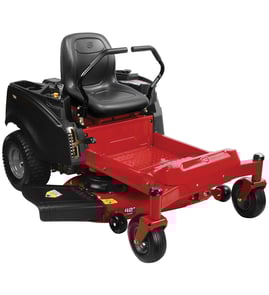



How to identify a lawn mower engine?
To identify the engine on your Craftsman 247204111 rear-engine riding mower, locate the engine’s ID label or stamped numbers and record the engine manufacturer, model, type/spec, and code/serial. Those identifiers are what parts lookups and service procedures use.
Most riding mower engines have the identification in one of these common spots:
- On the blower housing/shroud (the sheet metal cover over the flywheel)
- Near the muffler area on the shroud or heat shield
- Near the air cleaner housing
- On the valve cover or a nearby flat machined surface
- On a sticker/foil label on the engine shroud (sometimes under grime)
If you do not see it right away, wipe the area with a rag and mild degreaser, then use a flashlight to read the stamping.
Engine tags often include multiple lines. We recommend capturing all of these:
- Engine brand (example: Briggs and Stratton, Kohler)
- Model (the engine family)
- Type/trim/spec (the exact configuration)
- Code/date or serial number (production run details)
| ID on engine tag | What it tells you | Why it matters |
|---|---|---|
| Model | Engine family | Gets you into the right parts list |
| Type/spec | Exact build | Ensures correct carburetor, starter, filters |
| Code/serial | Production run | Matches updates and service bulletins |
Your mower model number (247204111) identifies the tractor and deck, but the engine model/type identifies engine-specific parts like the starter, carburetor, ignition coil, and air filter. Using both prevents wrong-part returns and repeat repairs.
- Confirm the mower model tag reads 247204111
- Record the engine IDs exactly as shown (including dashes)
- Compare belt and blade sizes only after confirming the correct deck configuration
For model-specific diagrams and maintenance references, use the 247204111 owner’s manual.
Last updated: January 2026
What model number is the Craftsman 247204111?
The model number for this Craftsman rear-engine riding mower is 247204111. You will use 247204111 to match the correct parts diagrams, belts, blades, and hardware for your mower, and to confirm compatibility before ordering.
Most Craftsman riding mowers have a model/serial tag in one of these common locations:
- Under the seat on the seat pan or frame
- On the rear frame near the hitch plate
- Along the left or right side of the frame rail
- Near the engine mounting area (on the frame, not the engine)
- On a decal near the footrest area
If the tag is dirty or faded, wipe it clean and use a flashlight; taking a close-up photo often makes the numbers easier to read.
When you search parts for 247204111, match these details exactly:
- Model number: 247204111 (do not add spaces or extra digits)
- Product type: rear-engine riding mower
- Part number on the old part (when available)
- Diagram location (deck, drive, steering, electrical)
For model-specific diagrams and identification help, use the 247204111 owner’s manual.
| Item type | Example from this mower’s parts list | What it means |
|---|---|---|
| Model number | 247204111 | Identifies the mower |
| Blade part number | 942-0616A | Identifies a specific blade |
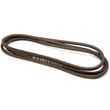
| Belt part number | 954-04317A | Identifies a specific belt |
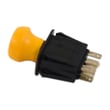
Using the exact model number prevents common fit issues, especially with deck components (blades, mandrel assemblies), drive belts, and electrical parts like interlock switches.
Last updated: January 2026
Where to find model number on riding mower?
On a Craftsman riding mower like model 247204111, the model number is printed on an ID label placed on the frame or body near serviceable areas. The most common spots are under the seat, on the frame near the rear wheels, or near the engine housing; confirm the exact location in the 247204111 owner's manual.
- Under the seat: lift the seat and look on the seat pan or frame crossmember
- Rear frame area: between or just above the rear wheels
- Right or left side of the frame: near the footrest area or frame rail
- Engine area: on or near the starter housing or engine shroud
- Cutting deck (if equipped): on the deck shell edge or near the discharge opening
The ID label typically includes multiple identifiers. Record these exactly (including dashes):
| Label item | What it’s used for | Example format |
|---|---|---|
| Model number | Finds the correct parts diagrams and lists | 247204111 |
| Serial number | Identifies production run details | Letters and numbers |
| Engine model/type/code (if shown) | Helps match engine-specific parts | Multiple fields |
- Wipe dirt and grass off the frame with a rag; labels are often hidden by debris.
- Use a flashlight and look along flat frame surfaces where a sticker can adhere.
- If the label is damaged, check for a second label under the seat or on the rear frame.
Using the exact model number prevents ordering the wrong belt, blade, switch, or hardware for your Craftsman mower. It also helps match common service parts like a ground drive belt or interlock switch to the correct configuration.
Last updated: January 2026
Is it worth replacing a lawn mower engine?
Yes, it’s worth replacing the engine on your Craftsman 247204111 rear-engine riding mower when the deck, transmission, and steering are still solid and the engine cost stays well below the cost of replacing the entire mower. When the engine job approaches about half the price of a comparable new mower, replacement usually makes more sense.
- Replace the engine if the mower frame, deck shell, and controls are straight and not heavily rusted
- Replace the engine if you want to keep your current attachments and setup (bagger, mulch kit, etc.)
- Replace the engine if the transmission drives smoothly and does not slip or whine under load
- Replace the engine if you can do the labor yourself or have a shop you trust
- Replace the engine if the failure is internal (low compression, rod knock) and not a simple fuel or ignition issue
| Option | Upfront cost | Time/complexity | Best when |
|---|---|---|---|
| Repair existing engine | Low to medium | Medium to high | Problem is carburetion, ignition, or minor leaks |
| Replace engine/short block | Medium to high | High | Chassis is in great shape and you want a long service life |
| Replace mower | High | Low | Multiple major systems are worn or you want a warranty on everything |
Many “bad engine” symptoms are actually electrical or safety-interlock issues. Check these first:
- Battery condition and cable connections (clean and tight)
- Safety switches and wiring (seat, brake, PTO interlock)
- Fuel quality and fuel flow (old fuel, clogged filter, stuck float)
- Spark at the plug and ignition shutoff wire condition
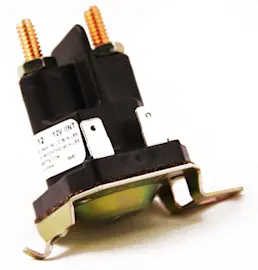
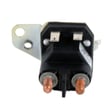
If the starter will not crank, a failed solenoid is common; the lawn tractor starter solenoid 725-06153 is one of the key parts in that circuit.
An engine swap is a big job, but it can be the most cost-effective way to extend the life of a good Craftsman riding mower. Making the decision based on the condition of the deck, drive system, and electrical safety circuits prevents spending engine money on a mower that is already near end-of-life.
For model-specific maintenance intervals, safety checks, and operating guidance, use the 247204111 owner’s manual.
Last updated: January 2026