Owner’s manual
 Error Codes


What is the average lifespan of a Kenmore Elite refrigerator?
Most Kenmore Elite refrigerators, including model 79578773800, typically last 10 to 15 years. With consistent maintenance (especially cleaning condenser coils and keeping door gaskets sealing well), it’s common to reach the upper end of that range before major sealed-system or compressor repairs become the deciding factor.
Typical lifespan and what affects it
A refrigerator’s life is usually determined by how hard the cooling system has to work and how well airflow and sealing are maintained.
- Condenser coil cleanliness: Dust buildup makes the compressor run longer and hotter.
- Door gasket condition: Poor sealing causes temperature swings and longer run times.
- Room temperature and usage: Hot kitchens and frequent door openings increase run time.
- Ice maker and water system health: Leaks or restrictions can create secondary issues.
- Preventive care: Regular cleaning and correct temperature settings reduce wear.
For model-specific care and cleaning guidance, use the 79578773800 use & care guide.
Maintenance checklist to help reach 15 years
These steps are the most practical ways to extend service life on a bottom-mount refrigerator.
- Vacuum and brush the condenser area regularly (unplug first).
- Keep food organized to reduce door-open time.
- Clean and inspect door gaskets; wipe the door liner and gasket sealing surfaces.
- Confirm proper airflow inside; avoid blocking vents.
- Watch for water leaks and address them early (tubing, fittings, inlet valve).
Quick “what to do” guide
| What you notice | What it often means | What to do next |
|---|---|---|
| Compressor seems to run a lot | Warm room, frequent openings, dirty coils | Clean coils, reduce openings, verify temps |
| Frost buildup or warm fridge | Airflow/defrost issue | Check vents, look for ice buildup, schedule service if persistent |
| Water under fridge | Drain or water line issue | Inspect drain path and water tubing |
Why it matters
A Kenmore Elite refrigerator can run 40% to 80% of the time under normal conditions, and even more in warmer conditions. Keeping coils clean and doors sealing reduces run time, which directly reduces compressor wear and helps the refrigerator reach its expected lifespan.
Last updated: January 2026
What year did the Kenmore Elite come out?
Kenmore Elite was introduced as a premium Kenmore line in the late 1990s; for your specific Kenmore Elite bottom-mount refrigerator model 79578773800, the exact build year is determined by the serial number on the appliance, not by the model name alone. Use the serial number date code guidance in the 79578773800 owner's manual to pinpoint the manufacturing timeframe.
How to find the manufacture year for model 79578773800
Most Kenmore Elite refrigerators have a rating label with the model and serial number. Common locations include:
- Inside the fresh food compartment on a side wall
- On or near the ceiling of the refrigerator compartment
- Along the door liner edge (hinge side)
- Behind the toe grille or lower kickplate area
- On the back exterior panel
Once you have the serial number, match its date code format to the decoding notes in the manual.
Why the serial number matters (more than the model name)
“Kenmore Elite” identifies a feature tier, not a single release year. Kenmore Elite refrigerators were produced across many years with different designs, controls, and parts. The serial number ties your exact unit to a specific production period, which helps when ordering parts like a water inlet valve, door gasket, or evaporator fan motor.
Quick timeline (what “Kenmore Elite” usually means)
| Item | What it tells you | What it does not tell you |
|---|---|---|
| Kenmore Elite branding | Premium line positioning | Exact year your refrigerator was built |
| Model number 79578773800 | Design family and configuration | Exact production date |
| Serial number | Manufacturing date code | Nothing about feature tier |
Related parts that often depend on the exact production run
If you are troubleshooting or ordering parts, confirming the serial number first prevents mismatches.
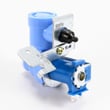
- Water supply issues: refrigerator water inlet valve MJX41178908
- Cooling noise or warm temps: refrigerator evaporator fan motor 4681JB1027C
- Frost buildup or defrost problems: lg refrigerator defrost heater 5300JK1005D
- Leaks or icing at the bottom: refrigerator drain tube 5251JA3003D
Why it matters
Getting the correct year (via serial number) helps us match the right Kenmore-compatible parts and avoid returns, especially for refrigeration and water system components.
Last updated: January 2026
What are the common problems with Kenmore Elite refrigerators?
On the Kenmore Elite 79578773800 bottom-mount refrigerator, the most common problems we see are poor cooling, frost or ice buildup, water leaks, and unusual fan or compressor noises. Many issues trace back to airflow being blocked, dirty condenser coils, a defrost problem, or a water supply component.
Most common symptoms and what usually causes them
- Not cooling well (fresh food or freezer): blocked air vents, dirty condenser coils, failing evaporator fan motor, or a defrost issue
- Frost or ice buildup: door not sealing, frequent door openings, or a defrost heater/control problem
- Water leaking inside or under the refrigerator: clogged/iced drain path or a cracked drain tube
- Ice maker or dispenser slow: water filter overdue, low water pressure, or a weak water inlet valve
- Noises (buzzing, clicking, rattling): fan blade hitting ice, worn fan motor, or vibration in the machine compartment
Quick checks we recommend first (safe, no parts guessing)
- Confirm vents are not blocked; the manual warns that blocked vents interrupt airflow and cause temperature and moisture problems.
- Adjust temperatures in small steps and wait 24 hours between adjustments (the manual recommends this).
- Clean condenser coils (dust buildup commonly causes warm temps and longer run times).
- If you have a leak, inspect the drain area and the drain tube for blockage or damage.
- If water flow is weak, replace the water filter and reset the filter indicator per the manual.
Parts that commonly fix these problems on model 79578773800
| Symptom | Part that often relates | Example part for this model |
|---|---|---|
| Warm temps, noisy airflow | Evaporator fan system | Refrigerator evaporator fan motor 4681JB1027C or refrigerator evaporator fan blade 5901JA1021A |
| Frost buildup, warm fridge | Defrost system | Lg refrigerator defrost heater 5300JK1005D |
| Water under/inside unit | Drain system | Refrigerator drain tube 5251JA3003D |
| No ice, slow dispenser | Water supply | Refrigerator water inlet valve MJX41178908 |
Why it matters
Cooling and ice-making problems usually get worse when airflow is restricted or the refrigerator cannot shed heat at the condenser. Fixing the root cause protects food, reduces run time, and helps prevent repeat icing and leaking.
For model-specific operating steps (temperature adjustment timing, airflow guidance, filter replacement and reset), use the 79578773800 owner's manual.
Last updated: January 2026
What size is Kenmore refrigerator model 79578773800?
Kenmore Elite model 79578773800 is a bottom-freezer refrigerator; “size” usually means the exterior dimensions (width, depth, height) and the interior capacity (cubic feet). For the exact measurements for your specific 795.7877-series unit, we recommend using the dimensions and clearance specs listed in the 79578773800 use & care guide.
What “size” can mean (and what to check)
To avoid ordering the wrong part or planning the wrong space, we match “size” to the situation:
- Overall width: needed for doorway clearance and cabinet opening
- Overall height: needed for overhead cabinet clearance
- Overall depth: varies a lot depending on handles and door swing
- Capacity (cu. ft.): helps compare storage volume, not fit
- Required clearances: space around the cabinet for airflow and door opening
Typical size range for this style of Kenmore bottom-freezer
Most Kenmore bottom-freezer refrigerators in this family are in this general range:
| Measurement | Typical range (approx.) | What changes it most |
|---|---|---|
| Width | 30 to 33 inches | door design, hinge style |
| Height | 67 to 70 inches | leveling legs, hinge caps |
| Depth | 30 to 35 inches | handles, door thickness |
How we recommend measuring your refrigerator
Use a tape measure and record to the nearest 1/8 inch:
- Width: widest point of the cabinet (include hinges if they stick out)
- Height: floor to top of hinge cover (after leveling)
- Depth: back of cabinet to front of door, then add handle depth if needed
- Door swing clearance: measure how far the doors extend when opened
Why it matters
Accurate dimensions help you confirm the refrigerator will fit your space, ensure proper air circulation, and prevent issues like warm temperatures or noisy operation caused by tight clearances.
Last updated: January 2026