Owner’s manual



How much should a new 2.5 ton AC unit cost?
A new 2.5 ton central AC outdoor unit typically costs about $1,500 to $4,000 for the equipment only; installed system pricing is typically about $5,000 to $12,000 depending on efficiency, labor, and whether the indoor coil, line set, or electrical work must be updated. For Goodman CK30-1A, confirm electrical and wiring requirements in the CK30-1A owner's manual before planning a replacement.
What changes the price the most
- SEER2/efficiency level: higher efficiency usually costs more up front.
- What is being replaced: outdoor condenser only vs. condenser plus indoor coil/air handler.
- Refrigerant and compatibility: matching the outdoor unit to the indoor coil and metering device.
- Ductwork and airflow: repairs, sealing, or resizing can add cost.
- Electrical and pad work: disconnect, breaker sizing, whip, and condenser pad condition.
- Permits and labor rates: vary by region and job complexity.
Typical cost ranges (quick view)
| What you’re buying | Typical range | Notes |
|---|---|---|
| Outdoor unit only (2.5 ton) | $1,500 to $4,000 | Equipment price varies by brand and efficiency |
| Outdoor unit + indoor coil | $2,500 to $6,000 | Helps ensure proper match and performance |
| Full installed replacement | $5,000 to $12,000 | Often includes refrigerant work, startup, and permits |
What to check before you buy
- Verify the tonnage (2.5 ton is about 30,000 BTU/h) and that your home load supports it.
- Confirm voltage and breaker requirements for the existing outdoor unit.
- Inspect the line set (size, condition, and whether it needs flushing or replacement).
- Confirm the indoor coil is compatible and sized correctly.
- Plan for common service items that affect reliability, such as a weak run capacitor (see capacitor 12972).
Why it matters
A 2.5 ton AC that is mismatched (coil, refrigerant setup, airflow, or electrical) can short-cycle, cool poorly, and cost more to run. Pricing is really a reflection of how much of the system must be brought up to correct, safe operating condition.
If you’re also planning maintenance parts for your Goodman CK30-1A, you can shop the parts list for this model first, or search by model number on Sears PartsDirect.
Last updated: February 2026
What are common problems with Goodman air conditioners?
Common problems we see with Goodman air conditioners (including the CK30-1A outdoor unit) are not cooling well, weak airflow, frequent cycling, unusual noises, and electrical no-start issues. Many are caused by maintenance or airflow restrictions; others point to failed electrical components such as a run capacitor.
Most common symptoms and what they usually mean
- Not cooling or cooling unevenly: dirty condenser coil, restricted indoor airflow, low refrigerant charge
- Outdoor unit will not start: tripped breaker, failed contactor, failed run capacitor
- Hums but fan or compressor will not run: weak/failed capacitor, seized motor, wiring issue
- Short cycling (starts and stops often): dirty coil, airflow problem, thermostat/control issue
- Rattling, buzzing, or grinding: loose panels, failing fan motor, debris in the fan area
Quick checks you can do safely
Turn power off at the disconnect and breaker before inspecting the outdoor unit.
- Confirm the thermostat is calling for cooling and set below room temperature
- Check the breaker and outdoor disconnect for a reset condition
- Inspect the outdoor coil for dirt, grass clippings, or blocked airflow (keep clearance around the unit)
- Listen for a steady hum (often electrical) versus rattling (often mechanical/loose parts)
- Look for obvious wire damage or burnt connectors
For wiring and component locations specific to your unit, use the CK30-1A owner's manual.
Parts that commonly fail (and when to suspect them)
Electrical problems are among the most common service calls on outdoor condensing units.
| Symptom | Common culprit | What you notice first |
|---|---|---|
| Unit will not start | Run capacitor | Humming, hard starting, fan not spinning |
| Vibrations or rubbing | Isolators/grommets | Rattle, metal-on-metal noise |
| Intermittent operation | Loose connections | Random shutoffs, heat at terminals |
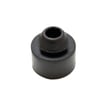
If your CK30-1A hums, struggles to start, or the fan will not keep spinning, the capacitor 12972 is a common suspect. If you have vibration noise after service or panel work, replacing a worn isolator such as the grommet B1339530 can help reduce rattles.
Why it matters
Airflow and electrical issues can quickly turn into bigger failures (overheating, hard starts, repeated breaker trips). Catching coil blockage, loose wiring, or a weakening capacitor early helps protect the compressor and keeps cooling performance steady.
Ordering the right parts
We recommend matching parts by the full model number CK30-1A and comparing the part ID/description to your unit’s parts list. You can order parts from the list for this model, or search by model number on Sears PartsDirect.
Last updated: February 2026
What is the average lifespan of a Goodman AC unit?
A Goodman central AC outdoor unit like model CK30-1A typically lasts 12 to 15 years. With correct installation, clean airflow, and yearly maintenance, many units reach 15 to 20 years before major components (like the capacitor or compressor circuit) start needing attention.
Typical lifespan ranges (what to expect)
Most Goodman split-system outdoor units fall into these real-world ranges:
- 12 to 15 years: common average lifespan
- 15 to 20 years: well-maintained systems in moderate climates
- Under 12 years: heavy run time, poor airflow, dirty coils, or electrical stress
- Over 20 years: possible, but efficiency and repair frequency usually become the deciding factors
| Condition | Typical outcome | What you’ll notice |
|---|---|---|
| Annual maintenance and clean coils | Longer service life | Lower electric bills, steadier cooling |
| Restricted airflow or dirty condenser coil | Shorter service life | Longer run times, higher bills |
| Electrical wear (weak capacitor/contacts) | More breakdowns | Hard starts, humming, intermittent cooling |
What shortens an AC unit’s life fastest
These are the most common lifespan killers for an outdoor condenser/heat pump unit:
- Dirty condenser coil and blocked outdoor airflow (leaves, lint, grass clippings)
- Oversized or undersized system causing short-cycling or constant running
- Loose, overheated, or corroded electrical connections
- Repeated hard starts (often tied to a weakening run capacitor)
- Refrigerant issues that keep pressures out of range
Maintenance that helps you reach the high end of the range
We recommend these habits for Goodman outdoor units:
- Keep 2 feet of clearance around the outdoor cabinet; keep the top unobstructed
- Rinse the outdoor coil gently (power off first); avoid bending fins
- Replace/clean the indoor air filter on schedule to protect airflow
- Have a yearly tune-up: electrical checks, coil condition, refrigerant performance
- If you see hard-start symptoms, test/replace the run capacitor such as the capacitor 12972
For model-specific service and wiring details, use the CK30-1A manual.
Why it matters
Once an AC reaches the 12 to 15 year mark, reliability and efficiency become the key tradeoff. Proactive maintenance and quick fixes (like addressing a weak capacitor) often prevent bigger failures and help you plan replacement on your timeline.
If you’re pricing parts for CK30-1A, you can start with the parts list for this model, or search by model number on Sears PartsDirect.
Last updated: February 2026