Owner’s manual


How do I know if my Kenmore dryer thermal fuse is blown?
A blown thermal fuse on your Kenmore dryer model 11095874402 usually shows up as a dryer that will not run at all, or runs with no heat depending on the circuit design. The fastest way to know is to unplug the dryer and test the fuse for continuity with a multimeter.
- Dryer will not start (no motor run)
- Drum turns but there is no heat (some setups)
- Cycle starts then stops quickly
- You find heavy lint buildup or poor airflow at the vent
- The problem began after a long dry time or overheating smell
- Unplug the dryer (no extension cord; use a grounded outlet when restoring power). See the safety and access notes in the 11095874402 owner's manual.
- Access the thermal fuse (commonly on the blower housing or exhaust duct area).
- Pull one wire off the fuse terminal so you do not read back through the circuit.
- Set your meter to continuity (or lowest ohms).
- Touch a probe to each terminal:
- Good fuse: continuity (beep) or near 0 ohms
- Blown fuse: no continuity (open/infinite)
A thermal fuse usually blows because the dryer overheated from restricted airflow. Replace the fuse, then fix the airflow issue so the new fuse does not blow again.
- Clean the lint screen and confirm strong airflow
- Inspect and clear the vent hose and wall vent
- Avoid crushed or extra-long vent runs
- Check the blower area for lint buildup
- Confirm the dryer is not pushed tight against the wall
The thermal fuse is a one-time safety device; when it opens, it prevents unsafe overheating. Restoring heat or starting without correcting venting can cause repeat failures and longer dry times.
| What you see | Most likely checks | Why it fits |
|---|---|---|
| Dryer will not run | House fuses/breaker, door closed, Start pressed 2 to 5 seconds, thermal fuse | The manual lists power and door/start checks for “will not run” |
| Drum turns, no heat | House fuses/breaker, gas shutoff valve open (gas models), airflow restriction | The manual notes no-heat can happen even with drum turning |
Last updated: February 2026
How do I tell what model my Kenmore dryer is?
Your Kenmore dryer’s model number is printed on the model and serial number label on the appliance. For Kenmore model 11095874402, the label is typically on the dryer cabinet (often inside the door opening) or on the back of the unit near the top; confirm the exact location in the 11095874402 owner's manual.
Check these common spots on Kenmore dryers first:
- Inside the door opening on the cabinet frame
- On the back panel near the top edge
- Along the door opening lip (around the front bulkhead area)
- Near the lint screen housing area (depending on configuration)
From the label, record these items so we can match the correct dryer parts and diagrams:
- Model number (example: 11095874402)
- Serial number
- Purchase date (helpful for service history)
- Fuel type (gas or electric), if shown
Kenmore model numbers can look similar, but small differences change the correct parts (drive belt, drum support roller, igniter, gas valve, and even the power cord style). Using the exact model number prevents ordering the wrong replacement.
Use this to make sure you are reading the right information from the label.
| Item on label | What it tells us | Example |
|---|---|---|
| Model number | Exact parts match | 11095874402 |
| Serial number | Production run details | (varies) |
| Electrical rating | Power requirements | (varies) |
| Gas info (if present) | Gas dryer details | (varies) |
- Wipe dust off with a damp cloth and mild soap; dry it fully
- Use your phone camera zoom and good lighting
- Copy the model number exactly, including all digits
Last updated: February 2026
What is the average lifespan of 11095874402?
A Kenmore dryer like model 11095874402 typically lasts 13 years with normal household use and basic maintenance. Keeping airflow strong and replacing common wear items on time helps you reach (and often exceed) that average.
- Vent restriction (long dry times, overheating, extra wear on motor and burner)
- Worn drum support parts (rollers, idler, belt) that strain the drive system
- Overloading that prevents proper tumbling
- Heat system condition on gas models (igniter, coils, burner)
- Routine cleaning of lint areas beyond the lint screen
Use the care and cleaning steps in the 11095874402 owner's manual and focus on these habits:
- Clean the lint screen every load.
- Check venting for strong airflow; clean the duct periodically.
- Avoid overloading; dry smaller loads that tumble freely.
- Listen for squealing or thumping and address it early.
- Keep the area around the dryer clean and dust-free.
These parts commonly wear over time; replacing them prevents bigger failures:
| Symptom | Common wear area | Example part for this model |
|---|---|---|
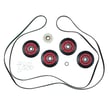
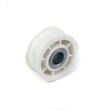
| Squealing, drum not turning smoothly | Belt and idler system | Dryer drive belt 661570V and dryer idler pulley 279640 |
| Thumping, rubbing, poor seal | Drum sealing surfaces | Dryer drum seal 280114 |
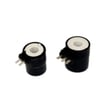
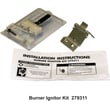
| No heat (gas) or intermittent ignition | Ignition and gas valve components | Igniter 279311 and dryer valve coil kit 279834 |
A dryer can keep running while slowly losing airflow or developing friction in the drum drive. That raises drying time, energy use, and heat stress, which shortens the life of the motor, burner, and drum support system.
Last updated: March 2026