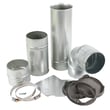
Installation guide
 Owner’s manual


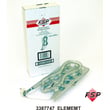
Can I replace a dryer heating element myself?
Yes, on the Whirlpool WED5620HW0 you can often replace the heating element yourself if you’re comfortable working with wiring and panels; the key is disconnecting power first, documenting wire locations, and reassembling the heater housing exactly as designed. Use the WED5620HW0 installation guide for safe power and start-up checks.
Before you start (safety and setup)
- Unplug the dryer (or switch both dryer breakers OFF for an electric model).
- Let the dryer cool completely.
- Take a clear photo of every wire connection before you remove anything.
- Use a nut driver/screwdrivers; keep screws grouped by panel.
- If you see overheated terminals or melted wire insulation, stop and correct the wiring issue before installing a new heater.
What to check first (it might not be the element)
The manual notes that an electric dryer can run but not heat if a fuse/breaker is tripped; many homes use two fuses or breakers for the dryer.
- Confirm the dryer has a 240 V supply (electric models).
- Check both household fuses/breakers; reset/replace as needed.
- Clean the lint screen and make sure the vent is not crushed or kinked.
Parts commonly involved
If testing shows the heater is open (no continuity), the correct replacement is the dryer heating element WP3387747. Depending on what failed, you may also need a safety device.
| Symptom | Common cause | Related part (if failed) |
|---|---|---|
| Drum turns, no heat | Heater circuit open | Heating element |
| Dryer overheats or shuts down | Safety device opened | Thermal fuse or high-limit thermostat |
| Long dry times | Airflow restriction | Venting/lint buildup |
Why it matters
A heating element usually fails because of age, restricted airflow, or a wiring/terminal problem. Fixing airflow and power issues first helps the new element last longer and prevents repeat failures.
Last updated: February 2026
What's the average lifespan of a Whirlpool dryer?
Whirlpool dryers typically last 10 to 13 years with normal household use. For your Whirlpool WED5620HW0, consistent airflow maintenance (lint screen and venting) and correct installation help the dryer heat and tumble properly, which directly supports a full service life; see the WED5620HW0 use and care guide.
What affects dryer lifespan the most
- Vent airflow: restricted venting increases heat stress and run time.
- Lint screen habits: cleaning before every load reduces overheating risk.
- Load size: chronic overloading strains the drum support system and motor.
- Cycle choices: long, high-heat cycles accelerate wear compared to sensor cycles.
- Installation conditions: cold or damp locations can cause longer cycles and extra wear.
Quick maintenance checklist (high impact)
Use these as your baseline routine for the WED5620HW0:
- Clean the lint screen before each load.
- Confirm strong airflow at the outside hood; clean the vent if airflow is weak.
- Keep venting to 4-inch diameter material and minimize turns.
- Avoid crushing or kinking the exhaust duct behind the dryer.
- Keep the dryer level so the drum tumbles correctly; see the WED5620HW0 installation guide.
Typical lifespan expectations by usage
| Usage pattern | Typical lifespan | What usually wears first |
|---|---|---|
| Light (1 to 3 loads/week) | 12 to 15 years | Rollers, belt, idler pulley |
| Average (4 to 7 loads/week) | 10 to 13 years | Heating system, rollers, blower wheel |
| Heavy (multiple loads/day) | 7 to 10 years | Motor, drum support parts, controls |
Why it matters
A dryer that takes longer to dry often runs hotter and longer than designed, which shortens the life of key components like the heating system and drum support. Keeping airflow strong is the simplest way to protect performance and longevity.
Last updated: February 2026
What are the common problems with Whirlpool dryers?
Common problems we see with Whirlpool dryers like model WED5620HW0 include a dryer that will not start, runs but will not heat, makes unusual noises, or takes too long to dry. Many issues trace back to power supply, airflow (venting), or normal wear parts such as rollers, the idler pulley, and the heating circuit.
Most common symptoms and what they usually mean
- Will not start: power issue, door switch, control problem, or a failed thermal safety device.
- Runs but will not heat: tripped breaker or blown fuse (electric), incorrect 240 V supply (electric), or gas supply valve closed (gas).
- Noisy operation (thumping, humming, squealing): drum support wear, idler pulley wear, or blower wheel issues.
- Long dry times: restricted venting, lint buildup, or weak airflow.
- Wrinkles after cycle: cycle/option selection; opening the door during Wrinkle Shield can pause the option.
Quick checks we recommend first (WED5620HW0)
Use the troubleshooting steps in the WED5620HW0 use and care guide to match your symptom to the right checks.
- Confirm the dryer is getting the correct power; electric models need 240 V.
- Reset both breakers (or replace both fuses) if the dryer runs but does not heat.
- Check the vent system for strong airflow; clean lint from the lint screen and exhaust path.
- Listen for where noise comes from (front, rear, or blower housing area).
- If the dryer overheated and stopped heating, a safety device may have opened and the venting must be corrected before replacing parts.
Parts that commonly fix noise or no-heat complaints
These are frequent wear or failure items on many Whirlpool dryers, including WED5620HW0:
| Symptom | Common part involved | Example part for this model |
|---|---|---|
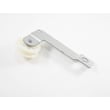
| Squealing, grinding, rumbling | Drum support system | Dryer drum support roller WPW10314173 |
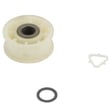
| Squealing, belt slack | Belt tension system | Dryer idler pulley W10837240 |
| Runs but no heat (electric) | Heating circuit | Dryer heating element WP3387747 |
Why it matters
Dryer problems often overlap; for example, restricted venting can cause long dry times and overheating, which can lead to a no-heat condition. Fixing airflow first helps the dryer dry faster and protects heating and safety components.
Last updated: February 2026
Can I search for Whirlpool parts by model?
Yes. For your Whirlpool dryer model WED5620HW0, searching by the full model number is the most reliable way to get compatible replacement parts because it matches your exact configuration to the correct diagrams and OEM part listings.
How to search parts by model number (best practice)
- Use the complete model number exactly as shown on the dryer’s model/serial tag: WED5620HW0
- Start with the parts diagram section to identify the correct location and part name
- Match by part name + part ID (not just a description)
- If multiple versions appear, choose the one that matches your dryer’s series and features
- Keep your model and serial number handy when ordering or calling for help (it speeds up verification)
What you can find faster when you search by model
Searching by model number helps you quickly narrow down common repair items for WED5620HW0, such as:
- Drum support parts (rollers, shafts, washers)
- Drive system parts (idler pulley, motor components)
- Heating and temperature sensing parts (heating element, thermistor, thermal fuse)
- Airflow parts (blower wheel, ducting components)
Example: common WED5620HW0 parts you might see
| Symptom | Common part to check | Example part for this model |
|---|---|---|
| Squealing or thumping | Drum support rollers, idler pulley | Dryer drum support roller WPW10314173 |
| No heat or weak heat | Heating element, thermal fuse, thermostat | Dryer heating element WP3387747 |
| Overheating or shuts off | Thermal fuse, high-limit thermostat, venting | Thermal fuse W10909685 |
Why it matters
Whirlpool often uses similar-looking parts across many dryers, but small differences in mounting, wiring, or temperature ratings can cause fit or performance problems. Searching by WED5620HW0 prevents ordering the wrong part and reduces repeat repairs.
Helpful reference
For model-specific identification details and service-ready information (model/serial location, troubleshooting flow, and support steps), use the WED5620HW0 owner's manual.
Last updated: February 2026
What brand of dryer has the least problems?
No single dryer brand has the least problems in every home; the lowest trouble rate comes from a proven design plus correct installation, proper 240 V power (for electric models), and clear venting. For your Whirlpool WED5620HW0, following the setup and troubleshooting steps in the WED5620HW0 owner's manual prevents many of the most common “dryer problems.”
Brands that are commonly dependable (practical guidance)
Instead of a single “best” brand, we recommend focusing on brands with strong parts support and straightforward service:
- Whirlpool and Maytag: widely serviced designs and strong parts availability
- LG: strong performance; reliability improves when airflow and maintenance are kept up
- Simple, fewer-feature models (any brand): fewer electronic components means fewer failure points
What causes most “problems” (more than the logo)
The WED5620HW0 troubleshooting guidance points to issues that create repeat service calls across many brands:
- Venting restrictions (crushed or kinked duct, too many elbows, long run) that cause long dry times and can light the Check Vent indicator
- Lint screen or outlet grille blockage (including a fabric softener sheet)
- Dryer not level, which can affect automatic cycles because clothes may not contact moisture sensors consistently
- Power supply problems on electric dryers (requires 240 V; some homes have two fuses/breakers)
Quick comparison (what to prioritize)
| What you prioritize | What to look for | Why it reduces problems |
|---|---|---|
| Fewer repairs | Simpler controls, fewer “smart” features | Fewer components to fail |
| Faster, consistent drying | Strong airflow design plus correct venting | Prevents long dry times and overheating trips |
| Easier long-term ownership | Common brand with broad service network | Faster diagnosis and parts sourcing |
Why it matters
Most dryer complaints are airflow, leveling, or electrical supply related. Choosing a mainstream, serviceable brand helps, but correct installation and vent maintenance usually make the biggest difference in real-world reliability.
Last updated: February 2026