Owner’s manual
 Error Codes



How do I reset my LG Hydro Shield dryer?
To reset your LG DLGY1702V dryer, we power-cycle it: turn the dryer off, unplug it (or switch the breaker off) for about 1 minute, then restore power and try a cycle again. This clears many temporary control and sensor glitches.
- Press POWER to turn the dryer off.
- Unplug the dryer, or turn the circuit breaker OFF.
- Wait 60 seconds.
- Plug the dryer back in, or turn the breaker ON.
- Press POWER, select a cycle, then press START/PAUSE.
- If Child Lock is on, press and hold Rack Dry for 3 seconds to turn it off.
On LG dryers, HS is a humidity sensor related error. A reset can clear a one-time glitch, but if HS returns, focus on airflow and the moisture-sensing system.
- Clean the lint screen and confirm it seats fully.
- Check the exhaust duct for kinks, crushing, or heavy lint buildup.
- Run the built-in duct check (installation test) and address restrictions if the bars indicate poor airflow.
- Inspect and clean the moisture sensor bars inside the drum.
- If the dryer still stops early or throws HS, the moisture sensor circuit may need attention (sensor or harness).
| Symptom | What to check | Example model-matched part |
|---|---|---|
| HS returns after reset | Moisture sensor bars and wiring | Dryer moisture sensor 6500EL3001A |
| Intermittent HS, loose connection | Sensor wiring harness | Dryer moisture sensor wire harness 6631EL3003B |
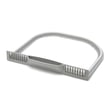
| Poor drying, long dry times | Lint screen fit and airflow | Dryer lint screen by LG 5231EL1001C |
A proper reset helps confirm whether you have a temporary control issue or an ongoing problem like restricted venting or a moisture sensor fault. Good airflow also prevents overheating and nuisance shutdowns.
For button-hold special functions and display messages specific to DLGY1702V, use the DLGY1702V owner’s manual.
Last updated: February 2026
Are LG gas dryers any good?
Yes. LG gas dryers like model DLGY1702V are a solid choice because they combine strong drying performance with convenience features such as steam cycles and airflow monitoring; they also use sensor-dry logic to adjust time based on moisture for more consistent results.
- Steam options can refresh clothes, reduce static, and help with wrinkles (cycle-dependent).
- Sensor dry cycles compare moisture in the load and the air, then adjust drying time automatically.
- Flow Sense duct blockage sensing alerts you when restricted venting is reducing airflow (a common cause of long dry times).
- Reversible door helps fit the dryer to your laundry room layout.
- Diagnostic support features can help speed troubleshooting when something is off.
| Area | Typically a “good” experience | Typically a “not so good” experience |
|---|---|---|
| Drying results | Even drying on sensor cycles | Damp spots if sensors are dirty or loads are mixed |
| Dry time | Normal times with clear venting | Long cycles when ducts are restricted |
| Convenience | Steam refresh, wrinkle care | More settings can feel complex at first |
- Clean the lint filter every load; replace it if it is torn or warped (see dryer lint screen 5231EL1001C).
- Keep the exhaust ducting clear; if Flow Sense indicates restriction, clean or repair the ductwork.
- Do not overload; sensor drying works best when air can circulate through the drum.
- Use the right cycle for the fabric type; sensor cycles auto-set dryness and temperature, and not every option works with every cycle.
Most “LG gas dryer problems” customers notice (long dry times, damp loads, overheating) trace back to airflow restriction, lint handling, or sensor-dry setup, not the gas burner itself. Keeping venting and lint filtration in top shape protects performance and helps prevent heat-related shutdowns.
For cycle details, features, and operating tips specific to DLGY1702V, use the DLGY1702V owner's manual.
Last updated: February 2026
How do I make my LG dryer dry faster?
For your LG DLGY1702V dryer, faster drying comes down to airflow and load size: clean the lint filter before every load, keep the exhaust duct clear (Flow Sense alerts you when airflow is restricted), and avoid overloading so air can move through the drum efficiently. See the DLGY1702V owner's manual for cycle and airflow guidance.
- Clean the lint filter before every load; even a thin layer slows airflow.
- Check the vent path for restrictions: crushed flex duct, lint buildup, or too many elbows.
- Run smaller loads; extra-large loads should be split for proper performance.
- Use the right cycle: sensor dry cycles adjust time automatically based on moisture.
- If you use Time Dry, increase time with the More Time button (1 minute per press).
- Keep the lint screen seated correctly; replace a damaged screen with the dryer lint screen by LG 5231EL1001C.
| What to check | What “good” looks like | What slows drying |
|---|---|---|
| Lint filter | Clean, mesh open | Film, lint, or softener residue |
| Exhaust duct | Short, smooth, not crushed | Long run, crushed duct, many bends |
| Outside vent hood | Flapper opens fully | Stuck flap, lint screen cover clogged |
| Load size | Drum not packed tight | Overloaded, heavy mixed fabrics |
- Sensor dry: best for everyday loads; the dryer adjusts time based on moisture.
- Time Dry: best for small loads or quick wrinkle removal; set 20 to 60 minutes (10-minute steps) and fine-tune with More Time/Less Time.
- Dry level: choose a higher dryness level when you need items fully dry; use Damp Dry or Less Dry for ironing.
Restricted airflow makes a gas dryer run longer, wastes energy, and can trigger duct blockage alerts. Keeping the lint filter and ductwork clear is the fastest, most reliable way to improve dry times.
Last updated: February 2026
What is the most common problem with LG dryers?
The most common LG dryer problem is poor drying performance: the dryer takes too long to dry or does not heat well because exhaust airflow is restricted. On the LG DLGY1702V, the built-in Flow Sense duct blockage sensing system is designed to alert you when household ductwork restrictions reduce airflow; fixing the venting usually restores normal drying.
- Lint buildup in the lint filter or lint filter housing
- Crushed, kinked, or overly long vent duct run
- Clogged wall cap or bird screen restricting exhaust
- Using plastic or thin foil duct instead of heavy metal vent
- Overloading the drum or mixing heavy and light items in one load
- Clean the lint filter after every cycle; if it is coated with fabric softener residue, wash it in warm, soapy water and dry it fully before reinstalling.
- Inspect the entire vent path (dryer outlet to outside hood) and remove lint restrictions.
- Confirm you are using heavy metal venting and that old ducts were cleaned before installation.
- If Flow Sense indicates a blockage, treat it as an airflow problem first, not a parts failure.
| Symptom | Most likely cause | What to do next |
|---|---|---|
| Long dry times | Restricted venting | Clean/repair ducts; verify heavy metal vent |
| No heat | Power/gas supply issue or safety device trip | Check breaker/fuse and settings; then diagnose heating circuit |
| Thumping/squealing | Worn belt, idler, or rollers | Inspect drum support and belt path |
| Dryer will not start | Power issue or door switch problem | Verify outlet/breaker; test door switch |
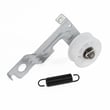
If the drum will not turn or you hear squealing, the most common wear items are the belt and idler. For this model, a frequent replacement is the LG dryer drum belt 4400EL2001F.
Airflow problems do more than slow drying; they can trigger alerts, reduce efficiency, and cause overheating that leads to thermostat trips. Following the venting and maintenance guidance in the DLGY1702V owner’s manual helps prevent repeat failures.
Last updated: February 2026