Installation guide
 Owner’s manual
 Error Codes


Where can I find my Frigidaire dryer model number?
On your Frigidaire dryer model FASE7073NW2, the model number is typically printed on the rating label located around the door opening, most often along the top edge of the opening when you open the dryer door. Confirm the exact label location in the FASE7073NW2 installation guide.
- Open the dryer door and look along the top lip of the door opening
- Check the inside front frame near the door switch area
- Look for a rating plate that lists both model and serial numbers
- Wipe lint and dust off the frame so the numbers are readable
- Take a photo of the label for ordering parts like a belt, thermostat, or heating element
| Label item | What it’s used for |
|---|---|
| Model number (FASE7073NW2) | Matching the correct Frigidaire dryer parts diagrams and parts list |
| Serial number | Identifying production details for service and compatibility |
| Electrical or gas info | Verifying installation requirements and troubleshooting |
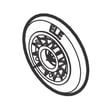
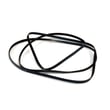
We use the full model number to match the correct parts for your exact dryer configuration. That prevents ordering issues when replacing common wear items such as the white-westinghouse dryer drum belt 134719300 or diagnosing heat and airflow problems.
Last updated: February 2026
How much does it cost to replace a heating element in a Frigidaire dryer?
For a Frigidaire FASE7073NW2 dryer, replacing the heating element typically costs $150 to $400 total: about $100 to $200 for the part plus $100 to $200 for labor (more if venting or other heat-related parts also need service). Use the FASE7073NW2 installation guide to follow safe service and wiring practices.
Replacement cost depends on whether you DIY or hire service, and whether the dryer overheated and damaged safety parts.
- Heating element part: commonly $100 to $200
- Labor: commonly $100 to $200 (service call minimums vary)
- Possible add-ons: thermal limiter, high-limit thermostat, vent cleaning, or drum support parts
| Scenario | Typical total cost | Notes |
|---|---|---|
| DIY (part only) | $100 to $200 | Best if you are comfortable labeling wires and reassembly |
| Pro repair (element only) | $200 to $400 | Most common outcome |
| Pro repair (element + safety parts) | $250 to $500 | Common after restricted airflow/overheating |
If the element failed due to overheating or restricted airflow, we often see one or more safety components open and need replacement.
- Frigidaire dryer heating element 134792700 (the heater that produces heat)
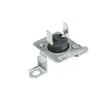
- Dryer inlet thermal limiter 137032600 (one-time safety cutoff that can open during overheating)
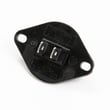
- Kelvinator dryer high-limit thermostat 3204267 (temperature safety control)
- Lint screen housing and exhaust duct (cleaning restores airflow)
A new heating element can fail early if airflow is restricted. The installation instructions warn against flexible plastic venting because it can crush, trap lint, and obstruct airflow, which increases overheating risk. Following the venting guidance helps the heater and thermostats last longer.
- Confirm the dryer tumbles normally and the drum turns freely
- Clean the lint screen and inspect the exhaust duct for lint buildup
- Check that the vent run is short, not crushed, and vents straight back when possible
- If the dryer overheated, plan to test/replace the thermal limiter and high-limit thermostat
Last updated: February 2026
Why does my Frigidaire dryer not dry so good?
Poor drying on your Frigidaire FASE7073NW2 dryer is almost always caused by restricted airflow (lint buildup, crushed vent, wrong duct material) or a heating control problem. Start with the venting and lint path first; it fixes most “takes too long to dry” complaints.
- Clean the lint screen before every load; wash it with warm water if you see a film.
- Inspect the vent hose behind the dryer for kinks, crushing, or sagging.
- Confirm you are using 4-inch rigid or flexible metal duct (not plastic or foil).
- Make sure the dryer exhausts outdoors (not into an attic, wall, or crawl space).
- Check the outside vent hood; the damper should open fully when the dryer runs.
Your installation guide calls for 4-inch (102 mm) metal duct and warns that plastic or foil venting can collapse, trap lint, increase drying time, and create a fire hazard. Use the vent length and elbow limits in the installation guide to confirm your setup is within spec.
| Item to verify | What “good” looks like | What causes slow drying |
|---|---|---|
| Duct type | 4-inch rigid or semi-rigid metal | Plastic or foil ducting |
| Discharge | Exhausted outdoors | Venting into enclosed spaces |
| Outside hood | Damper opens, no lint blockage | Stuck damper, lint screen at hood |
| Duct routing | Short, smooth, minimal elbows | Long runs, many elbows, crushed hose |
If the drum tumbles but clothes stay damp, heat may be cycling off too soon or not coming on consistently.
- A weak heater can point to the Frigidaire dryer heating element 134792700.
- Overheating shutdowns can involve the dryer inlet thermal limiter 137032600 or kelvinator dryer high-limit thermostat 3204267.
- Temperature sensing issues can involve the dryer thermistor 134587700.
Restricted airflow makes any dryer run longer, wastes energy, and can overheat safety thermostats. Fixing the venting and lint path first protects the heater circuit and restores normal cycle times.
Last updated: February 2026
How much is a control board for a Frigidaire dryer?
For a Frigidaire dryer like model FASE7073NW2, a replacement control board typically costs about $150 to $300, depending on the exact board version and whether it includes the user interface. Confirm the correct part by matching your dryer’s model and the board’s wiring connectors in the FASE7073NW2 owner’s manual.
- Which board you need: main control board vs. user interface (console) board
- Revision level: updated boards can cost more than earlier versions
- Included components: some assemblies include overlays or harness adapters
- Availability: in-stock parts are often priced differently than limited-availability parts
- Return policy and warranty: coverage can vary by supplier
A “dead” dryer or odd behavior is often caused by power, door, or heat-safety issues, not the board.
- Verify the dryer has the correct power supply and outlet type for your setup
- Check the door switch operation (a failed switch can prevent starting)
- Look for signs of overheating or airflow restriction (lint buildup, crushed vent)
- If the dryer runs but will not heat, test heat-safety parts first
- If you see an error code, use the Frigidaire dryer error codes guide to narrow the failure
| Symptom | More likely cause | Example part for FASE7073NW2 |
|---|---|---|
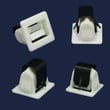
| Won’t start | Door not proving closed | Dryer door switch 134813601 |
| No heat or shuts off | Overheat protection opened | Dryer inlet thermal limiter 137032600 |
| Overheats | Temperature sensing issue | Dryer thermistor 134587700 |
Control boards are one of the most expensive electrical parts on a dryer. Confirming power, door-switch input, and heat-safety circuits first helps you avoid replacing a board when the real issue is a simpler component or a venting problem.
Last updated: February 2026