Owner’s manual
 Error Codes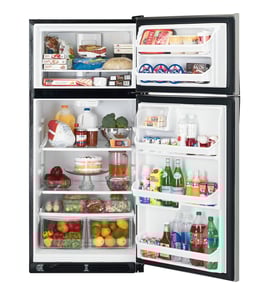




What are the disadvantages of a top mount fridge?
Top-mount refrigerators like Kenmore model 10660239900 typically make fresh-food access less convenient because the refrigerator section sits lower, and they usually offer fewer built-in organization and dispenser features than many bottom-freezer designs. They also rely on clear vent airflow to keep temperatures even.
- More bending for fresh food: the most-used items are often below waist level.
- Less “grab-and-go” organization: many top-mount layouts have fewer specialty drawers/bins than some newer styles.
- Fewer dispenser options: many top-mount models do not include an external water or ice dispenser.
- Airflow can be easier to block: overpacking can block vents and cause warm spots or moisture issues.
- Door swing and placement limits: you may need extra clearance next to walls for the door to open fully.
This Kenmore top-mount design depends on air moving between the freezer and refrigerator sections. When vents are blocked, you can get temperature swings, frost, or moisture.
- Keep packages away from freezer and fresh-food vents.
- Avoid packing items tightly against the back wall.
- Wrap foods tightly to reduce odor transfer between sections.
| Feature | Top-mount refrigerator (like 10660239900) | Common alternative designs |
|---|---|---|
| Fresh-food access | Lower, more bending | Often higher in bottom-freezer models |
| Organization | Usually simpler | Often more bins/drawers in newer layouts |
| Dispensers | Often none externally | More common on side-by-side/french door |
| Vent sensitivity | Higher if overpacked | Varies by design |
Most “top-mount disadvantages” show up as comfort and convenience issues (bending, storage layout) plus performance issues if airflow is blocked. Following the venting and loading guidance in the owner's manual helps keep temperatures stable and reduces moisture and odor problems.
Last updated: February 2026
What happens if the fridge is not leveled?
If your Kenmore 10660239900 refrigerator is not leveled (or the cabinet is not tilted slightly to the rear), the doors may not close and seal consistently. That can lead to warm temperatures, moisture or frost buildup, and extra run time because the unit struggles to maintain airflow and cooling.
- Doors swing open, don’t self-close, or need to be pushed shut
- Gaps in the door gasket that cause condensation around the door
- Frost buildup in the freezer or moisture in the fresh food section
- Temperature swings, especially after frequent door openings
- Noisy operation from shifting cabinet or vibrating components
We follow the leveling steps in the owner's manual. In general, the goal is stable contact at the floor and a slight tilt back so the doors close easily.
- Remove the base grille to access the front leveling screws
- Turn the leveling screw right to raise that side; left to lower it
- Have someone push gently on the top of the refrigerator to reduce weight on the screws
- Recheck both doors; if needed, tilt slightly more to the rear by raising both sides evenly
- Reinstall the base grille when finished
| What to check | What “good” looks like | What happens if it’s off |
|---|---|---|
| Door closing | Doors close easily and stay shut | Warm air leaks in, temps rise |
| Cabinet stability | No rocking at corners | Vibration and noise |
| Door alignment | Even gap between doors | Poor sealing, moisture |
A refrigerator cools best when doors seal tightly and air can circulate between the freezer and fresh food sections. When the cabinet is out of level, door sealing and alignment suffer, which directly causes moisture, frost, and temperature problems.
Use the door-alignment procedure in the owner's manual. On this style, adjusting the top hinge position typically corrects uneven door gaps.
Last updated: February 2026
What is the top part of a refrigerator called?
On a Kenmore 10660239900 top-mount refrigerator, the top compartment is the freezer compartment (often just called the freezer). It is designed to keep foods frozen and it also supplies cold air that helps cool the fresh food section below.
- Freezer door and door gasket that seals in cold air
- Freezer shelves or bins for frozen food storage
- Air vents that move cold air between freezer and refrigerator sections
- An evaporator area behind an interior panel (where cooling happens)
- On some setups, an ice maker or ice tray area
In this top-mount design, cold air enters and circulates through the freezer first, then some of that air flows into the refrigerator section through vents. When vents are blocked by food packages, airflow drops and you can get temperature swings, frost buildup, or moisture issues. For airflow and control details, use the owner's manual.
| What people call it | Common name | What it does |
|---|---|---|
| “Top part” | Freezer compartment | Freezes food; drives cooling airflow |
| “Bottom part” | Refrigerator (fresh food) compartment | Keeps food cold (not frozen) |
| “Divider vents” | Air vents/diffuser | Moves cold air between sections |
These checks solve most top-mount cooling complaints:
- Make sure freezer and refrigerator vents are not blocked
- Confirm controls are set near the mid-setting after installation
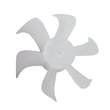
- Listen for the evaporator fan running; a failed fan can stop airflow
- Check door seals for gaps that leak warm air
- Avoid overpacking the freezer, which restricts circulation
If you suspect an airflow problem, the refrigerator evaporator fan motor WP2315539 is a common repair part for restoring circulation.
Knowing the “top part” is the freezer helps with troubleshooting: many cooling problems in the refrigerator section start with airflow, fan, or door-seal issues in the freezer section.
Last updated: February 2026
How do I tell what model Kenmore fridge I have?
Your Kenmore refrigerator model number is printed on the appliance’s model and serial tag. On Kenmore model 10660239900, you will typically find that tag inside the fresh food compartment or inside the freezer, often on a side wall, near the crisper area, or behind the lower kickplate.
- Inside the refrigerator compartment on the left or right interior wall
- Inside the freezer compartment on a side wall
- On the frame behind the crisper drawers (you may need to slide drawers out)
- Behind the lower front kickplate or toe grille
- Along the door frame area (open the door and look around the perimeter)
The tag usually lists:
- Model number (example format: 106.XXXXXXXX)
- Serial number
- Electrical ratings (volts/amps)
- Sometimes a manufacturing date code
Model numbers can be easy to misread. Use this quick checklist:
| What to capture | Example | Why it matters |
|---|---|---|
| Full model number | 10660239900 | Ensures parts diagrams match your exact refrigerator |
| Serial number | (varies) | Helps confirm production run and compatible revisions |
| Any suffixes/extra digits | (if shown) | Prevents ordering the wrong door, gasket, or control |
Kenmore refrigerators that look similar can use different door gaskets, shelves, control boards, and fan motors. Using the exact model number helps us match the correct parts list and the correct instructions in the 10660239900 owner's manual.
Last updated: February 2026
What are the most common problems with Kenmore refrigerators?
The most common problems we see on Kenmore refrigerators like model 10660239900 are poor cooling from restricted airflow, moisture or temperature swings from blocked vents, water leaks from drain or seal issues, ice maker and water taste/odor complaints, and unusual noises from fans or the compressor. Use the 10660239900 owner's manual troubleshooting section to match symptoms to checks.
- Not cooling or warm fridge/freezer: blocked air vents, dirty condenser area, evaporator fan not running, defrost system icing up
- Frost buildup or ice on the back wall: defrost problem (heater/thermostat/timer or control issue), doors not sealing
- Water on the floor or inside the fridge: clogged defrost drain, door left ajar, gasket not sealing
- Ice maker issues (no ice, bad taste, gray color): low water pressure, new plumbing taste, old ice, odor transfer from food, filter needs attention
- Noises (buzzing, rattling, clicking): fan blade hitting ice, failing fan motor, compressor start components, items vibrating
- Confirm airflow is clear: do not block freezer floor vents or the refrigerator top vent with food packages (blocked vents cause temperature and moisture problems).
- Verify controls are set correctly: many Kenmore top-mount models are factory preset to a mid-setting; confirm they were not moved to OFF.
- Check door closing and sealing: look for gaps, torn gasket areas, or doors that sit uneven.
- Listen for the evaporator fan: when the compressor is running, you should typically hear airflow in the freezer.
- Address odor transfer: wrap foods tightly and clean both sections if odors are present.
| Symptom | Common suspect part | Example part on this model page |
|---|---|---|
| Warm temps, weak airflow, fan noise | Evaporator fan motor or fan blade | Refrigerator evaporator fan motor WP2315539, refrigerator evaporator fan blade WP2163777 |
| Frost buildup, intermittent warming | Defrost thermostat issue | Refrigerator defrost bi-metal thermostat WP2321800 |
| Light stays off or won’t turn off | Door/light switch | Refrigerator light switch W11384469 |
Most “not cooling” complaints come down to airflow. Your 10660239900 is designed to circulate cold air from the freezer into the refrigerator section; when vents are blocked or a fan/defrost component fails, temperatures rise and moisture problems follow.
Last updated: February 2026