Owner’s manual
 Error Codes


Why is my refrigerator not getting cold at the bottom?
If your Kenmore Elite 79571059013 is warm at the bottom of the fresh food section, the most common causes are restricted airflow (blocked vents, overpacked shelves), dirty condenser coils, or a fan issue that prevents cold air from circulating. Start with cleaning and airflow checks, then verify temperature settings in the 79571059013 owner's manual.
Quick checks that fix most “warm at the bottom” complaints
- Set temperatures to the recommended starting point: 37°F for the refrigerator and 0°F for the freezer; wait 24 hours after any change.
- Make sure food packages are not blocking air vents; cold air has to move from the freezer into the refrigerator.
- Clean dust and pet hair from the condenser area; restricted condenser airflow reduces overall cooling.
- Confirm doors close fully and are not being held open by bins or containers.
- Avoid frequent door openings and large warm food loads; both temporarily raise temperatures.
What to check next (in order)
- Airflow inside the refrigerator: If the top feels cooler than the bottom, vents are often blocked or the evaporator airflow is weak.
- Condenser cleanliness: A dirty condenser makes the compressor run longer and can leave the refrigerator section undercooled.
- Fan-related symptoms: If you hear unusual fan noise, or cooling is uneven, inspect the fan blade and surrounding area for ice buildup or obstructions.
Helpful part examples for this model
| Symptom | What it can point to | Example part for model 79571059013 |
|---|---|---|
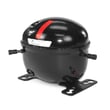
| Warm temps and long run times | Poor heat release at condenser | Refrigerator condenser coil ACG73784701 |
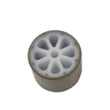
| Weak or no airflow in fresh food | Circulation problem | Refrigerator evaporator fan blade 5901JA1021A |
Why it matters
Bottom-warm temperatures usually mean the refrigerator is not moving cold air efficiently. Fixing airflow and heat removal early helps protect food, reduces compressor run time, and prevents icing problems that can worsen cooling.
When to stop and get service
- The freezer is also warming above 0°F.
- You see heavy frost or ice buildup that returns quickly after defrosting.
- The compressor is extremely hot, clicking, or cycling off and on.
Last updated: January 2026
How long is the compressor warranty on a Kenmore Elite refrigerator?
For Kenmore Elite model 79571059013, the warranty covers defects in the sealed refrigerant system for 5 years from the purchase date when the refrigerator is installed, operated, and maintained as instructed. The standard coverage for other non-consumable parts is 1 year for private family use; labor is not covered beyond the first year.
What “compressor warranty” usually means
On this Kenmore Elite bottom-mount refrigerator, compressor-related coverage is handled under the sealed refrigerant system warranty (the system that includes the compressor and refrigerant tubing).
Use the warranty section in the 79571059013 owner's manual to confirm the exact terms for your purchase date and usage type.
Coverage details to know
- 1 year: Non-consumable parts (excluding the sealed system) for defects in materials/workmanship.
- 5 years: Sealed refrigerant system coverage for defects.
- 90 days: Reduced coverage if used for other than private family purposes (for the 1-year portion).
- 1 year: Reduced sealed-system coverage if used for other than private family purposes.
- Filters, light bulbs, and other expendable items are not covered as warranty parts.
Quick reference table
| Item | Private family use coverage | Other-than-private use coverage |
|---|---|---|
| Non-consumable parts (not sealed system) | 1 year | 90 days |
| Sealed refrigerant system (includes compressor) | 5 years | 1 year |
Why it matters
Compressor repairs often involve sealed-system work, which is more complex than typical refrigerator repairs. Knowing whether your issue falls under the sealed refrigerant system coverage helps you decide whether to schedule service, troubleshoot airflow and temperature settings, or focus on non-sealed components.
Last updated: January 2026
What are the common problems with Kenmore Elite refrigerators?
On the Kenmore Elite refrigerator model 79571059013, the most common problems we see are cooling issues, ice maker and water dispenser troubles, frost buildup, water leaks, and unusual noises. Many of these are caused by airflow restrictions (dirty coils), door sealing problems, or water supply and filtration issues; the troubleshooting steps in the 79571059013 owner's manual help pinpoint the cause.
Common symptoms and what they usually mean
- Not cooling well or warm temperatures: often dirty condenser coils, blocked vents, or a fan problem.
- Compressor seems to run too much: frequent door openings, warm room conditions, or airflow restrictions; some run time is normal.
- Ice maker not making ice: ice bin full or uneven, ice compartment door not closing tightly, or the ice maker switch set to Off.
- Bad-tasting or smelly ice: old ice, unwrapped food odors, or water quality; filtration and cleaning usually fix it.
- Water in/under the refrigerator: normal defrost drain pan evaporation issues in humidity, or a drain line problem.
Quick checks we recommend first (before replacing parts)
- Clean the condenser coils and confirm airflow around the grille area.
- Check door gaskets for gaps and make sure doors close firmly.
- Verify ice compartment door closure; a loose door can stop ice production and cause freezing in the fresh food section.
- Dump old ice and wash the bin if taste or odor is the complaint.
- Confirm power and lighting basics (outlet, bulb seated correctly) if you suspect an electrical interruption.
Parts that commonly solve these complaints
If your symptoms point to filtration or water supply issues, these model-matched parts are common fixes:
| Symptom | Likely area | Example part for 79571059013 |
|---|---|---|
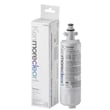
| Bad taste/odor in ice or water | Filtration | Genuine Kenmore refrigerator water filter 9690 AGF80300801 |
| No water dispensing or slow fill | Water supply valve | Lg refrigerator water inlet valve AJU72992601 |
| Leaks or water line issues | Tubing and connections | Refrigerator water tubing MJU62070602 |
Why it matters
Cooling, ice, and leak problems usually get worse over time. Cleaning coils, keeping doors sealed, and maintaining the water filter protects food temperatures, reduces compressor run time, and helps prevent ice maker and dispenser failures.
Last updated: January 2026
Why is my Kenmore Elite refrigerator leaking water out of the bottom?
On Kenmore Elite refrigerator model 79571059013, water leaking from the bottom is typically caused by a clogged defrost drain (water overflows inside and runs down), a leaking water line to the dispenser or icemaker, or a dripping inlet valve or connection behind the unit. Use the checks below to pinpoint the source; see the 79571059013 owner's manual for care, cleaning, and water line guidance.
Quick checks (fastest way to narrow it down)
- Water under crisper drawers or ice on the refrigerator floor: defrost drain is blocked.
- Water only near the back of the refrigerator: supply line fitting or inlet valve is leaking.
- Water near the front, especially by the door hinge area: dispenser tubing is leaking.
- Leak started after moving the refrigerator: a compression fitting is loose.
- Intermittent puddles: inlet valve seepage or a slow drain restriction.
Fixes for the most common causes
Clogged defrost drain
- Unplug the refrigerator.
- Remove drawers and look for ice at the rear interior floor.
- Melt ice with warm water.
- Flush the drain opening with warm water until it drains to the pan.
Leaking tubing or fittings
- Shut off the household water supply.
- Dry connections, turn water back on, and watch for seepage.
- Tighten compression nuts slightly (do not overtighten).
- Replace cracked tubing with refrigerator water tubing MJU62070602.
Water inlet valve seepage
- Inspect the valve body and outlet ports for moisture.
- Replace the valve if it drips with lg refrigerator water inlet valve AJU72992601.
Symptom-to-cause guide
| What you see | Most likely cause | Where to check |
|---|---|---|
| Water under crispers | Defrost drain clogged | Rear interior floor, drain opening |
| Water behind unit | Loose fitting or valve leak | Supply line, inlet valve |
| Water near door hinge | Dispenser tubing leak | Hinge area, tubing path |
Why it matters
Stopping the leak prevents floor damage and helps avoid ice buildup and odors caused by standing water inside the cabinet.
Last updated: January 2026