


Where to find model number on Craftsman Wet Dry Vac?
On the Craftsman wet/dry vacuum model 113177900, the model number is typically printed on a rating label (often a sticker) on the powerhead or lid area, sometimes near the handle or cord wrap. Look for a line that says MOD or Model followed by the number.
Where to check first (fastest spots)
- Top of the lid or powerhead (near the handle)
- Side of the powerhead housing (near the switch)
- Back of the powerhead near the cord wrap or cord entry
- Inside the drum area under the lid lip (less common)
- Bottom of the drum near the caster mounts
What the label usually looks like
Most Craftsman wet/dry vac labels include several identifiers. Use this quick guide to pick out the right one:
| Label field | What it means | What to use for parts |
|---|---|---|
| MOD / Model | The vacuum model identifier | Use this (example: 113177900) |
| Serial / S/N | Production identifier | Not needed for most parts |
| Volts / Amps | Electrical rating | Helpful for troubleshooting |
Why it matters
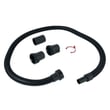
We use the exact model number to match the correct hose size, attachments, and fitment details for your vacuum. For example, model 113177900 commonly uses 1-1/4 inch accessories like the wet/dry vacuum hose, 1-1/4-in x 6-ft 551013109.
If the label is missing or unreadable
- Check for an embossed number on the powerhead or drum (sometimes molded into plastic)
- Match by connection size (1-1/4 inch vs 2-1/2 inch) and tank capacity (6-gallon)
- Compare your accessories to known-fit items such as the wet/dry vacuum hose adapter, 1-1/4 to 2-1/2-in 551025121
- Use our model-number tips in how to find your appliance model number (and what it means for parts)
Last updated: January 2026
Why is my vacuum not picking up?
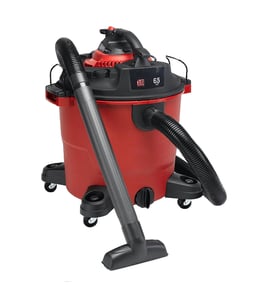
If your Craftsman 113177900 6-gallon home-n-shop vacuum isn’t picking up, the most common cause is restricted airflow: a clog in the hose or nozzle, a dirty filter, or a leak at a connection that reduces suction at the tool.
Quick checks that fix most pickup problems
- Unplug the vacuum and empty the tank; an overfilled tank reduces airflow.
- Remove the hose and check for a clog end-to-end (coins, drywall chunks, pet hair mats).
- Inspect the nozzle or tool opening for packed debris.
- Reseat every connection so it fits snugly (hose to inlet, tool to hose).
- If suction is weak only at certain tools, swap to a different attachment to isolate the restriction.
Parts to inspect on model 113177900
A damaged or partially blocked attachment can make it feel like the vacuum has “no suction” even when the motor is fine.
| What to check | What you’ll notice | What to do |
|---|---|---|
| Hose | Little to no airflow, whistling, or debris stuck inside | Clear the clog; replace if split or crushed using wet/dry vacuum hose, 1-1/4-in x 6-ft 551013109 |
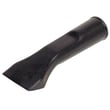
| Crevice tool | Works briefly then stops, narrow opening plugs easily | Clean the tool; replace if cracked using wet/dry vacuum crevice tool 551012109 |
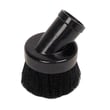
| Dusting brush | Poor pickup on fine dust, bristles packed | Clean bristles and air path; replace if damaged using wet/dry vacuum dusting brush, 1-1/4-in 551004116 |
| Hose fitment | Hose feels loose, air leaks at the connection | Use the correct adapter size with wet/dry vacuum hose adapter, 1-1/4 to 2-1/2-in 551025121 |
Why it matters
Wet/dry vacuums rely on a sealed airflow path. Even a small clog or air leak can drop suction enough that debris stays on the floor, especially with fine dust or heavier shop debris.
Electrical note (if the motor sounds weak)
If the motor pitch changes, surges, or won’t reach full speed, check the power cord and outlet first. For safe electrical testing steps, use how to use a multimeter to test electrical parts video.
Last updated: January 2026
Why is my shop vac blowing instead of vacuuming?
If your Craftsman 113177900 6-gallon home-n-shop vacuum is blowing air or dust out instead of picking it up, the airflow path is usually wrong: the hose is connected to the exhaust port, the filter is missing or not seated, or the filter is clogged and forcing dust past the seal.
Quick checks that fix most “blowing” complaints
- Confirm the hose is on the suction (inlet) port, not the exhaust port.
- Remove and reinstall the filter so it sits flat and seals all the way around.
- Clean the filter (tap off debris outdoors) or replace it if it is packed with fine dust.
- Empty the tank; an overfilled tank can push debris toward the filter.
- Check the hose and tools for a clog (coins, screws, drywall chunks).
Common causes and what to do
| What you notice | Most likely cause | What we recommend |
|---|---|---|
| Strong air blowing from the rear/side outlet | Hose on exhaust port | Move hose to suction port; use exhaust only for “blower” use |
| Dust puffing out while vacuuming fine debris | Filter clogged or not sealing | Reseat filter; clean or replace filter |
| Weak pickup and motor sounds strained | Hose/tool clog or full tank | Clear blockage; empty tank |
| Dusting tool sprays dust around | Tool not suited for heavy debris | Switch to a nozzle or crevice tool for tighter pickup |
Parts that can help (fit and airflow)
If your hose or attachments are cracked, loose, or not matching the port size, airflow drops and dust can escape. These model-compatible items are common fixes:
- Wet/dry vacuum hose, 1-1/4-in x 6-ft 551013109 for splits, leaks, or poor suction.
- Wet/dry vacuum hose adapter, 1-1/4 to 2-1/2-in 551025121 if you need a tighter connection between sizes.
- Wet/dry vacuum crevice tool 551012109 for concentrated suction in tight areas.
Why it matters
A wet/dry vacuum depends on a sealed airflow path. When the filter is clogged or not seated, or the hose is on the wrong port, the vacuum can act like a blower and push fine dust back into the air.
Last updated: January 2026