Owner’s manual
 Error Codes



Are bottom mount fridges better?
Bottom-mount refrigerators like the GE GFE26JEMAFDS are better for many kitchens because the fresh-food section sits at eye and waist level, so everyday items are easier to reach; the freezer stays in a lower drawer for bulk storage.
We recommend a bottom-mount design when you want convenience for daily cooking and fewer bends for fresh-food access.
- You use the refrigerator section more than the freezer
- You want produce, drinks, and leftovers at a comfortable height
- You prefer wide shelves and drawers for meal prep items
- You like freezer organization in pull-out baskets and drawers
- You want a layout that supports frequent door openings without digging down
Bottom-mount models are not “better” for every household; the best choice depends on how you store food.
| Feature | Bottom-mount refrigerator | Top-freezer refrigerator |
|---|---|---|
| Fresh-food access | Easier, more ergonomic | Requires more bending |
| Freezer access | Requires bending/kneeling | Easier for frequent freezer use |
| Freezer organization | Drawer-style, often better sorting | Shelf-style, simpler |
| Typical cost | Often higher | Often lower |
Most households open the fresh-food doors far more often than the freezer. With a bottom-mount layout, the items you grab every day are at a more natural reach, which reduces strain and makes cooking and meal prep faster.
Use these setup habits to make the design pay off.
- Keep high-use items (milk, condiments, snacks) on the middle shelves
- Use climate zone drawers for produce to reduce temperature swings
- Avoid overpacking the freezer drawer so it can close fully
- If the refrigerator beeps, check for a door not closing completely (common with overfilled bins)
- Follow the feature and storage guidance in the GFE26JEMAFDS owner's manual
You can also order model-matched replacement parts (like the GE refrigerator water filter XWFE) from the parts list for this model, or search by model number on Sears PartsDirect.
Last updated: February 2026
How to remove bottom grille on GE refrigerator?
On the GE GFE26JEMAFDS bottom-mount refrigerator, the bottom grille (base grille) typically comes off by releasing its retaining tabs or removing any mounting screws, then pulling the grille straight out from the front. Use steady, even pressure so the grille does not crack.
- Unplug the refrigerator if your hands will be near wiring or the condenser fan area.
- If the unit is tight to the wall, raise the front leveling legs slightly so you can pull the refrigerator straight out without scraping the floor.
- Protect the floor with cardboard or a thin panel if you need to slide the refrigerator.
For model-specific handling notes and safety steps, follow the owner's manual.
- Look along the top edge and corners of the grille for screws (some versions use Phillips-head screws).
- If screws are present, remove them and set them aside.
- Grip the grille near both ends.
- Pull the grille straight toward you to disengage the clips or tabs.
- If it feels stuck, gently work one side loose, then the other; avoid twisting.
- Check for hidden fasteners near the ends.
- Make sure the refrigerator is not sitting too low; slightly raising the leveling legs can reduce binding.
- Pull straight out; side-to-side pulling can damage the grille or the mounting slots.
With the grille removed, you can safely inspect common airflow and cooling-related items:
| What you notice | What it usually means | What to check next |
|---|---|---|
| Heavy dust buildup | Reduced airflow and warmer temps | Clean condenser area; confirm fan operation |
| Rattling or vibration | Loose grille or fan noise | Re-seat grille; inspect condenser fan |
| Warm refrigerator section | Airflow or control issue | Check damper and sensors |
If you are troubleshooting cooling or airflow, parts commonly involved on this model include the refrigerator condenser fan WR60X24484, refrigerator air damper WR60X27396, and GE profile refrigerator temperature sensor WR55X10025. You can order these from the parts list for your model or search by model number on Sears PartsDirect.
The bottom grille helps direct airflow across the condenser area. Keeping it properly installed and the area behind it clean helps your GE refrigerator cool efficiently and can prevent temperature swings.
Last updated: February 2026
What is the most common problem with a GE refrigerator?
The most common GE refrigerator problem is not cooling properly (fresh food warm, freezer soft ice). On your GE GFE26JEMAFDS bottom-mount refrigerator, the most frequent causes are airflow issues, a failing fan, or a temperature-sensing/control problem; use the GFE26JEMAFDS owner's manual to confirm settings and diagnostics.
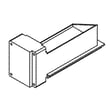
- Refrigerator warm, freezer cold: air damper stuck or airflow blocked (see refrigerator air damper WR60X27396)
- Both sections warm: condenser fan issue, sealed system problem, or control issue
- Loud humming or grinding: evaporator fan motor or fan blade contacting ice (see refrigerator evaporator fan motor WR60X32614)
- Temps swing up and down: temperature sensor or main control board problem (see GE profile refrigerator temperature sensor WR55X10025 and main control board WR55X46945)
- Ice maker or dispenser issues: often tied to water supply, filter restriction, or frozen lines
- Verify temperature settings and give the unit 24 hours to stabilize after changes.
- Check door sealing and loading: don’t block vents; avoid overpacking the fresh food section.
- Listen for fans: you should typically hear a fan running at times; silence can indicate a fan or control issue.
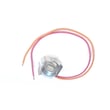
- Inspect for frost buildup on the freezer back wall (a clue of a defrost problem; see refrigerator defrost bi-metal thermostat WR50X10069).
- Confirm water filter status: a clogged filter can reduce water flow; replace on schedule (commonly every 6 months) and make sure the filter or bypass is installed.
| Symptom | Most likely area | Example part for GFE26JEMAFDS |
|---|---|---|
| Fresh food warm, freezer OK | Airflow control | WR60X27396 (air damper) |
| Warm temps, odd readings | Temperature sensing | WR55X10025 (temperature sensor) |
| Noisy, poor cooling | Evaporator fan | WR60X32614 (fan motor) |
| Frost/ice buildup, warming | Defrost system | WR50X10069 (bi-metal thermostat) |
| Random behavior, no response | Electronics | WR55X46945 (main control board) |
Cooling problems can quickly lead to food spoilage and can also force the compressor to run longer than normal. Catching airflow, fan, or sensor issues early helps restore stable temperatures and reduces strain on major components.
For replacement parts listed for your model, order directly from the parts list for GE GFE26JEMAFDS or search by model on Sears PartsDirect.
Last updated: February 2026