Owner’s manual
 View engine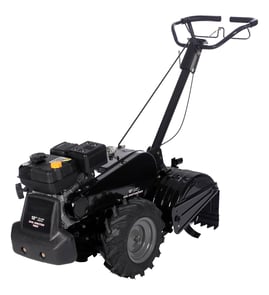



How deep does a rear tine tiller go?
On the Craftsman rear-tine tiller model 24723000, the maximum tilling depth is controlled by the depth stake and is adjustable in five settings; for cultivating around plants, we recommend setting it shallow at about 1 to 2 inches. For deeper soil prep, make multiple passes and increase depth gradually (see the 24723000 operator's manual).
Typical depth range and what to expect
Most rear-tine tillers are designed to work from shallow cultivating depth up to a deeper garden-prep depth; the key is to let the wheels pull the machine while the tines dig, then deepen the setting on later passes.
- Use shallow depth for cultivating and weed control (about 1 to 2 inches)
- Use deeper settings for initial garden prep (increase depth pass by pass)
- Make the first pass at a higher, shallower setting to avoid overloading the engine
- Avoid forcing depth by pushing down on the handlebars
- If wheels spin in soft soil, lift slightly on the handlebar to help traction
How the depth is adjusted on model 24723000
This model uses a depth stake with a clevis pin and cotter pin to select the depth setting.
| What you change | What it affects | Best use |
|---|---|---|
| Depth stake position (5 settings) | How deep the tines bite | Shallow to deep soil work |
| Number of passes | Final depth and soil texture | Deep tilling without bogging |
| Wheel traction and pace | Control and consistency | Prevents hopping and pull-ahead |
Why it matters
Setting the tilling depth correctly helps prevent loss of control and protects the tiller drivetrain. Pushing down on the handlebars to force deeper digging reduces wheel traction, which can let the tines propel the tiller unexpectedly.
Last updated: January 2026
What tiller is made in the USA?
Some tillers are made in the USA, but it varies by brand and even by specific model and production run. For your Craftsman rear-tine tiller model 24723000, we recommend using the 24723000 owner's manual to confirm the exact manufacturing details and specifications tied to your unit.
What to check to confirm “made in USA”
To verify where a tiller is made, we use the product identification information and documentation, not just the brand name.
- Check the model and serial number tag on the tiller frame (often near the engine or handle mount)
- Look for a “Made in …” statement on the ID tag or engine label
- Compare the model number on the tag to the model number in the manual
- Review the parts list and decals section for country-of-origin markings
- If the engine is a separate brand, check the engine model label as well
How this applies to Craftsman model 24723000
Craftsman equipment is commonly built by different manufacturers over time, so country of origin is best confirmed by the specific model and ID tag.
| Item to verify | Where to find it | Why it helps |
|---|---|---|
| Tiller model number (24723000) | Frame ID tag | Confirms you are looking up the correct unit |
| Serial number | Frame ID tag | Ties the unit to a production run |
| Engine model | Engine label | Engine origin can differ from the tiller origin |
| Decals/labels | Handle, tine shield, engine area | Sometimes lists country of manufacture |
Why it matters
“Made in USA” can affect parts sourcing, hardware standards, and which diagrams match your machine. Confirming the exact model and labels helps us match the correct Craftsman parts (like tine shields, fasteners, and gear case components) the first time.
Last updated: January 2026
What kind of engine is on a Craftsman tiller?
The Craftsman rear-tine tiller model 24723000 uses an engine identified in the parts documentation as Engine model 270-V0. For the most accurate engine details (specs, tune-up items, and diagrams), match your engine label to the listings in the 24723000 owner's manual.
How to confirm the exact engine on your tiller
Even within the same tiller model, the most reliable way to identify the engine is by reading the engine’s ID label (typically on the blower housing or near the muffler).
- Locate the engine model and type code on the engine tag
- Compare that information to the engine section diagrams for model 24723000
- Use the engine model to select the correct carburetor, air filter, and ignition parts
- Record the numbers before ordering parts or adjusting the carburetor
What “Engine model 270-V0” means for parts and service
In the manual’s engine parts breakdown for model 24723000, the engine is grouped under “Engine model 270-V0,” with common serviceable components such as:
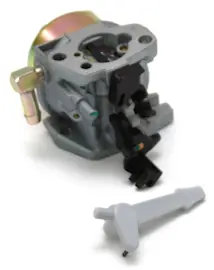
- Carburetor assembly and gaskets
- Air cleaner housing, filter assembly, and cover
- Fuel tank, fuel cap, and fuel filter
- Muffler assembly and muffler gasket
- Dipstick and oil fill tube O-ring
Quick ID checklist (what to look for)
| Item to check | Where to find it | Why it matters |
|---|---|---|
| Tiller model number: 24723000 | Tiller ID tag on frame | Confirms you are using the correct diagrams |
| Engine model: 270-V0 | Engine label or manual engine section | Ensures correct engine-specific parts |
| Fuel guidance label | On tiller/engine decals | Helps prevent fuel-related running issues |
Why it matters
Ordering the right Craftsman tiller parts depends on matching the tiller model (24723000) and the engine identification. That prevents common mistakes like buying the wrong carburetor gasket set, air filter assembly, or muffler hardware.
Last updated: January 2026
How much does a Craftsman rear tine tiller weigh?
The Craftsman rear-tine tiller model 24723000 weight depends on its exact configuration and any installed accessories. For the correct weight for your unit, use the specifications section in the 24723000 operator's manual and compare it to how your tiller is currently equipped.
How to get the correct weight for your 24723000
We recommend using the manual spec as your baseline, then accounting for anything you have added or removed.
- Check the manual for the listed unit weight (often shown as net or dry weight)
- Weigh the tiller on a platform scale if you need an exact transport number
- Remove loose items (tools, debris, attachments) before weighing
- Note whether the fuel tank is full or empty when you record the weight
- Include any installed accessories that stay on during transport
Common items that change “real-world” weight
These are the most common reasons two rear-tine tillers of the same model can handle differently when loading or moving.
| Item | What changes | What to do for accuracy |
|---|---|---|
| Fuel | Adds weight when the tank is filled | Weigh with the fuel level you normally transport |
| Soil and debris | Can add surprising weight around tines and shields | Clean the tine area before weighing |
| Accessories | Added components increase total weight | Weigh with accessories installed |
| Repairs/mods | Non-original parts can change weight slightly | Use a scale if precision matters |
About the counterweight on this model
The parts list for model 24723000 includes a 40 lb counterweight. If your tiller has that accessory installed, your total weight is higher than the base unit.
- Confirm whether the counterweight is installed
- Use the exact accessory rating when planning ramps and tie-downs
- If you need the part, match it to tiller counterweight, 40-lb 723P0381
Why it matters
Knowing the correct weight helps you choose safe loading ramps, trailer capacity, and tie-down points; it also reduces the risk of injury when moving a rear-tine tiller.
Last updated: January 2026