Owner’s manual
 Error Codes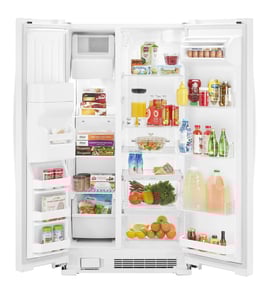


Does anyone make a 30 inch side-by-side refrigerator?
Yes. Several brands make 30-inch-wide side-by-side refrigerators, but they are less common than 33-inch and 36-inch models. If you are trying to replace a GE GSHF5KGXGCBB, confirm your opening width and door-swing clearance using the GSHF5KGXGCBB owner's manual before shopping.
What “30 inch” usually means (and what to measure)
Manufacturers often list a nominal width (30 inches), but the real fit depends on the cabinet cutout and door clearance.
- Measure the cabinet opening width at the front and back
- Measure height to the underside of the cabinet above
- Measure depth to the wall, including baseboards
- Confirm you have room to pull the unit out for service
- Check that doors can open without hitting walls or islands
Typical size comparison (shopping shortcut)
Use this as a quick filter when comparing models.
| Nominal width class | Common availability | Best for |
|---|---|---|
| 30-inch side-by-side | Limited | Tight kitchens, condos, smaller cutouts |
| 33-inch side-by-side | Common | Replacements where space is moderate |
| 36-inch side-by-side | Very common | Most standard full-size installations |
If you are replacing a side-by-side like GE GSHF5KGXGCBB
Even if you find a 30-inch side-by-side, the install details matter as much as width.
- Verify your opening is truly sized for a 30-inch unit (not a 33-inch cutout)
- Plan for moving clearance; many side-by-sides need doors removed for narrow entries
- If you have a dispenser, plan for a water line connection and enough slack to pull the refrigerator out
- Match electrical requirements and outlet location
Why it matters
Choosing the wrong width class can create door-interference problems, poor airflow around the cabinet, and installation headaches. Measuring first helps you avoid returns and ensures the replacement cools properly.
Last updated: January 2026
Where is the water filter in a GE side-by-side refrigerator?
On the GE GSHF5KGXGCBB side-by-side refrigerator, the water filter cartridge is located inside the fresh food (refrigerator) compartment in the back, upper-right corner. You access it from inside the refrigerator, not from the freezer door or the back of the unit.
How to find it quickly
- Open the refrigerator (fresh food) door.
- Look at the back wall near the top-right corner.
- Find the filter housing and cartridge (it typically twists or locks into place).
- If your model has a filter indicator light on the dispenser, use it as a reminder for replacement timing.
- For the exact filter location and removal steps for this model, follow the GSHF5KGXGCBB owner's manual.
Replacement timing and common symptoms
GE’s guidance is to replace the filter when the indicator changes color (if equipped) or about every 6 months, sooner if flow drops.
Typical signs the filter needs attention:
- Water dispenser flow slows down
- Ice maker production drops
- Ice cubes get smaller or hollow
- Water tastes or smells off
| What you notice | Most common cause | What we recommend |
|---|---|---|
| Slow water at dispenser | Clogged filter | Replace the filter cartridge |
| Less ice production | Restricted water flow | Replace filter, then check supply valve |
| Hollow ice cubes | Low flow (often filtration related) | Replace filter; verify water pressure |
The correct filter for this model
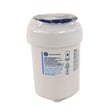
For the GE GSHF5KGXGCBB, a commonly used replacement is the GE refrigerator water filter MWFP. Match the cartridge style and seating method shown in the manual to ensure a proper seal.
Why it matters
A properly installed, unclogged refrigerator water filter helps maintain normal water flow to the dispenser and ice maker, and it reduces the chance of taste and odor issues caused by restricted filtration.
Last updated: January 2026
Are GE side-by-side refrigerators good?
GE side-by-side refrigerators like model GSHF5KGXGCBB are a solid choice for everyday use because they typically deliver consistent cooling, convenient ice and water dispensing, and flexible storage with adjustable shelves and bins. Overall performance depends most on proper setup, airflow, and routine maintenance.
What “good” usually means for this GE side-by-side
We judge a refrigerator by how well it holds temperature, how usable the storage is, and how reliable the dispenser and icemaker are over time.
- Temperature control features: This model family includes temperature controls and quick-cool features (such as TurboCool) referenced in the GSHF5KGXGCBB owner’s manual.
- Ice and water convenience: Side-by-sides are popular for in-door dispensing; water filtration is part of normal upkeep.
- Organization: Adjustable shelves and door bins make it easier to fit tall items and keep food visible.
- Serviceability: Common wear items (filters, valves, sensors, fan motors) are replaceable when symptoms show up.
Common pros and tradeoffs (side-by-side style)
| Area | What most owners like | Typical tradeoff |
|---|---|---|
| Freezer access | Items are at eye level | Narrower freezer shelves for wide boxes |
| Fresh food access | Easy access to daily items | Less full-width shelf space than some French-door models |
| Dispenser | Fast access to water and ice | More parts to maintain (filter, valve, chute door) |
Maintenance that keeps performance “good”
A lot of “bad refrigerator” complaints come from restricted airflow, neglected filters, or dispenser issues.
- Replace the water filter on schedule; use the correct filter for this model, such as the GE refrigerator water filter MWFP.
- Keep vents inside the refrigerator and freezer clear of food packages.
- Clean spills and avoid harsh cleaners that can damage interior surfaces (the manual warns against certain cleaners and dishwasher use for plastics).
- If ice dispensing gets messy or warm air leaks through the chute, inspect the chute door components.
- If temperatures drift, check basics first (door closing, loading, settings) before replacing parts.
Why it matters
A side-by-side that is set up correctly and maintained (especially the water filtration and airflow) holds safer food temperatures, reduces odor and frost issues, and helps the icemaker and dispenser work more consistently.
Last updated: January 2026
Why is my GE side-by-side freezing up?
On a GE GSHF5KGXGCBB side-by-side refrigerator, “freezing up” is usually caused by a defrost system problem (frost builds on the evaporator and blocks airflow) or a temperature and airflow issue (controls set too cold, vents blocked, door left open). Start with the temperature settings and airflow checks, then test defrost components.
Quick checks first (no tools)
- Confirm the controls are set to the factory recommendations: 37°F fresh food and 0°F freezer; allow 24 hours for temperatures to stabilize.
- Make sure food packages are not blocking the rear air vents and louvers (air tower/air tunnel).
- Check for a door not sealing or being left ajar; warm air causes moisture that turns into frost.
- If the ice chute door is stuck open, humid air can enter and create frost around the dispenser area.
- If the water dispenser line in the door is freezing, a slow-dripping valve can keep water sitting in the tube long enough to freeze.
Most common causes and what to do
| Symptom | Most likely cause | What we recommend |
|---|---|---|
| Freezer wall packed with snow or frost, fridge side warms | Defrost failure | Test/replace defrost heater, defrost thermostat, and related wiring |
| Items freezing in fresh food section | Controls too cold or airflow issue | Reset temps, clear vents, avoid overpacking |
| Frost/ice around dispenser or chute | Ice chute door not sealing | Inspect/replace chute door kit or solenoid if not closing |
| Dispenser line freezes, water flow weak | Water valve seeping or filter restriction | Replace filter, then evaluate valve seepage |
Parts that commonly fix “freezing up” on this model
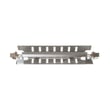
- Refrigerator defrost heater WR51X10055 (restores automatic defrost heat)
- Refrigerator defrost bi-metal thermostat WR50X10065 (opens/closes the defrost circuit based on coil temperature)
- GE refrigerator water filter MWFP (a clogged filter can reduce flow and contribute to dispenser issues)
- Refrigerator water valve WR57X33326 (a valve that does not fully close can seep and contribute to freezing in the dispenser line)
Why it matters
When frost builds up on the evaporator, airflow drops and temperatures swing; that can lead to a freezer that “ices up,” a refrigerator section that warms, higher energy use, and noisy fan operation.
For model-specific control features and troubleshooting steps, use the GSHF5KGXGCBB owner’s manual.
Last updated: January 2026