Owner’s manual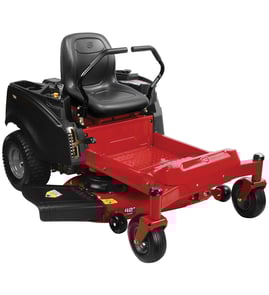



What is the advantage of a rear engine mower?
A rear-engine riding mower like the Husqvarna RZ4619 puts the engine weight over the drive wheels, which improves traction and stability while you mow. The layout also keeps the deck area more open for airflow, helping the mower cut and discharge clippings more consistently when you run high blade speed and control ground speed.
Key advantages you will notice
- Better traction on typical lawns because the engine weight is over the rear tires
- More stable feel when starting, stopping, and turning at mowing speed
- Easier access to the front and mid sections for routine checks and cleaning
- Consistent cut quality when you mow with high engine RPM and slower ground speed (especially in thicker grass)
- Good maneuverability around landscaping when you plan your mowing pattern
How to get the best results from your RZ4619
The operator guidance for this mower focuses on technique: run the engine fast so blades spin quickly, then slow your travel speed if grass is dense. We also recommend mowing dry grass and cleaning the underside of the deck after use.
- Start with a higher cutting height, then lower it to your preferred cut
- In hot months, keep grass a bit taller (over 3 inches) for lawn health
- If grass is over 6 inches, mow twice (first pass higher, second pass to finish)
- Avoid mowing wet lawns to reduce clumping and buildup under the deck
- After mowing, rinse the underside with the deck raised and the engine off
For model-specific operating and maintenance details, use the owner's manual.
Rear-engine mower advantages at a glance
| What you care about | Rear-engine riding mower benefit | What you do as the operator |
|---|---|---|
| Traction | More weight on drive wheels | Avoid wet grass; reduce speed in thick areas |
| Cut quality | Better airflow and discharge consistency | High engine speed; slower ground speed |
| Safety and control | Stable feel during turns and stops | Mow slopes up and down, not side-to-side |
Why it matters
Better traction and steadier handling help you maintain a consistent blade speed and mowing pattern, which is what produces an even cut and reduces clumps. That also lowers strain on deck components like blades and idlers over time.
Last updated: February 2026
How to fix a small engine backfire?
On a Husqvarna RZ4619 riding mower, small-engine backfire is usually caused by fuel quality, a lean/rich carburetor mixture, or ignition issues (especially a worn or incorrectly gapped spark plug). We fix it by correcting fuel and storage practices first, then checking ignition and engine speed settings per the owner's manual.
Quick fixes to try first (fuel and operation)
- Reduce engine speed gradually; avoid snapping the throttle closed.
- Use fresh gasoline; alcohol-blended fuel can attract moisture and damage the fuel system during storage.
- If the mower sat for 30 days or longer, drain old fuel and run the engine until the fuel lines and carburetor are empty, then refill with fresh fuel.
- Let the engine cool at least 2 minutes before refueling; wipe up any spilled fuel.
- Add fuel stabilizer for storage and run the engine at least 10 minutes so treated fuel reaches the carburetor.
Ignition check (common backfire cause)
The RZ4619 uses an electronic ignition system; the spark plugs are the main service item.
- Remove the ignition cable boot and clean around the spark plug.
- Inspect the plug; replace it if fouled, electrodes are burned, or the insulator is cracked.
- Set the electrode gap to 0.030 in (0.75 mm).
- Tighten correctly: used plug 1/8 turn past seated; new plug 1-1/4 turns past seated.
Spark plug condition guide
| What you see | What it points to | What to do |
|---|---|---|
| Black, sooty plug | Rich mixture or restricted air | Clean/replace plug; check air intake and carburetor setting |
| White, blistered electrode | Lean mixture or overheating | Correct mixture; verify plug type and tightening |
| Wet with fuel | Flooding or weak spark | Dry/replace plug; recheck ignition lead and starting technique |
Carburetor and engine speed settings
- Adjust the carburetor for smooth, steady running (optimum performance) after fuel and spark plug checks.
- Do not change governor settings or run at overly high engine speeds; overspeed can damage components.
Why it matters
Backfire is more than noise; it often signals poor combustion that can overheat the engine, damage the muffler, and shorten spark plug life. Fixing fuel quality and spark plug setup typically restores reliable starting and smoother mowing.
Last updated: February 2026
How do I know if my Husqvarna riding mower has a transmission problem?
If your Husqvarna RZ4619 moves slowly, surges, won’t move, or feels like it’s slipping (especially on hills or when changing direction), the drive system needs attention. Start by checking the parking brake, bypass valve position, and drive belt condition before assuming the hydrostatic transaxle has failed.
Quick symptoms that point to a drive or transmission issue
- Mower creeps, hesitates, or won’t move in forward or reverse
- Speed is uneven side-to-side (one side pulls harder)
- Loss of power going up inclines or under load
- New whining or growling noise during drive operation
- Oil leak around the transaxle area
Checks to do first (most common causes)
These items commonly mimic a “bad transmission” on the RZ4619.
- Parking brake: confirm it fully releases and the linkage returns freely
- Bypass valve: make sure the pump bypass is fully closed (open bypass causes little or no drive)
- Drive belt: inspect for slack, glazing, cracking, or a belt that has jumped off a pulley
- Hydraulic system: if drive feels spongy after service or storage, air can be trapped and cause slow or uneven movement
- Tire pressure: match left and right pressures; uneven pressure can feel like a drive problem
For control locations and operating checks specific to your mower, use the owner's manual.
What the manual troubleshooting chart is telling you
The RZ4619 troubleshooting guidance ties “moves slowly, unevenly, or not at all” to a short list of root causes. Use this table to narrow it down fast.
| What you notice | Most likely cause | What to do next |
|---|---|---|
| No/weak movement | Parking brake on | Recheck brake lever and linkage return |
| No/weak movement | Bypass valve open | Close bypass fully, then test drive |
| Slipping/slow drive | Transmission drive belt loose/off | Inspect belt routing and tension |
| Surging/uneven drive | Air in hydraulic system | Purge air per normal hydrostatic procedure |
| Oil under transaxle | Seal/gasket issue | Clean area, confirm leak source, plan repair |
Why it matters
A loose belt, open bypass, or trapped air can make the mower feel like the transaxle is failing, but those fixes are faster and cheaper than replacing major drive components. Catching leaks early also helps prevent internal damage.
Last updated: February 2026
Is 500 hours a lot for a Husqvarna riding mower?
For a Husqvarna RZ4619 riding mower, 500 hours is significant use, but it is not automatically “too much.” With consistent maintenance, many residential riders reach 500 to 1,500 hours; 500 hours is often mid-life rather than end-of-life. See the maintenance intervals in the owner's manual.
How to judge 500 hours on an RZ4619
We treat the hour meter like mileage on a vehicle: the condition and service history matter more than the number alone.
- Starts quickly hot and cold, with no excessive smoke
- Hydrostatic drive pulls smoothly without surging or whining
- Mower deck engages cleanly and cuts evenly
- Steering and brakes feel consistent and predictable
- Service journal entries or receipts match the hour meter
Maintenance checkpoints that matter most
The RZ4619 manual includes a service journal with major intervals (notably 100-hour and 300-hour services). Use these as your baseline for evaluating wear and planning upkeep.
| Hour range | What to verify | Why it matters |
|---|---|---|
| 0 to 100 | Oil and filter service, basic inspections | Prevents early engine wear |
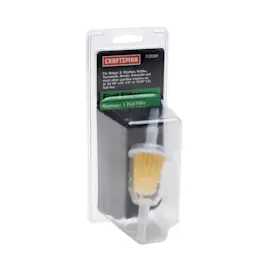
| 100 to 300 | Fuel filter, spark plugs, belt checks | Reduces no-start and power-loss issues |
| 300 to 500+ | Deck adjustment, deeper engine checks | Restores cut quality and performance |
Parts that commonly wear by this point
At around 500 hours, normal wear items often need attention, especially in the cutting system and belt drive.
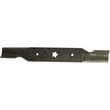
- Blades: replace if bent, cracked, or repeatedly sharpened thin (example: mulching blade 532134149)
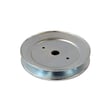
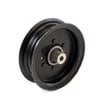
- Idler pulleys: replace if noisy, wobbly, or rough when spun by hand (example: Husqvarna lawn tractor deck idler pulley 532196106)
- Ground drive belt: replace if glazed, cracked, or slipping (example: lawn tractor ground drive belt, 1/2 x 56-5/16-in 539110411)
Why it matters
A mower with 500 hours that has been serviced on schedule typically stays reliable and holds value better than a lower-hour mower that missed oil changes, ran with dull blades, or used worn belts and pulleys.
Last updated: February 2026