Owner’s manual


How do you fix the PF code on a dryer?
On the Maytag MGD3500FW0 gas dryer, the PF code usually means the control detected a power failure or power interruption. Restoring steady power and clearing the code typically fixes it; if PF returns repeatedly, focus on the home power supply and the dryer’s power cord connection.
Quick reset steps
- Press Power/Cancel to clear the display.
- Unplug the dryer (or switch the breaker OFF) for 1 minute.
- Restore power and run a short timed cycle to confirm normal operation.
- If the breaker trips again, leave it OFF and correct the electrical issue before retrying.
What commonly triggers PF
- Brief outage or flicker (storm, utility work)
- Loose plug in the outlet or a worn outlet
- Tripped breaker or weak breaker that trips under load
- Power cord connection issue at the dryer terminal block (less common, but important)
Check these items (in order)
- Breaker: Reset the dryer breaker fully (OFF then ON).
- Outlet and plug fit: The plug should feel snug; no wobble.
- Power cord condition: Look for heat damage, cuts, or a loose strain relief.
- House voltage stability: If lights dim when the dryer starts, PF can reappear.
When a part is likely involved
PF is usually power related, but if the dryer also stops mid-cycle, overheats, or will not restart, a safety device may be opening.
| Symptom with PF | Most likely cause | What to do next |
|---|---|---|
| PF after outage only | Normal interruption | Reset and resume |
| PF repeats randomly | Unstable power, loose connection | Check breaker, outlet, cord |
| PF plus no heat or shutdown | Airflow restriction or overheating | Clean venting; inspect safety devices |
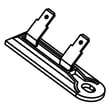
If overheating is suspected, we commonly see the thermal fuse open to protect the dryer; for this model, see thermal fuse W10909685.
Why it matters
Repeated PF events can interrupt drying, increase cycle time, and point to an electrical connection that can overheat. Fixing the root cause helps protect the control and keeps drying performance consistent.
For model-specific control panel functions and reset behavior, use the owner's manual. If you need to order replacement parts for MGD3500FW0, use the parts list for this model or search by model number on Sears PartsDirect.
Last updated: February 2026
How many cu ft is a Maytag MGD3500FW0?
The Maytag MGD3500FW0 gas dryer has a 7.2 cu. ft. drum capacity, which is considered a full-size dryer. This capacity is a good fit for everyday family loads, including towels and mixed fabrics; use the owner's manual to confirm cycle recommendations for bulky items.
What 7.2 cu. ft. means for real-world loads
A 7.2 cu. ft. dryer typically handles:
- A full mixed load from a standard washer
- A set of bath towels (avoid packing the drum tight)
- Medium bedding loads (dry in smaller batches for best airflow)
- Jeans and heavier cottons (use the correct cycle to prevent overdrying)
Quick capacity guide
| Load type | How full to load the drum | Why |
|---|---|---|
| Everyday clothes | About 1/2 to 2/3 full | Promotes tumbling and even drying |
| Towels | About 1/2 full | Reduces clumping and improves airflow |
| Bulky items | About 1/3 to 1/2 full | Helps prevent long dry times |
Why it matters
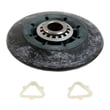
Capacity affects drying performance and fabric care. Overloading a 7.2 cu. ft. drum can cause longer dry times, higher heat exposure, and more wear on drive components such as the support rollers and idler pulley.
Helpful related parts and where to get them
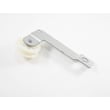
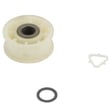
If your dryer is noisy, thumping, or not tumbling smoothly, common wear items for this model include:
You can order replacement parts for Maytag MGD3500FW0 from the parts list for this model, or search by model number on Sears PartsDirect.
Last updated: February 2026
What is the average lifespan of a Maytag washing machine?
A Maytag washing machine typically lasts 10 to 13 years with normal household use. This MGD3500FW0 page is for a Maytag gas dryer, so use your washer’s own documentation for model-specific care steps; for dryer care, use the MGD3500FW0 owner's manual.
Typical lifespan and what changes it
- Load size and balance: chronic overloading and off-balance loads wear suspension, bearings, and drive parts faster.
- Cycle frequency: more loads per week reduces service life.
- Water quality: hard water increases mineral buildup in valves and internal passages.
- Detergent use: excess detergent can cause residue, odors, and extra strain during rinsing.
- Maintenance habits: cleaning and inspection prevent small issues from becoming major repairs.
Maintenance habits that help you reach 10 to 13 years
- Keep loads within the rated capacity and distribute items evenly.
- Run the washer’s cleaning cycle on the schedule recommended for your model.
- Inspect and replace water inlet hoses on a regular schedule (many homeowners do this about every 5 years).
- Check pockets and use a mesh bag for small items to reduce drain clogs.
- Level the washer to reduce vibration and premature wear.
Quick lifespan guide (typical)
| Appliance type | Typical lifespan | Biggest life-shortener |
|---|---|---|
| Top-load washer | 10 to 13 years | Overloading, repeated off-balance loads |
| Front-load washer | 10 to 13 years | Poor cleaning routine, door boot neglect |
| Gas dryer | 10 to 13 years | Restricted venting, overheating |
Why it matters
Knowing the 10 to 13 year range helps you decide when a repair is cost-effective versus replacement, especially for high-cost failures like bearings, drive components, or electronic controls.
If you are shopping for parts, order the correct parts for your specific appliance model from the parts list for that model, or search by model number on Sears PartsDirect.
Last updated: February 2026