 Owner’s manual
 Error Codes


Where is the filter on a Maytag steam dishwasher?
On the Maytag MDBH955AWB dishwasher, the filter is in the bottom of the tub under the lower rack, around the sump area. You typically remove the lower rack, then unlock the upper filter assembly with a short counterclockwise turn and lift the filter pieces out for cleaning (see the MDBH955AWB owner's manual).
How to access and remove the filter
- Turn off the dishwasher and let the tub cool if it just ran a heated cycle.
- Pull out the lower rack to expose the bottom of the tub.
- Locate the round filter area near the center-bottom of the tub.
- Rotate the upper filter assembly about a quarter turn counterclockwise to unlock.
- Lift out the upper filter, then lift the lower filter from the circular opening.
- Rinse the filter under warm water; use a soft brush to remove grease and debris.
What to check while you are there
A clogged filter often shows up as poor cleaning, gritty residue, or slow draining. While the filter is out, check these common trouble spots:
- Food debris in the sump opening
- Spray arms blocked by labels, seeds, or glass chips
- Detergent buildup on the filter screen
- Standing water that suggests a drain restriction
- Rinse aid level (helps reduce spotting and film)
Quick symptoms-to-cause guide
| Symptom | Most common cause | What to do next |
|---|---|---|
| Dishes look sandy or gritty | Filter clogged | Clean filter and run a hot rinse cycle |
| White film on glassware | Detergent or hard water | Adjust detergent, use rinse aid |
| Poor wash coverage | Spray arms blocked | Clear spray arm holes and reload correctly |
| Water left in tub | Drain restriction | Check drain path and air gap (if used) |
Why it matters
The filter protects the wash system by trapping food soil so it does not recirculate onto dishes. Keeping it clean helps your Maytag dishwasher maintain strong spray performance, better drying results, and fewer odor issues.
Last updated: January 2026
What is the average lifespan of a Maytag dishwasher?
A Maytag dishwasher like model MDBH955AWB typically lasts 10 to 12 years. With consistent care (cleaning, correct detergent use, and fixing small leaks early), many units reach 12 to 15 years before major repairs such as a heater, pump, or door latch become more likely.
Typical lifespan and what affects it
Most dishwasher life depends more on water quality and maintenance than brand name alone.
- Hard water and heavy daily use shorten lifespan
- Regular cleaning of filters and spray arms extends lifespan
- Leaks left unchecked can damage wiring, the motor, and flooring
- Overloading can strain the circulation system and racks
- Heating and drying performance depends on the heater and proper rinse aid use
Maintenance checklist we recommend
Use these habits to get the longest life from your MDBH955AWB.
- Clean the filter area and sump regularly (remove debris and labels)
- Run hot water at the sink before starting a cycle for better wash temperature
- Use rinse aid and keep the cap sealing properly (see dishwasher rinse-aid dispenser cap WP99002614)
- Inspect the door closing and latching action; replace worn latch parts early
- Check inlet and drain hose connections periodically for leaks (the manual specifically recommends periodic leak checks)
Common “end-of-life” repairs (what they mean)
| Symptom | Often related to | Example part on this model |
|---|---|---|
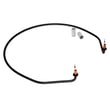
| Not drying, water stays cool | Heating circuit | Heater element (W10283681) |
| Poor cleaning, weak spray | Circulation system | Dishwasher pump impeller (WP99002659) |
| Won’t fill or fills slowly | Water supply control | Dishwasher water inlet valve (W11082871) |
| Door won’t latch or starts then stops | Door latch system | Dishwasher door latch (WPW10275768) |
Why it matters
Knowing the typical lifespan helps you decide whether to repair or replace. If your MDBH955AWB is already in the 10 to 12 year range, a major repair (heater, pump, or control issue) can be the point where replacement makes more sense, while smaller fixes (latch handle, cap, hose) are usually worth doing.
For model-specific care, cleaning, and troubleshooting steps, follow the MDBH955AWB owner's manual.
Last updated: January 2026
How to reset error code on Maytag dishwasher?
On the Maytag MDBH955AWB dishwasher, the most reliable “reset” for many error conditions is to cancel the current cycle using the START/CANCEL pad; the unit will drain and shut off, which often clears a temporary control glitch. If the code returns, use the error code as a clue to fix the underlying issue.
Quick reset steps (MDBH955AWB)
- Press START/CANCEL once to cancel a running cycle; the dishwasher will drain, then shut off.
- If you want the dishwasher off without draining, press START/CANCEL twice.
- If the controls seem unresponsive, check Control Lock: press and hold Heated Dry for 3 seconds to toggle lock on or off.
- After selecting a cycle, press START/CANCEL within 30 seconds or the dishwasher can turn off.
For the exact button layout and cycle behavior on your unit, follow the steps in the MDBH955AWB owner's manual.
If the error code comes back
An error code that returns after a cancel/reset usually means the dishwasher is still detecting a problem (drain, fill, heating, or door latch).
- Drain-related symptoms: standing water, slow drain, gurgling at the sink
- Fill-related symptoms: no water entering, very low water level, long fill time
- Heating/drying symptoms: poor drying, cool water, cycle seems to run long
- Door/latch symptoms: won’t start, stops mid-cycle, lights flashing when door is moved
Common parts tied to these symptoms (examples)
| Symptom | What to check | Example part for this model |
|---|---|---|
| Won’t start or stops when door moves | Door latch engagement | Dishwasher door latch WPW10275768 |
| Not filling or fills slowly | Water supply and inlet valve | Dishwasher water inlet valve W11082871 |
| Not drying or heating issues | Heating circuit and element | Heater element W10283681 |
Why it matters
Clearing the code without correcting the cause can lead to repeat shutdowns, poor cleaning, poor drying, or water left in the tub. Using START/CANCEL and Control Lock correctly helps you separate a simple control issue from a real mechanical or water-flow problem.
Last updated: January 2026
What is the most common problem with a Maytag dishwasher?
The most common issues we see on a Maytag dishwasher like model MDBH955AWB are poor cleaning, not draining, and leaks. In many cases, the cause is basic maintenance or setup: clogged wash paths, suds from the wrong detergent, low incoming water temperature, or a door that is not latching fully (so the cycle will not run correctly).
Most common symptoms and what usually causes them
- Not cleaning well: clogged filter area, blocked spray arm holes, overcrowded racks
- Not draining: food debris in the sump area, drain path restriction, drain hose routing issue
- Leaking: unit not level, rinse aid cap not tight, oversudsing from incorrect detergent
- Cycle takes too long: Sanitize option extends the cycle to heat water; incoming water should be about 120°F (49°C)
- Odor: standing water from poor draining, or dishes sitting too long before running a cycle
For model-specific operating tips and troubleshooting notes (including odor, leaks, and long cycle guidance), use the MDBH955AWB owner's manual.
Quick checks we recommend first (fast, no parts)
- Confirm water temperature at the sink nearest the dishwasher; hot water should reach about 120°F before starting.
- Use only dishwasher detergent and measure carefully; suds can cause overflow and leaks.
- Check loading so spray arms can spin freely and tall items do not block detergent cup opening.
- Run a rinse-only cycle if dishes are sitting and causing odor.
- Verify the dishwasher is level; leveling affects both leaks and noise.
When a part is commonly involved
If basic checks do not fix the problem, these parts are often involved depending on the symptom:
| Symptom | Common part to inspect | What it affects |
|---|---|---|
| Leaks or overfilling behavior | Water inlet valve | Water entering the tub |
| Poor drying or no heat | Heater element | Water heating and drying performance |
| Door will not start or stops mid-cycle | Door latch | Door closure and cycle safety |
Relevant parts for MDBH955AWB include the dishwasher water inlet valve W11082871, heater element W10283681, and dishwasher door latch WPW10275768.
Why it matters
Most “common problems” are really performance issues that build up over time. Correct detergent use, proper loading, and hot water at the start prevent repeat clogs, long cycles, and leaks, and they help protect the pump and heating system.
Last updated: January 2026





