Owner’s manual
 Error Codes


What is the most common reason a washing machine won't drain?
On the Kenmore washer model 11029802890, the most common reason it will not drain is a drain path restriction, usually a kinked or clogged drain hose or a blockage at the pump. A lid switch problem can also stop draining and spinning on many top-load washers; confirm the checks in the 11029802890 owner's manual.
Quick checks we recommend first
- Unplug the washer before touching hoses or the pump.
- Make sure the lid is fully closed; a failed lid switch can prevent drain and spin.
- Inspect the drain hose for kinks, crushing, or clogs.
- Verify the drain hose height and standpipe setup match the installation requirements.
- If you have heavy suds, reduce detergent; excessive sudsing can interfere with draining.
Most likely causes and what to do
| Symptom | Most likely cause | What to check next |
|---|---|---|
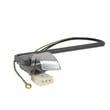
| Washer won’t drain and won’t spin | Lid switch not working | Test/replace the washer lid switch WP3949238 |
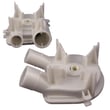
| Hums but drains slowly or not at all | Pump jam or pump failure | Check/replace the washer drain pump WP3363394 |
| Drains sometimes, then stops | Kinked/clogged drain hose or standpipe issue | Straighten hose; clear standpipe; ensure an air gap |
| Drains but leaves clothes very wet | Wrong cycle or too much detergent | Use higher spin cycle; reduce detergent |
Why it matters
A washer that cannot drain often cannot transition into spin, so loads stay wet and the motor, coupling, and gearcase can be stressed by repeated attempts to drain.
Last updated: January 2026
Is it worth replacing the drain pump on a washing machine?
Yes, it’s usually worth replacing the drain pump on a Kenmore washer model 11029802890 when the washer is otherwise in good shape and the problem is truly a drain failure (not a kinked hose, standpipe issue, or excessive suds). For this model, we recommend confirming the drain setup and basic causes first using the 11029802890 owner’s manual.
Quick decision guide
- Replace the pump when the washer won’t drain, drains very slowly, or makes loud pump noises and you’ve ruled out hose/installation issues.
- Skip the pump replacement when the washer is very old, has multiple major problems (gearcase, basket drive, leaks), or the tub/bearing area is failing.
- For DIYers, a drain pump is typically a straightforward repair compared to a gearcase or tub job.
Check these common “not the pump” causes first
The manual calls out several conditions that can prevent draining or spinning even when the pump is fine:
- Drain hose kinked or clogged; straighten/clear it
- Drain hose installed too high (more than about 96 inches above the floor)
- Drain hose installed too low (less than about 39 inches above the floor)
- Drain hose fits too tightly in the standpipe; adjust for a looser fit
- Too much detergent causing excessive sudsing
If your washer drains quickly, you may also hear air being pulled through the pump near the end of draining; that sound can be normal.
When replacing the pump makes the most sense
If the washer otherwise agitates and fills normally, a pump replacement is often a high-value fix.
| Situation | More likely worth it? | Why |
|---|---|---|
| Won’t drain, hose/standpipe checks out | Yes | Pump is a common single-point failure |
| Drains but leaves wet loads | Maybe | Could be pump, lid switch, or spin issue |
| Multiple symptoms (noise, leaks, poor spin) | Maybe not | Costs can stack up quickly |
Part to consider
For this model, the correct replacement is the washer drain pump WP3363394.
Why it matters
A weak or failed drain pump can stop the cycle before spin, leave clothes soaking wet, and contribute to odors from standing water. Fixing the true drain issue restores normal cycle completion and protects floors from overflow risks.
Last updated: January 2026
How to hard reset a Kenmore Elite washer?
For Kenmore model 11029802890, a “hard reset” is simply a power reset: disconnect power long enough to clear the control’s state, then restart the cycle normally using the timer knob. For exact operating steps for your control panel, use the 11029802890 owner's manual.
Hard reset steps (power reset)
- Push the cycle selector (timer) knob in to stop the washer.
- Unplug the washer (or switch the breaker off).
- Wait 1 minute.
- Restore power.
- Set a cycle by turning the timer knob to the right, then pull the knob out to start.
If the washer still will not start after a reset
These checks solve the most common “no start” complaints on this style of Kenmore top-load washer.
- Confirm the outlet has power (test with a lamp).
- Make sure the lid is fully closed; a failed lid switch can prevent agitation and spin.
- If the tub will not drain, check for a clog or a failing pump.
- If you hear the motor but the washer will not agitate or spin, inspect the motor coupling.
- If the washer drains but will not spin up to speed, the clutch can be the cause.
Quick part-to-symptom guide
| Symptom | Most likely area | Example part for this model |
|---|---|---|
| Won’t spin or agitate with lid closed | Lid safety circuit | Washer lid switch WP3949238 |
| Won’t drain or drains very slowly | Drain path/pump | Washer drain pump WP3363394 |
| Motor runs but basket/agitator doesn’t move | Drive connection | Coupling 285753A |
Why it matters
A hard reset clears a “stuck” control state after a power flicker or an interrupted cycle, but it will not fix a mechanical failure (lid switch, drain pump, coupling, clutch). Using the correct stop/restart method also prevents timer damage and reduces repeat no-start issues.
Last updated: January 2026
How to tell if a washing machine drain pump is bad?
On Kenmore washer model 11029802890, the drain pump is bad when the washer won’t drain (or drains very slowly) after you correct drain-hose setup and clear clogs; you often hear a steady hum, grinding, or rattling during the drain portion of the cycle.
Quick checks first (rule out installation and clogs)
- Straighten any kinks or crush points in the drain hose.
- Confirm the standpipe or laundry tub drains fast enough; a slow household drain mimics a bad pump.
- Set the drain hose height correctly; this model can drain poorly if the hose is routed too high.
- Make sure the hose is clamped and secured so it cannot leak or pull loose (see the 11029802890 owner's manual).
- Note that some air noise at the end of draining is normal as the tub empties.
Strong signs the pump itself is failing
- Water remains in the tub after the drain step.
- You hear the motor/pump humming but no water moves (jammed or seized impeller).
- Grinding or rattling during drain (debris in the pump or damaged impeller).
- Leaks from the pump housing or at the pump ports.
What to check safely before replacing parts
- Unplug the washer.
- Inspect the pump inlet and outlet hoses for socks, lint, or small items.
- If the pump is cracked, leaking, or the impeller is damaged, replace the pump.
What you observe vs. what it usually means
| Symptom | Most likely cause | Best next step |
|---|---|---|
| Hums but won’t drain | Jammed/failed pump | Clear debris; replace pump if damaged |
| Drains slowly | Partial clog or weak pump | Clear restrictions; retest |
| Won’t drain and won’t spin | Lid switch not closing or drain issue | Check lid; test switch |
Why it matters
A no-drain condition leaves loads soaking wet, can stop the cycle before spin, and increases leak risk if the drain hose is not secured correctly.
Last updated: January 2026