Installation guide
 Owner’s manual
 Error Codes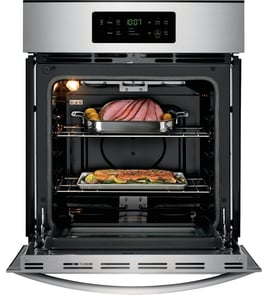

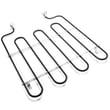
What is the difference between a convection oven and a wall oven?
A convection oven is defined by how it cooks (a fan circulates hot air for more even baking and roasting), while a wall oven is defined by how it’s installed (built into a cabinet). Your Dacor ECD230 is a wall oven; it may offer convection depending on its features.
- Convection oven: Uses a fan to move hot air for more even temperatures and faster cooking.
- True convection: Adds a heating element near the fan to keep the circulated air consistently hot.
- Wall oven: An oven installed in a wall or base cabinet cutout; it can be convection or non-convection.
- Standard (non-convection) bake: Relies mainly on radiant heat from bake and broil elements.
When you switch from standard bake to convection, you typically adjust time and temperature.
- Reduce set temperature by about 25°F for many recipes
- Start checking doneness 5 to 10 minutes earlier
- Use lower or middle racks for best air circulation
- Avoid overcrowding pans so air can move around food
| Feature | Convection (cooking method) | Wall oven (installation type) |
|---|---|---|
| Main difference | Fan-driven air circulation | Built-in cabinet installation |
| Typical benefit | More even browning, faster cook times | Saves floor space, ergonomic height |
| Can overlap? | Yes, a wall oven can be convection | Yes, a wall oven can be standard bake |
Understanding the difference helps you choose the right setting and expectations: convection affects results (browning, cook time), while wall-oven design affects fit, ventilation, and cabinet cutout requirements. For installation and clearance details for the ECD230, use the installation guide.
Last updated: January 2026
Can you still buy wall ovens?
Yes, wall ovens are still widely sold, and you can buy new single or double wall ovens in common sizes (such as 27-inch and 30-inch) with features like convection and self-clean. For your Dacor ECD230, we also support repairs by offering replacement wall oven parts and installation specs in the ECD230 installation guide.
Wall ovens are not one-size-fits-all; the cabinet cutout, electrical supply, and ventilation clearances must match the oven you choose.
- Cutout size: match the cabinet cutout width and height to the oven’s requirements
- Single vs. double: double ovens need a taller cutout and more planning
- Electrical: confirm the circuit and junction box location before ordering
- Ventilation: keep the oven air exhaust area clear during installation and use
- Features: convection, hidden bake element, and control style can change cooking results
If you are replacing an existing Dacor ECD230, using the same cutout style is the easiest path. The installation instructions list cabinet cutout dimensions and product dimensions for the ECD230 family, which helps you compare new models accurately.
| Shopping goal | Best approach | What to verify |
|---|---|---|
| Replace with same size | Choose a wall oven with matching cutout specs | Cutout width, cutout height, minimum cabinet depth |
| Upgrade features | Compare feature set first, then confirm fit | Electrical requirements, ventilation clearances |
| Switch brands | Expect small dimension differences | Exact cutout specs and trim overlap |
A wall oven that does not match the cabinet cutout can require cabinet modification, and incorrect electrical or blocked exhaust clearances can lead to poor baking performance and heat damage around the installation.
Last updated: January 2026
Is an electric wall oven better than a gas wall oven?
For most homes, an electric wall oven like the Dacor ECD230 is the better choice for baking because it holds a steadier temperature and delivers more even heat. Gas wall ovens can preheat faster and can be preferred for broiling style, but they typically cycle temperature more.
- Temperature consistency: Electric heat is steadier, which helps with cakes, cookies, and bread.
- Preheat speed: Gas often preheats a bit faster; electric can take longer depending on the cavity size.
- Moisture in the oven: Gas combustion adds moisture; electric heat is drier, which can improve browning.
- Installation requirements: Electric wall ovens require correct cabinet support and electrical supply planning.
- Operating cost: This depends on local utility rates; performance differences usually matter more than small cost swings.
| Feature | Electric wall oven (like ECD230) | Gas wall oven |
|---|---|---|
| Best for | Baking accuracy, even results | Fast heat, some broiling preferences |
| Heat type | Electric elements | Gas burner |
| Typical feel | Steady, even | More temperature cycling |
| Install focus | Electrical supply, cabinet cutout | Gas line plus electrical, venting rules |
Because the ECD230 is a built-in wall oven, correct installation affects both performance and cabinet protection. We recommend following the cutout, support platform, and electrical requirements in the ECD230 installation guide.
Key points to plan for:
- The support platform must be level and flush with the cabinet cutout; the oven cannot be leveled after it is installed.
- Do not block the oven air exhaust at the bottom of the oven.
- Electrical connection should be handled by a qualified electrician and follow applicable electrical codes.
If your priority is consistent baking and predictable results, electric is the practical “better” choice. If your priority is faster heat-up and you already have gas available at the wall-oven location, gas can be a good fit, but it is usually less precise for baking.
Last updated: January 2026
What is the best electric wall oven to buy?
The “best” electric wall oven depends on your cooking habits, cutout size, and features you will actually use. If you already own a Dacor ECD230, the best choice is usually a like-for-like replacement that matches your cabinet cutout and electrical requirements shown in the installation guide.
- Fit first: confirm your cabinet cutout width, height, and depth before shopping.
- Power requirements: match voltage and wiring needs to your home’s electrical supply.
- Cooking performance: look for convection if you bake frequently or cook multiple racks.
- Cleaning preference: decide between self-clean, steam clean, or manual cleaning.
- Controls and usability: choose knobs vs touch controls, and consider display readability.
- Serviceability: check parts availability (door components, vents, trim, control bezel).
| Priority | What to look for | Why it helps |
|---|---|---|
| Exact fit | Matching cutout and overall dimensions | Avoids cabinet modifications and install delays |
| Even baking | Convection fan system | More consistent browning and faster cook times |
| Easy upkeep | Self-clean or easy-to-remove door glass | Less time spent scrubbing |
| Long-term ownership | Replaceable wear parts and available trim/door pieces | Keeps the oven looking and working right |
Use the installation specs as your baseline so the new oven fits the opening and clears heat exhaust. We also recommend confirming whether you are replacing a single wall oven or a double wall oven configuration, since cutout and overall dimensions differ by design.
- Dacor error codes (for diagnosing control and sensor-related problems before replacing the oven)
- Dacor bezel assembly 13400R (if the issue is cosmetic or control-panel related)
- Dacor oven grille exhaust 82229R (if the top vent grille is damaged or missing)
A wall oven is one of the hardest appliances to “make fit later.” Getting the cutout dimensions and electrical requirements right up front prevents costly cabinet work and helps ensure safe, reliable operation.
Last updated: January 2026