Installation guide
 Owner’s manual


How to tell if a Whirlpool dishwasher heating element is bad?
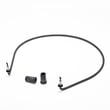
If your Whirlpool WDF520PADM6 dishwasher is leaving dishes wet and cool, takes much longer than normal, or the water never seems to heat, the heating element is a top suspect. We confirm it by checking for visible damage and testing the element for electrical continuity with power disconnected (see the owner's manual).
- Dishes do not dry well, even with rinse aid and a heated dry option
- Wash water stays lukewarm; cleaning results drop
- A cycle seems to run unusually long (heater not boosting temperature)
- You see cracks, blisters, or burn marks on the element
- A breaker trips during heat portions of the cycle (less common)
Before any hands-on inspection, let the dishwasher cool; the manual warns not to touch the heating element during or immediately after use.
- Do a quick visual inspection: Pull out the lower rack and look at the element for obvious damage.
- Check for heating-related performance issues: Poor drying plus poor cleaning often points to a heat problem.
- Test the element with a multimeter (best confirmation):
- Turn off power at the breaker (and do not rely only on the control panel)
- Access the element terminals and test for continuity
If the element tests open (no continuity), replacement is typically the fix. For this model, the heater is sold as an element assembly W10518394.
Sometimes the heater is fine, but another issue prevents proper heating or drying.
| Symptom | More likely cause | What to check next |
|---|---|---|
| Poor cleaning and poor drying | Low incoming water temp | Incoming water should be at least 120°F (49°C) per the manual |
| Poor cleaning, gritty debris | Filtration issue | Clean and reinstall the filter; consider dishwasher filter WPW10463906 |
| Not filling correctly | Water supply problem | Check the dishwasher water inlet valve W11175771 and supply line |
| Stops or behaves oddly with codes | Control sensing a fault | Use Whirlpool dishwasher error codes to match symptoms to code patterns |
On the WDF520PADM6, proper heating supports both wash performance and drying. When water does not reach target temperature, detergent works less effectively, soils redeposit more easily, and plastics stay wet longer.
Last updated: February 2026
What's the most common problem with a Whirlpool dishwasher?
Drain and wash-performance problems are the most common issues we see with Whirlpool dishwashers like model WDF520PADM6: the dishwasher will not drain fully, or dishes come out dirty because water flow is restricted by a clogged filter, blocked spray arm, or a pump-related problem. For model-specific checks and symptoms, use the owner's manual.
- Not draining or standing water: clogged filter area, restricted drain hose, or a drain/pump issue
- Dishes not getting clean: spray arm holes blocked, filter clogged, or weak circulation
- Stops mid-cycle or will not run: door not fully latched, power interruption, or control-related issue
- Leaks: loose hose connections, inlet valve seepage, or a sealing issue
- Noise (thumping/clattering): items contacting the wash arms or filters not seated correctly
- Confirm the door closes tightly and latches.
- Load soiled surfaces facing down and inward; avoid overlapping items that trap food.
- Make sure no dishes block the detergent dispenser.
- Verify spray arms spin freely and nothing extends into their path.
- Check the filter area and reinstall filters correctly after cleaning.
If cleaning and loading fixes do not help, these model-matched parts are common next steps:
| Problem you notice | Common part to inspect/replace | What it affects |
|---|---|---|
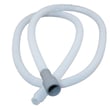
| Standing water, slow drain | Dishwasher drain hose 8269144A | Drain path restriction or kinks/clogs |
| Poor cleaning, weak spray | Dishwasher spray arm WPW10491331 | Water distribution and spray pattern |
| Poor cleaning, debris recirculating | Dishwasher filter WPW10463906 | Filtration and soil removal |
| No fill or underfilling | Dishwasher water inlet valve W11175771 | Water entering the tub |
| Poor drying, water not heating | Element assembly W10518394 | Water heating and drying performance |
Most “bad dishwasher” complaints trace back to water movement: filling, heating, spraying, filtering, and draining. When any one of those is restricted, you get dirty dishes, wet dishes, odors, or cycle interruptions.
Last updated: February 2026
What is the lifespan of a Whirlpool dishwasher?
A Whirlpool dishwasher typically lasts 10 to 12 years. To get the full lifespan from your Whirlpool WDF520PADM6, consistent cleaning, correct loading, and keeping the filter system clear matter as much as the number of cycles you run.
Most dishwashers fall into a similar life range, but these factors move the needle the most:
- Water quality and hardness (mineral buildup stresses the pump, heater, and valve)
- How often you run it (daily use wears moving parts faster)
- Filter and sump cleanliness (clogs reduce wash pressure and can cause drain issues)
- Drying habits (rinse aid and Heat Dry reduce moisture left behind)
- Installation quality (improper installation can increase noise and vibration)
These are the highest-impact habits we recommend for this Whirlpool dishwasher:
- Remove hard food debris before loading (bones, toothpicks, labels)
- Load with soiled surfaces facing down and inward; avoid overlapping items
- Confirm spray arms spin freely and are not blocked by tall items
- Use rinse aid for better drying and less spotting/filming
- Keep filters properly installed and clean them on a regular schedule
For model-specific use and care details, follow the owner's manual.
Some problems are maintenance-related; others signal a major component wearing out.
| Symptom | Common cause | What to check first |
|---|---|---|
| Dishes not drying | Low rinse aid, no Heat Dry, loading issues | Rinse aid level, loading, Heat Dry setting |
| Not cleaning well | Clogged filter, blocked spray arm, low wash pressure | Filter cleaning, spray arm holes, loading |
| Not draining | Drain restriction, hose routing, pump issue | Air gap/disposal, drain hose, filter area |
| Loud thumping | Items hitting spray arms | Re-load so items do not touch arms |
If you’re troubleshooting cleaning performance, the dishwasher filter WPW10463906 and dishwasher spray arm WPW10491331 are two common wear or clog points to inspect on this model.
A dishwasher that is kept clean internally runs with better water flow and heat performance. That reduces strain on key parts like the circulation system, heater, and inlet valve, which is the difference between replacing a part and replacing the dishwasher.
Last updated: February 2026
What are the commonly replaced parts in a dishwasher?
In a Whirlpool WDF520PADM6 dishwasher, the most commonly replaced parts are the ones that handle heating, water fill, washing action, and draining. When cleaning or drying performance drops, leaks appear, or the unit will not fill or drain, these parts are the first places we check; see the owner's manual for model-specific care and operating guidance.
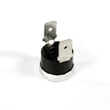
- Heating components: heating element and thermostat (poor drying, cool water, long cycles)
- Wash system parts: spray arm, filters, circulation pump and sump (poor cleaning, low spray)
- Fill parts: water inlet valve and float switch (won’t fill, overfills, fill errors)
- Drain parts: drain hose and related clamps (won’t drain, leaks under the sink)
- Door and user interface parts: dispenser and console/control components (detergent not dispensing, won’t start)
| Symptom | Likely part category | Example part for WDF520PADM6 |
|---|---|---|
| Not drying or water not heating | Heating | Element assembly W10518394, thermostat WP661566 |
| Not filling or fills slowly | Water fill | Dishwasher water inlet valve W11175771, dishwasher float switch WPW10195039 |
| Poor cleaning, weak spray | Wash action/filtration | Dishwasher spray arm WPW10491331, dishwasher filter WPW10463906 |
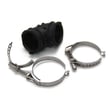
| Not draining or leaking at drain line | Drain | Dishwasher drain hose 8269144A, dishwasher hose clamp W10789434 |
| Detergent door not working | Dispensing | Dispenser assembly W11705150 |
- Clean the filter area and check for debris that can block water flow.
- Inspect the spray arm holes for clogs and confirm the arm spins freely.
- Verify the drain hose routing is not kinked and is installed with a proper high loop.
- If the dishwasher is not draining well, check and clean the drain air gap (if your setup uses one).
- For drying complaints, confirm you are using rinse aid and the heated dry option (if selected).
Dishwashers rely on correct water temperature, strong circulation, and proper draining. A worn heating element, restricted filter, or failing inlet valve can make cycles seem “normal” while results get worse over time.
Last updated: February 2026