Owner’s manual
 Error Codes



What is the average lifespan of a KitchenAid refrigerator?
A KitchenAid refrigerator typically lasts 12 to 15 years on average, and 10 to 17 years is a normal overall range. For your KitchenAid KRFF302ESS02 bottom-mount refrigerator, consistent maintenance and good airflow around the cabinet are the biggest factors that help it reach the high end of that range; see the owner's manual for care and operating guidance.
Most refrigerators fail early due to heat stress, poor airflow, dirty condenser areas, or cooling-system wear. These factors have the biggest impact:
- Condenser cleanliness and airflow (dust and pet hair make the compressor work harder)
- Door seal condition (warm air leaks increase run time and frost)
- Stable temperatures (avoid frequent warm-ups from propped doors)
- Water system upkeep (filters and valves that restrict flow can cause nuisance issues)
- Power quality (surges and outages can stress electronics)
As a refrigerator approaches the later years of its lifespan, these symptoms become more common:
- Longer run times to hold temperature
- More noticeable fan noise
- Frost buildup from door leaks or defrost issues
- Temperature swings in the fresh-food section
- Water dispenser slowing down (often filter related)
| Symptom | Common cause | Example part for KRFF302ESS02 |
|---|---|---|
| Warm fresh-food section, freezer OK | Airflow/damper issue | Refrigerator electronic damper WPW10594329 |
| Frost buildup, poor cooling | Defrost system issue | Refrigerator defrost heater WP12729128 |
| Clicking, no water/ice fill | Water supply issue | Refrigerator water inlet valve assembly WPW10420083 |
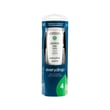
| Water tastes/flows poorly | Filter overdue | Filter, water EDR4RXD1 |
Knowing the typical 12 to 15-year lifespan helps you decide whether to repair or replace. If your KRFF302ESS02 is under about 10 years old, repairs like a thermistor, damper, or fan motor are often worthwhile; beyond that, repeated sealed-system or control issues can shift the value equation.
Last updated: February 2026
What is the advantage of a bottom mount fridge?
A bottom-mount refrigerator like the KitchenAid KRFF302ESS02 keeps the fresh-food section at about eye and waist level, so you reach everyday items with less bending. The freezer stays in the lower drawer, which can make frozen storage easier to organize by baskets.
- Easier access to frequently used fresh foods (less stooping)
- Better visibility of shelves and bins in the refrigerator compartment
- Freezer drawer can hold bulky items and stacks well
- French doors reduce the swing space needed in front of the refrigerator
- Door seals and alignment features help maintain consistent temperatures when doors close properly
Bottom-mount units still need proper airflow and door swing clearance to work well. For this model, our owner's manual calls out typical spacing needs such as clearance at the sides and top, space behind the cabinet for ventilation and water line connections (if equipped), and extra room on the hinge side when installed next to a wall.
| What you are planning | What to check first | Why it matters |
|---|---|---|
| Placing next to a wall or cabinet | Hinge-side clearance | Doors can open fully without rubbing |
| Pushing the refrigerator into a tight alcove | Side, top, and rear ventilation space | Helps cooling performance and efficiency |
| Doors not closing easily | Leveling and door alignment | Prevents warm air leaks and frost |
When the refrigerator section is the most-used space, keeping it higher reduces strain and speeds up meal prep. Proper door closing and alignment also protects food quality by reducing temperature swings and moisture intrusion.
Last updated: February 2026
What are the disadvantages of a bottom freezer refrigerator?
Bottom-freezer refrigerators like the KitchenAid KRFF302ESS02 keep fresh food at eye level, but the tradeoffs are more bending to reach frozen items, heavier freezer drawers that can feel awkward when fully loaded, and typically higher purchase and repair costs than simpler top-freezer designs. See the owner's manual for model-specific use and care details.
- You have to bend or squat to access the freezer drawer, especially for items stored at the bottom.
- Freezer drawers can be heavy when packed; that extra weight puts more strain on slides, rails, and baskets.
- Organization can be harder if the freezer is a deep bin style; items can stack and get buried.
- Door and drawer alignment matters more; if the cabinet is not level, doors may not close as easily.
- Some repairs can cost more because bottom-mount designs often use more complex drawer hardware and airflow routing.
| Feature | Bottom freezer | Top freezer | Side-by-side |
|---|---|---|---|
| Fresh-food access | Best (eye level) | Good | Good |
| Freezer access | Most bending | Least bending | Minimal bending |
| Freezer organization | Drawer-dependent | Shelf/bin-dependent | Narrow shelves, easy sorting |
| Typical complexity | Medium | Low | Medium to high |
Most “disadvantages” come down to ergonomics and wear points. A fully loaded freezer drawer is convenient for bulk storage, but it is also the part you pull, push, and slam the most, so leveling and smooth drawer travel make a bigger difference over time.
- Keep heavy items (meat, frozen juice, bulk bags) in the upper basket when possible.
- Do not overload the drawer; distribute weight front-to-back.
- Level the refrigerator so doors close reliably (the manual describes using the leveling screws).
- Open the drawer straight out; avoid twisting it, which can stress rails.
- If you notice warm temps or inconsistent cooling, adjust set points one step at a time and wait 24 hours between changes (per the manual).
Last updated: February 2026
What is the most common problem with KitchenAid refrigerators?
The most common KitchenAid refrigerator problems are cooling and ice maker or water dispenser issues. On the KitchenAid KRFF302ESS02, the most frequent root causes we see are restricted airflow from dirty condenser coils, a weak evaporator fan, or water system restrictions from a clogged filter or a failing inlet valve; start with the checks in the owner's manual.
- Fridge warm, freezer OK: airflow or damper problem (often the air damper or evaporator fan)
- Both sections warm: condenser coils dirty, condenser airflow blocked, or sealed system issue
- Ice maker slow or not making ice: water supply restriction, filter, inlet valve, or freezer temp too warm
- Water dispenser weak: filter restriction, air in the line, or inlet valve issue
- Frost buildup or leaking: defrost drain restriction or defrost system problem
- Set temps to typical targets: 37°F fresh food, 0°F freezer.
- Clean condenser coils and confirm the condenser area has good airflow.
- Replace the water filter if it is older than 6 months or flow is reduced (use the correct filter for this model, such as filter, water EDR4RXD1).
- Listen for the evaporator fan in the freezer; a failed motor often causes warm temps and poor airflow.
- If water flow is still weak after a new filter, test the inlet valve (a common fix is refrigerator water inlet valve assembly WPW10420083).
| Problem area | What you notice | Parts that commonly apply |
|---|---|---|
| Water filtration | Slow water, small ice cubes | Filter, Water (EDR4RXD1) |
| Water supply control | No water to dispenser/ice maker | Refrigerator Water Inlet Valve Assembly (WPW10420083) |
| Air circulation | Warm fridge, uneven temps | Refrigerator Evaporator Motor (W11024089), Refrigerator Evaporator Fan Blade (WP2169142) |
| Defrost | Frost, warming over time | Refrigerator Defrost Heater (WP12729128) |
Cooling and ice maker complaints often share the same underlying issue: restricted airflow or restricted water flow. Fixing the simple causes first (coil cleaning, correct temperature settings, and filter replacement) prevents food spoilage and reduces strain on the compressor.
- Follow our step-by-step article: how to replace the water filter in a KitchenAid refrigerator
Last updated: February 2026