Owner’s manual
 Error Codes


What is the life expectancy of a GE refrigerator?
GE refrigerators typically last 10 to 16 years. For your GE GSS25GSHPCSS side-by-side refrigerator, that same 10 to 16 year range is the practical expectation when the condenser area is kept clean, doors seal well, and temperatures are kept at recommended settings (see the GSS25GSHPCSS owner’s manual and installation instructions).
What affects lifespan the most
- Condenser airflow and cleanliness (dust buildup makes the compressor work harder)
- Door gasket condition (warm air leaks increase run time and frost)
- Stable temperatures (avoid frequent warm-ups from long door openings)
- Water filter and water system care (helps protect the dispenser and icemaker)
- Ice maker usage and maintenance (a common wear area on many side-by-sides)
Quick maintenance schedule (simple, high impact)
| Task | How often | Why it helps |
|---|---|---|
| Check temps (about 37°F fresh food, 0°F freezer) | Monthly | Reduces compressor strain |
| Clean condenser area / ensure airflow | Every 6 to 12 months | Improves cooling efficiency |
| Replace water filter (if equipped) | Every 6 months | Protects flow and taste |
| Inspect door seals for gaps/tears | Every 6 months | Prevents moisture and frost |
Parts that commonly come up as the unit ages
If you are troubleshooting temperature swings, slow ice production, or dispenser issues, these model-compatible parts are often involved:
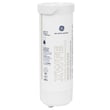
- GE refrigerator water filter XWFE (water quality and flow to dispenser/icemaker)
- Mech ice mak WR30X10093 (ice production problems)
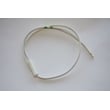
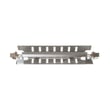
- Refrigerator defrost heater WR51X10055 (frost buildup and poor airflow)
Why it matters
A refrigerator that runs longer to hold temperature uses more energy and puts extra wear on the compressor, fans, and defrost system. Basic upkeep can help your GSS25GSHPCSS reach the upper end of the typical lifespan range.
Last updated: January 2026
What is the most common problem with a GE refrigerator?
For the GE GSS25GSHPCSS side-by-side refrigerator, the most common service issues we see across similar GE side-by-side models are cooling problems (warm fridge or freezer) and ice maker or dispenser problems. Cooling complaints are often tied to airflow restrictions, dirty coils, or a failed fan or defrost component.
Quick checks we recommend first
- Confirm the controls are set correctly and allow 24 hours for temperatures to stabilize after changes (typical targets are 37°F fresh food and 0°F freezer).
- Make sure vents are not blocked by food packages in either compartment.
- Clean dust from the condenser area and ensure there is space behind the refrigerator for airflow.
- Listen for the evaporator fan running when the doors are closed; no airflow can point to a fan or control issue.
- If ice production is slow, verify the freezer is cold enough and the water supply valve is fully open.
Common symptoms and likely causes (GE side-by-side)
| Symptom | Most common causes | What to do next |
|---|---|---|
| Fridge warm, freezer OK | Airflow damper/duct blockage, evaporator fan issue | Check for blocked vents; inspect fan operation |
| Freezer warm, fridge warm | Dirty condenser coils, condenser fan issue, sealed system/compressor issue | Clean coils; check fan; service if still warm |
| Frost buildup, warm temps | Defrost heater/thermostat failure | Check defrost system components |
| No ice or slow ice | Water filter restriction, inlet valve issue, ice maker issue | Replace filter; check valve and ice maker |
Parts that commonly relate to these problems
If troubleshooting points to a failed component, these model-compatible parts are commonly involved:
- Refrigerator evaporator fan motor WR60X10307: restores airflow across the evaporator to keep temperatures stable.
- Refrigerator defrost heater WR51X10055: helps prevent frost buildup that can block airflow.
- Refrigerator water inlet valve WR57X30890: controls water flow to the ice maker and dispenser.
- GE refrigerator water filter XWFE: a restricted filter can reduce water flow and slow ice production.
Why it matters
Cooling and ice maker issues often start small (slower ice production, slightly warmer temps) but can quickly lead to food spoilage, heavy frost buildup, or dispenser jams if airflow and water flow problems are not corrected.
For model-specific operating details like control settings, filter replacement steps, and ice maker basics, use the GSS25GSHPCSS owner’s manual.
Last updated: January 2026
How do you reset a GE side by side refrigerator?
To reset your GE GSS25GSHPCSS side-by-side refrigerator, disconnect power for about 30 seconds, then restore power. This reboots the control electronics; if cooling was interrupted, allow up to 24 hours for temperatures to stabilize. See the GSS25GSHPCSS owner’s manual for control and display details.
Reset options that apply to GSS25GSHPCSS
- Power reset: Unplug for 30 seconds, then plug back in.
- Breaker reset: Switch the refrigerator breaker OFF for 30 seconds, then ON.
- Unlock controls: Press and hold Lock Controls for 3 seconds if the panel is locked.
- Cooling set to OFF: If the display shows OFF, press a Colder pad to restart cooling.
Step-by-step: power reset
- Note your current temperature settings.
- Unplug the refrigerator (or turn the breaker OFF).
- Wait 30 seconds.
- Restore power.
- Confirm the display responds; then give the unit time to pull temperatures back down.
If it still will not cool after a reset
A reset will not fix a failed component. If temperatures stay high after 24 hours, check airflow, door sealing, and fan/compressor operation. If you suspect the refrigerator is not sensing temperature correctly, a compatible part for this model is the GE profile refrigerator temperature sensor WR55X10025.
- Keep air vents clear of food packages.
- Make sure both doors close and seal fully.
- Clean dust from the condenser area.
- Listen for the evaporator fan and compressor.
Why it matters
A reset clears minor control glitches after a power interruption or settings change. If cooling does not return, the problem is usually airflow, defrost, fan, sensor, or control related and needs troubleshooting.
| Symptom | What to try | What it suggests |
|---|---|---|
| Control panel unresponsive | Power reset | Temporary glitch vs. power issue |
| Display shows OFF | Press a Colder pad | Cooling was turned off by settings |
| Still warm after 24 hours | Basic cooling checks | Likely cooling-system problem |
Last updated: January 2026