 Owner’s manual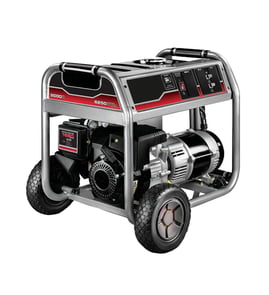

Will a 2000 watt generator run a 30 amp RV?
A 2000-watt generator like the All Power APG3014 can run some 30-amp RV loads, but it typically will not start and run an RV air conditioner reliably because AC compressors have high startup (surge) watts. It works best for lighter essentials when you manage what’s on at the same time.
What it can usually power (and what it usually cannot)
A 30-amp RV service is up to about 3,600 watts (30A × 120V). Your generator’s 2,000 watts is well below that, so you have to “budget” power.
- Usually OK: LED lights, phone/laptop charging, TV, small fans
- Often OK (depends on model): RV refrigerator on electric (many owners use propane instead), small microwave briefly
- Usually not OK: 13.5K to 15K BTU RV air conditioner (startup surge is the problem)
- Not OK together: microwave + coffee maker + space heater (any two can overload a 2,000W unit)
Quick wattage budgeting (example)
Use this as a practical way to decide what can run at the same time.
| RV item | Typical running watts | Notes |
|---|---|---|
| Battery converter/charger | 200 to 600 | Higher when batteries are low |
| RV refrigerator (electric mode) | 300 to 800 | Many switch to propane to save watts |
| Microwave | 900 to 1,500 | Short bursts; varies widely |
| Rooftop AC | 1,200 to 1,800 running | Startup surge can be much higher |
Tips to make a 2,000W generator work better for an RV
- Start with everything unplugged, then connect loads one at a time after the generator is running (this matches the safe-start guidance in the owner's manual).
- Turn off the converter/charger temporarily if you need to run a microwave.
- Use propane for the fridge and water heater when possible to reduce electrical demand.
- Avoid resistive heaters (space heater, toaster, hair dryer) on a small generator.
- Use a watt meter to see real-time draw and prevent overload trips.
Why it matters
Overloading a small generator causes voltage drop, breaker trips, and hard starts on motors (like an AC compressor). Managing loads protects your RV appliances and helps the APG3014 run more steadily.
Last updated: February 2026
What can a 10,000 watt generator run in a house?
A 10,000-watt generator can run many essential household loads at the same time, but the generator on this page (All Power APG3014) is a 2000-watt class unit, so it is sized for a few small loads, not whole-home circuits. For safe operation details, follow the APG3014 owner's manual.
What a 10,000-watt generator can typically run
With proper connection (transfer switch or interlock) and load management, 10,000 watts usually supports several essentials together:
- Refrigerator or freezer plus lights
- Gas furnace blower or boiler circulator
- Sump pump or well pump (surge watts matter)
- Microwave or coffee maker (cycle with other loads)
- One larger load at a time (for example, a window AC)
What usually cannot run All at once (even with 10,000 watts)
These loads commonly push you into overload if they overlap or start together:
- Central air conditioning plus other major loads
- Electric range/oven
- Electric dryer
- Electric water heater
- Multiple space heaters
Quick planning table (typical watt ranges)
Use appliance nameplates for exact watts and starting amps.
| Load | Typical running watts | Typical starting surge | Planning tip |
|---|---|---|---|
| Refrigerator | 150 to 800 | 1,200 to 2,000+ | Start it first, then add loads |
| Sump pump | 800 to 1,500 | 1,300 to 3,000+ | Larger pumps surge higher |
| Well pump | 1,000 to 2,500 | 2,000 to 5,000+ | Surge is the limiter |
| Microwave | 900 to 1,500 | Low | Input watts exceed “cooking watts” |
| Window AC | 600 to 1,500 | 1,500 to 3,500+ | Run one cooling load at a time |
Important note for the All Power APG3014 (2000-watt class)
If you are using the APG3014 specifically, plan on only small loads:
- A few LED lights
- Phone/laptop chargers
- A small fan
- A small TV
Avoid running refrigerators, sump pumps, space heaters, or microwaves on a 2000-watt class generator unless the appliance wattage and starting surge are clearly within the generator’s ratings.
Why it matters
Generator sizing is about both running watts and starting surge; matching the generator to the loads prevents breaker trips, stalled motors, and unsafe improvising with cords or connections.
Last updated: February 2026
What brand of generator is the most reliable?
For a portable generator like the All Power APG3014, the most reliable “brand” is the one that delivers stable power at your required wattage and is maintained on schedule. In real-world use, correct sizing, overload protection, and routine service matter more than the logo; follow the APG3014 owner's manual to get the reliability this model is designed to deliver.
What reliability looks like on the APG3014
Your APG3014 includes features and procedures in the manual that directly support dependable starting and safe output.
Key reliability points to use:
- Start with no loads connected; connect appliances only after the engine is running
- Disconnect loads before shutdown to prevent arcing and nuisance trips
- Use the fuel valve (cock) correctly: ON to run, OFF to stop and store
- Keep the air cleaner clean; a dirty filter causes hard starting and poor running
- Use the oil protection system (oil sensor/low-oil shutdown) as a safeguard, not a substitute for checking oil
How to compare “most reliable” brands for portable generators
When you compare brands, compare the specific model features and support, not marketing claims.
| Compare item | What to look for | Why it matters |
|---|---|---|
| Running vs. surge watts | Clear ratings that match your loads | Prevents overload and voltage drop |
| Protection | Overload/AC protection, low-oil shutdown | Reduces engine and connected-load damage |
| Fuel system design | Easy draining, accessible carburetor | Less trouble from stale fuel |
| Maintenance access | Air filter and spark plug are easy to reach | Increases on-time maintenance |
What we recommend for dependable performance
Use these practices to make the APG3014, or any comparable portable generator, as reliable as possible:
- Keep gasoline fresh; drain or treat fuel before storage
- Change oil on schedule and check level before each use
- Clean the air filter regularly (more often in dusty conditions)
- Tighten and inspect electrical connections if output is intermittent
- Avoid running continuously at maximum load; leave headroom for starting watts
Why it matters
Most “unreliable generator” problems come from overload, stale fuel, and skipped maintenance. When the generator is sized correctly and serviced routinely, a portable unit like the APG3014 starts more consistently and holds steadier output.
Last updated: February 2026