Installation guide
 Owner’s manual
 Error Codes


How do I tell what model my Kenmore dryer is?
Your Kenmore dryer’s model number is printed on the model and serial number label; on model 11072712101, it’s located at the top inside the dryer door well. Once you have that full number, we can match the correct parts, diagrams, and specifications.
Where to look for the model number label
Check these common Kenmore dryer locations (start with the door opening):
- Top inside the dryer door well (most common for this Kenmore 110-series style)
- Inside the door opening on the cabinet frame
- Rear panel (less common, but possible)
- Behind the lint screen housing area (varies by design)
For the exact label location and how it’s shown in the diagrams, use the 11072712101 owner's manual.
How to read the number (and why the prefix matters)
Kenmore model numbers are usually a long string of digits. The first three digits often indicate the manufacturing source.
| Example prefix | What it usually indicates | Why it helps |
|---|---|---|
| 110 | Whirlpool-built Kenmore | Best match for parts like belts, thermostats, and gas burner components |
| 796 | LG-built Kenmore | Different parts and service procedures |
| 417 | Frigidaire/Electrolux-built Kenmore | Different error codes and wiring layouts |
Tips to avoid ordering the wrong part
Use these quick checks before you buy a replacement part:
- Copy the model number exactly as printed (no spaces added or removed)
- Record the serial number too; it helps confirm production variation
- Match the part by name and part ID, not just appearance
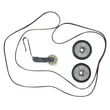
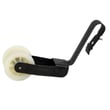
- If you are fixing a noise or no-tumble issue, common wear items include the dryer drum belt 341241 and the idler pulley
Why it matters
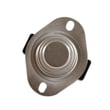
Kenmore dryers can look similar across different series, but parts like the gas valve coils, operating thermostat, timer, and door switch can vary by model family. Using the exact model number keeps troubleshooting accurate and prevents returns.
Last updated: February 2026
What are the most common issues with 11072712101?
The most common problems we see on Kenmore gas dryer model 11072712101 are no heat or intermittent heat, won’t start, drum not turning, long dry times, and squealing or thumping noise. Most are caused by airflow restriction or normal wear parts.
Most common symptoms and likely causes
- No heat / heats then stops: weak gas valve coils, failed igniter, radiant sensor, high-limit thermostat tripping from poor venting
- Won’t start: door switch not closing, timer issue, broken wire/connection
- Drum won’t turn: broken belt, seized idler pulley, worn drum support parts
- Long dry times: clogged venting, lint buildup in lint chute, blower wheel issues
- Noise (squeal, rumble, thump): belt, idler pulley, drum support wear
Quick checks before replacing parts
Follow the safety and access steps in the installation guide. Then:
- Confirm strong airflow at the outside vent hood
- Clean the lint screen and inspect the lint chute opening
- Verify the door closes firmly and the latch engages
- Listen for burner ignition (click, glow, then flame) during a heat cycle
- Stop using the dryer if you smell gas; have a qualified technician check the gas supply and burner system
Common fixes using model-matched parts
| Problem | Part that often fixes it |
|---|---|
| Drum not turning | Dryer drum belt 341241 |
| Dryer won’t start when door is shut | Dryer door switch WP3406107 |
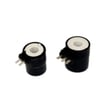
| Intermittent heat | Dryer valve coil kit 279834 |
| Squealing/chirping | Idler pulley WP691366 |
Why it matters
On a gas dryer, restricted venting can overheat the dryer and cause safety thermostats to trip, leading to no-heat complaints and repeated part failures. Fixing airflow first prevents repeat breakdowns.
Last updated: March 2026
What is the average lifespan of 11072712101?
A Kenmore gas dryer like model 11072712101 typically lasts 13 years with normal household use and basic maintenance. Keeping airflow strong (lint screen, lint chute, and venting) is the biggest factor in reaching that lifespan.
What affects lifespan the most
- Vent restriction and overheating (most common life-shortener)
- Heavy loads and frequent high-heat cycles
- Worn drum support parts (rollers, idler, belt)
- Ignition and gas heat components cycling frequently
- Lack of periodic internal lint cleaning
Maintenance that adds years
Use the schedule in your owner's manual and focus on airflow.
| Task | How often | Why it matters |
|---|---|---|
| Clean lint screen | Every load | Improves drying and reduces heat stress |
| Clean vent duct to outside | Every 6 to 12 months | Prevents overheating and long dry times |
| Check drum support noise/wear | Yearly | Prevents belt and motor strain |
| Inspect door seal and latch | Yearly | Helps maintain proper airflow path |
Parts that commonly wear during the dryer’s life
These are normal wear items on many Kenmore dryers; replacing them can extend service life:
- Dryer drum belt 341241 (drum stops turning or squeals)
- Idler pulley WP691366 (chirping, belt wear)
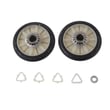
- Dryer repair kit 4392065 (common drum support wear items in one kit)
Why it matters
A dryer can run for years while slowly losing airflow; that causes longer dry times, higher gas use, and extra heat stress on thermostats, the motor, and burner components.
Last updated: March 2026