Installation guide
 Owner’s manual


What does PF stand for on a Kenmore dryer?
PF on a Kenmore dryer means power failure. On Kenmore model 11068722700, it shows up after the dryer loses electrical power (outlet, breaker trip, loose cord, or a brief outage) and then power is restored.
What to do when you see PF
- Press Stop/Cancel (or Pause/Cancel, depending on your control panel) to clear the display.
- Restart the cycle and monitor for repeat PF messages.
- Check the home breaker for a partial trip; reset it fully OFF, then ON.
- Make sure the dryer plug is fully seated and the cord is not loose at the terminal block cover.
- If you use a power strip or extension cord, remove it; plug the dryer directly into the wall outlet.
- If PF happens repeatedly, have the outlet voltage and connections checked by a qualified electrician.
Why PF happens (common causes)
PF is almost always an incoming power issue, not a heating problem. A dryer can run the motor on reduced or intermittent power but still reset the control and log PF.
| Situation | What you typically notice | Best next step |
|---|---|---|
| Brief outage or flicker | PF appears once | Clear PF and resume |
| Breaker partially tripped | Dryer dead or intermittent | Reset breaker fully |
| Loose power cord/terminal connection | PF repeats, may smell heat | Inspect connections per guide |
| Weak outlet or wiring issue | PF during heat-up | Electrician checks outlet and supply |
Why it matters
Repeated PF events can interrupt cycles and point to a wiring or grounding problem. Following the grounding and power connection instructions in the 11068722700 installation guide helps prevent unsafe connections and nuisance shutdowns.
Last updated: February 2026
What size is a Kenmore Model 11068722700 dryer?
The Kenmore dryer model 11068722700 is a 27-inch wide dryer with an overall height of 43 1/2 inches; the installation guide also shows an overall depth of about 29 1/4 inches (depth can vary slightly depending on venting and hookups). For exact placement and clearances, use the 11068722700 installation guide.
Dimensions and what they mean
These are the cabinet dimensions shown for this model in the installation documentation.
- Height: 43 1/2 in (110.5 cm)
- Width: 27 in (68.6 cm)
- Depth: about 29 1/4 in (74.3 cm)
- Recommended rear clearance for venting: typically 5 in minimum for the exhaust vent and elbow
- Floor requirement: level within 1 in slope under the entire dryer
Quick sizing table
| Measurement | Size (inches) | Notes |
|---|---|---|
| Width | 27 | Standard full-size width for many Kenmore dryers |
| Height | 43 1/2 | Measured to the top of the cabinet |
| Depth | ~29 1/4 | Allow extra space for cord, vent, and elbow |
Why it matters (fit, airflow, and service access)
Correct sizing is not just about sliding the dryer into place; it also affects airflow and how easily you can service the dryer later. Tight installs commonly lead to crushed vents, longer dry times, and overheating.
Installation tips we recommend
- Plan for extra depth behind the dryer so the exhaust duct does not kink.
- Keep the dryer level so the drum tumbles correctly and sensor cycles work as designed.
- Make sure the door can open fully in the installation location.
- If installing in a closet, follow the ventilation opening requirements in the documentation.
- Confirm the electrical setup matches the requirement for a separate 30-amp circuit.
Last updated: February 2026
What is the average life of a Kenmore dryer?
A Kenmore dryer typically lasts 10 to 13 years. With consistent care (especially lint and vent cleaning) many Kenmore dryers run 15 years or more. For your Kenmore 11068722700, following the maintenance steps in the 11068722700 owner's manual helps you reach the full expected lifespan.
What affects dryer lifespan most
- Airflow and venting: restricted exhaust overheats components and shortens life
- Lint buildup: inside the cabinet and vent increases heat stress and wear
- Load size: frequent overloading strains the drive motor, drum supports, and belt system
- Heat settings and cycle choice: high heat on every load accelerates wear
- Leveling and installation: an unlevel dryer can tumble poorly and increase mechanical stress (installation guidance is in the 11068722700 installation guide)
Maintenance that extends life (high impact)
- Clean the lint screen every load.
- Clean the exhaust venting regularly; lint should be removed from inside the exhaust vent about every 2 years, or more often with heavy use.
- Have lint removed from inside the dryer cabinet about every 2 years (this is typically done by a qualified technician).
- Keep the dryer level so the drum tumbles correctly.
- Avoid running the dryer in very cold spaces; operation below about 45°F can cause longer dry times and cycle issues.
Common wear items vs. major repairs
| What wears out first | Typical symptom | Example part for this model |
|---|---|---|
| Drum support/roller system | Thumping, rumbling | Support WPW10314173 |
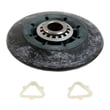
| Idler pulley/belt drive parts | Squealing, belt slipping | Dryer idler pulley 279640 |
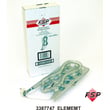
| Heating circuit parts | No heat, weak heat | Dryer heating element WP3387747 |
Why it matters
A dryer that is kept clean and vented correctly runs cooler, dries faster, and puts less strain on the heating element, thermostats, motor, and drum support system. That directly translates into fewer breakdowns and a longer service life.
Last updated: February 2026
How do I tell what model my Kenmore dryer is?
Your Kenmore dryer’s model number is printed on the model and serial number label; for model 11068722700, that label is located at the top inside the dryer door well. Once you have the full model number, we can match the correct parts, diagrams, and specifications.
Where to look on Kenmore model 11068722700
On this Kenmore dryer, the manual points to one primary location.
- Open the dryer door.
- Look at the top inside the dryer door well for the model and serial number label.
- Write down the entire model number (all digits) and the serial number.
- Take a clear photo of the label for future reference.
- Keep the purchase date with your records for service and parts matching.
For the exact label location and how Kenmore documents the model and serial number, use the 11068722700 owner's manual.
How to read the number you find
Kenmore model numbers often start with a prefix that helps identify the manufacturing source. For example, many Kenmore dryers that start with 110 were built for Kenmore by Whirlpool.
| What you see on the label | What it means for parts lookup |
|---|---|
| 11068722700 | Exact model; best match for diagrams and parts |
| 110.XXXXXXX | Same family prefix; still use the full number |
| Serial number | Helps identify production run details |
Why it matters
Using the full model number prevents ordering the wrong dryer parts (such as a heating element, door switch, or drum support roller) and helps ensure the correct installation and venting guidance for your exact configuration.
Last updated: February 2026
How do I know if my Kenmore dryer thermal fuse is blown?
If your Kenmore dryer model 11068722700 runs but has no heat, or it will not start at all, a blown thermal fuse is a top suspect. The sure way to know is a continuity test with a multimeter after disconnecting power and accessing the fuse, as outlined in the 11068722700 owner's manual.
Common symptoms that point to a blown thermal fuse
- Dryer will not start (no motor run, no drum tumble)
- Dryer tumbles but produces no heat (electric models can still tumble with a heat-side power issue)
- Cycle seems to run but clothes stay cool and damp
- Problem appears suddenly after a long cycle or restricted airflow
How we test it (safe, reliable method)
- Unplug the dryer or shut off power at the breaker.
- Access the thermal fuse (location varies by design; it is commonly on the blower housing or exhaust duct).
- Remove at least one wire from the fuse terminal.
- Check continuity with a multimeter.
What the meter reading means
| Multimeter result | What it means | What to do next |
|---|---|---|
| Continuity (near 0 ohms) | Fuse is good | Keep troubleshooting heat/airflow components |
| No continuity (open circuit) | Fuse is blown | Replace the fuse and correct the airflow problem |
Why the fuse blows (and what to fix so it does not happen again)
A thermal fuse usually opens because the dryer overheats. Overheating is most often caused by restricted airflow.
- Clean the lint screen and the lint screen housing
- Inspect and clean the vent duct from dryer to outside
- Confirm the outside vent hood opens fully
- Avoid crushed or extra-long vent runs
- Check for lint buildup at the blower area
For startup and heat checks specific to this model, follow the steps in the 11068722700 installation guide.
Related parts that often come up during no-heat or overheating repairs
If testing confirms a heat-system issue, these model-matched parts are commonly involved:
Why it matters
The thermal fuse is a one-time safety device. Replacing it without fixing the venting restriction often leads to repeat failures and continued no-heat or no-start symptoms.
Last updated: February 2026
How do I know if my dryer coil is bad?
A “bad dryer coil” on Kenmore model 11068722700 usually means the electric heating element coil is broken or shorted. The most reliable sign is no heat (or weak heat) even though the drum tumbles; confirm it by testing the heating circuit for continuity.
Quick symptoms to look for
- Drum turns but clothes stay cold or take much longer to dry
- Dryer runs normally but produces little to no heat on a high-heat cycle
- Burning smell only when heat is selected (stop the cycle and inspect)
- Breaker trips when heat should come on (possible short in the element or wiring)
- Heat works intermittently (often airflow or thermostat related, not always the element)
How we confirm the heating coil is the problem
Before testing parts, unplug the dryer (or switch off both breakers). Then follow the access and test steps in the 11068722700 installation guide.
Basic checks first (fast and common):
- Verify the dryer has the correct power supply; electric dryers need 240V.
- Check both household fuses or breakers; the drum can run on 120V but the heater needs the full 240V.
- Make sure the door fully closes and the cycle is set to a heat setting.
Continuity test (most definitive):
- Access the heater terminals.
- Use a multimeter on continuity or ohms.
- A good element typically shows continuity (often around 8 to 15 ohms).
- No continuity indicates a broken coil; continuity from a heater terminal to the metal heater housing indicates a short.
Parts that commonly get replaced with “no heat”
| Symptom | Most common cause | Example part for this model |
|---|---|---|
| Drum tumbles, no heat | Heating element open | Dryer heating element WP3387747 |
| No heat, overheating history | Thermal cut-off opened | Cut-off kit 279769 |
| Heat cycles oddly, long dry times | Operating thermostat issue or airflow restriction | Dryer operating thermostat WP3387134 |
Why it matters
A failed heating element coil stops proper drying, but restricted venting can also cause no-heat symptoms and can overheat the heater circuit. Our owner's manual covers venting basics and emphasizes using proper metal venting for safe, efficient drying.
Last updated: February 2026
Can you get parts for a Kenmore dryer?
Yes. We carry replacement parts for Kenmore dryers, including model 11068722700, so you can fix common problems like no heat, noisy tumbling, or a door that will not start the cycle. Use the 11068722700 owner's manual to confirm symptoms and safe service steps before ordering.
Parts you can commonly replace
For Kenmore dryer model 11068722700, these are some of the most frequently replaced items we stock:
- Drum support roller (helps the drum turn smoothly): support WPW10314173
- Heating component for no-heat issues: dryer heating element WP3387747
- Belt tension pulley for squealing or a loose belt: dryer idler pulley 279640
- Door safety switch for a dryer that will not run: dryer door switch WP3406107
- Thermal safety kit often used after overheating or airflow problems: cut-off kit 279769
How to make sure you order the right part
Match by model number first, then confirm the part location and style.
- Verify the model tag reads 11068722700
- Compare the part name and ID (example: WP3387747) to what is installed
- Check wiring terminals and mounting points before ordering
- If you are replacing a heat-related part, inspect and clean the venting path
- Disconnect power before servicing (per the manual safety guidance)
Quick match checklist
| What you see | What it often points to | Example part to check |
|---|---|---|
| Drum thumping or rumbling | Worn roller support | WPW10314173 |
| Runs but no heat | Failed heater or safety cut-off | WP3387747 or 279769 |
| Will not start when door closes | Door switch not closing circuit | WP3406107 |
| Squealing during tumble | Idler pulley wear | 279640 |
Why it matters
Using the correct Kenmore 11068722700 dryer parts helps restore safe airflow, proper heating, and smooth drum support. That prevents repeat failures like blown thermal cut-offs caused by restricted venting.
Last updated: February 2026