Installation guide
 Owner’s manual
 Error Codes


How to troubleshoot common whirlpool dishwasher problems?
For Whirlpool WDT730PAHW0, we troubleshoot most common dishwasher problems by confirming power, door latch, cycle selection, and water supply first; then we check draining and wash performance items like filters, spray arms, and hoses. Use the WDT730PAHW0 user guide for model-specific indicators and steps.
Quick checks (most fixes start here)
- Reset the house breaker or replace the fuse if the dishwasher has no power.
- Close the door firmly until it latches; the unit will not run if it is not latched.
- Press Start/Resume and close the door within 3 seconds (or the Start/Resume light can flash).
- Confirm the cycle is selected correctly and the water shutoff valve is fully open.
- If the dishwasher pauses briefly during wash, that can be normal on some cycles.
If it will not start or stops mid-cycle
Start with the basics above, then focus on the door latch and control response.
| Symptom | Most likely cause | What to do next |
|---|---|---|
| No lights, no response | Power issue | Check breaker, outlet, wiring connection per the WDT730PAHW0 installation guide |
| Lights on, won’t run | Door not latched or Start/Resume timing | Re-latch door; press Start/Resume and close within 3 seconds |
| Stops during cycle | Temporary pause or motor overload | Wait a few minutes; re-start cycle if needed |
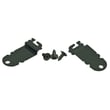
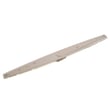
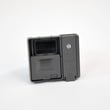
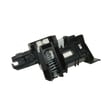
Part to consider if the door will not latch: a worn or broken dishwasher door latch WPW10653840.
If it won’t drain
A drain problem is usually a clog or a restriction.
- Check the sink/disposal connection for blockage.
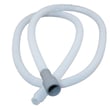
- Inspect the drain hose routing for kinks and ensure it is not crushed.
- Look for standing water and clear debris from the sump area (after disconnecting power).
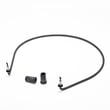
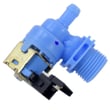
Parts that commonly relate to draining issues:
If it’s not cleaning or drying well
- Make sure the spray arm spins freely and the holes are not plugged.
- Avoid blocking the detergent dispenser with large items.
- Use rinse aid and run hot water at the sink before starting for better wash temperature.
Helpful reference: Whirlpool dishwasher error codes.
Why it matters
Starting with power, latch, and water supply prevents unnecessary part replacement. Drain and wash checks help protect the pump, improve cleaning, and reduce repeat cycles.
Last updated: February 2026
What does F4 mean on a whirlpool dishwasher?
On a Whirlpool dishwasher, an F4 code typically points to a draining problem (the dishwasher is not pumping water out as expected). On model WDT730PAHW0, start by canceling the cycle and checking for a simple blockage in the filter area, drain hose, or sink/disposer connection; then reset and retest.
What to do first (fast checks)
- Press Cancel/Drain and listen for the drain pump running for 30 to 120 seconds.
- Check the tub bottom for standing water and remove any debris.
- Verify the door is closing and latching firmly (a loose latch can interrupt parts of a cycle).
- Confirm the kitchen sink drain is flowing freely (a slow sink often means a restricted dishwasher drain path).
- If the unit recently had suds, correct detergent use and run a rinse cycle to clear foam.
Common causes of an F4 drain-related code
| What’s happening | Most common cause | What we recommend |
|---|---|---|
| Water stays in the tub | Clog in sump/filter area | Clear debris; retest drain |
| Pump runs but drains slowly | Kinked or restricted hose | Inspect routing and high loop/air gap |
| No drain sound at all | Failed drain pump or control issue | Test components; replace if needed |
| Drains into sink then backflows | Disposal plug not removed or drain restriction | Correct sink/disposal connection |
Parts that often fix a no-drain condition
If the dishwasher hums, won’t drain, or drains intermittently after clearing clogs, these model-matched parts are common fixes:
Why it matters
A drain fault can leave dirty water in the tub, cause cycle interruptions, and lead to poor cleaning and odors. Fixing the drain path first prevents unnecessary part replacement and gets WDT730PAHW0 back to normal cycle operation.
Reset and confirm operation
Follow the reset and diagnostic steps in the WDT730PAHW0 owner’s manual. If the code returns immediately after a successful drain, use the how to reset a Whirlpool dishwasher steps and then recheck the drain path.
Last updated: February 2026
What is the average lifespan of a whirlpool dishwasher?
A Whirlpool dishwasher typically lasts about 10 years with normal household use and basic maintenance. For your Whirlpool WDT730PAHW0, keeping filters and spray paths clear, using rinse aid, and avoiding detergent oversudsing are the biggest factors that help it reach that average.
Typical lifespan and what changes it
Most dishwashers fall into a similar range, but real-world life depends on usage and water conditions.
- Typical average: ~10 years
- Common range: 7 to 12 years
- Heavy use (multiple loads daily): often shorter
- Hard water and poor drying habits: can shorten life due to buildup
- Good maintenance and correct detergent: can extend life
Maintenance habits that extend life (WDT730PAHW0)
Your WDT730PAHW0 is designed for efficiency; the installation guidance notes that newer units often run longer cycles (about 2 to 5 hours) to use less energy and water. Longer cycles make maintenance and proper chemistry more important. See the WDT730PAHW0 owner’s manual for care steps and operating tips.
- Use dishwasher detergent only (never hand soap or laundry detergent)
- Use rinse aid consistently for drying and to reduce hard-water deposits
- Load so spray arms can rotate freely; don’t block the wash action
- Clean the interior and remove debris that can restrict draining
- Watch for early symptoms (poor cleaning, standing water, unusual noise) and address them quickly
Quick “repair or replace” guide
| Symptom | Often a maintenance fix | Often a part/repair issue |
|---|---|---|
| Dishes not drying | Add rinse aid; use Heat Dry | Heater circuit or control problem |
| Not draining | Clear hose/air gap; clean sump area | Drain pump failure |
| Poor cleaning | Improve loading; clear spray paths | Wash system or diverter issue |
| Door won’t start cycle | Close and latch firmly | Latch switch/latch assembly |
If the dishwasher is not draining and basic checks do not help, the dishwasher drain pump W10876537 is a common component involved in draining problems.
Why it matters
Knowing the average lifespan helps you plan: if your WDT730PAHW0 is near the 10-year mark and needs a major repair (pump, control board, or motor), comparing repair cost to replacement value becomes much clearer.
Last updated: February 2026
What model is Whirlpool Quiet Partner III?
Whirlpool “Quiet Partner III” is a series name used on multiple built-in dishwashers, not one single model number. If you’re working with a Whirlpool dishwasher like model WDT730PAHW0, the only reliable way to identify the exact model is to read the model/serial label inside the door and confirm it against the WDT730PAHW0 owner’s manual.
How to find the exact model number (fast)
Look for the model/serial label in the dishwasher interior near the door (typically on the right or left side).
- Open the door and check the inner tub frame near the latch area
- Write down the full model number and serial number exactly as shown
- Match the model number to the correct parts list before ordering parts
- If the label is hard to read, take a clear photo and zoom in
- Use the model number (not “Quiet Partner III”) when searching for parts and troubleshooting
“Quiet Partner III” vs. model number: what’s the difference?
“Quiet Partner III” describes a Whirlpool dishwasher line; the model number identifies the exact configuration (controls, racks, pump, heater, and trim).
| What you have | What it tells you | What to use for parts |
|---|---|---|
| Quiet Partner III badge | Product family/marketing name | Not enough by itself |
| Model number (example: WDT730PAHW0) | Exact build and compatible parts | Always use this |
| Serial number | Production details | Helpful for service |
Why it matters
Using the correct model number prevents ordering the wrong Whirlpool parts (like a control board, water inlet valve, or rack components) that may look similar but mount or wire differently.
Last updated: February 2026