Owner’s manual
 Error Codes


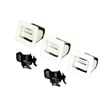
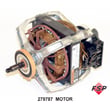
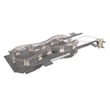
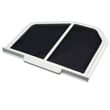
How do I know if my Kenmore dryer thermal fuse is blown?
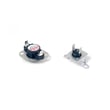
On your Kenmore Elite dryer model 11087729701, a blown thermal fuse usually shows up as a dryer that will not run at all (no start), even though the door is closed and the controls are set. The sure way to confirm is a continuity test with a multimeter after disconnecting power; a good fuse reads closed (continuity), a blown fuse reads open.
Before you open the cabinet, we recommend ruling out the common “no run” causes listed in the 11087729701 owner’s manual:
- Confirm the dryer is plugged in and the outlet has power.
- Check both household fuses or circuit breakers (many electric dryers use two).
- Make sure the door fully latches; if it does not latch, the dryer will not start.
- Press and hold Start firmly for 2 to 5 seconds (some loads require a longer press).
- Try a Timed Dry heated cycle to eliminate cycle selection issues.
- Unplug the dryer or shut off the breaker.
- Access the thermal fuse (location varies by design; follow the cabinet access steps in the 11087729701 owner’s manual).
- Pull one wire off the fuse terminal.
- Set your multimeter to continuity (or lowest ohms).
- Touch a probe to each terminal.
- Continuity (0 to a few ohms): fuse is good.
- No continuity (OL or infinite): fuse is blown and must be replaced.
A thermal fuse opens when the dryer overheats, most often from restricted airflow.
| What to check | What it affects | What to do |
|---|---|---|
| Lint screen and housing | Airflow through the blower | Clean every load; vacuum the chute |
| Vent duct to outside | Backpressure and heat buildup | Clear lint, kinks, crushed duct |
| Internal lint buildup | Heater and blower cooling | Clean inside cabinet during repair |
If you are also seeing airflow-related symptoms, inspect the venting and consider checking the dryer thermal cut-off fuse kit 279973 because overheating can damage multiple safety devices.
Last updated: February 2026
How do I tell if my dryer heating element is bad?
On Kenmore Elite dryer model 11087729701, a bad heating element usually shows up as no heat (or very weak heat) even though the drum tumbles. The most reliable check is a multimeter test for continuity and resistance; most dryer elements read about 10 to 50 ohms.
These items can mimic a “bad element” by preventing the heater from turning on:
- Run a Timed Dry heated cycle (not Air Only) and confirm the dryer actually calls for heat
- Check for an L2 diagnostic code; it points to a home power supply issue that can keep the heater off
- Verify both household fuses or breakers are good (electric dryers typically use two)
- Make sure the door fully closes and the Start button is pressed firmly
- Inspect the venting for restriction; crushed or blocked venting can trigger airflow problems
For model-specific operating and troubleshooting details, use the 11087729701 owner’s manual.
- Unplug the dryer (and shut off gas if you have a gas model; this Kenmore Elite model is commonly electric, but always follow your unit’s setup).
- Access the heater terminals (location varies by design).
- Set your multimeter to ohms (Ω).
- Measure across the element terminals.
| Meter reading | What it usually indicates | Next step |
|---|---|---|
| ~10 to 50 Ω | Element is typically OK | Check airflow, thermostats, thermal cut-off, power supply |
| OL / no continuity | Element is failed (open) | Replace the element |
| Very low Ω (near 0) | Possible short | Replace the element and inspect wiring |
If you need the correct replacement part for this model, match it by model number and use the dryer heating element WP8544771.
A failed heating element stops proper drying, but power supply issues (L2) and vent restrictions can also prevent heat and lead to repeat failures. Fixing the root cause helps protect the new element and improves drying performance.
Last updated: February 2026
What are the codes for Kenmore Elite dryer?
For Kenmore Elite dryer model 11087729701, the most common display codes include PF (power failure), L2 (home power supply issue affecting heat), AF (restricted or crushed vent), and F service codes (such as F1, F2, F20) that point to a control or keypad problem. See the 11087729701 owner's manual for the full list and the exact reset steps.
- PF: Power failure interrupted the cycle; press and hold START to restart.
- L2: The drum may turn but the heater may not; check the home power supply (electric dryers use two fuses or breakers).
- AF: Airflow restriction; the vent run may be crushed or blocked.
- F1 / F2 / F20 (and other F codes): Service codes; typically indicate an electronic control or user interface issue.
- Clear the code: Press any key to clear the display message (when applicable).
- Confirm the basics:
- Door fully closed
- Controls set to an active cycle
- START pressed firmly
- For PF: Restart the cycle by pressing and holding START.
- For L2:
- Reset both breakers (or replace both fuses if applicable)
- Confirm the power cord is installed correctly
- Try a Timed Dry heated cycle (not Air Only)
- For AF:
- Check the vent hose behind the dryer for crushing
- Remove lint buildup from the duct and exterior hood
| Code on display | Most likely area | What we recommend first |
|---|---|---|
| PF | Power interruption | Restart cycle; check outlet and breaker stability |
| L2 | Electrical supply to heater | Check both breakers/fuses; verify cord connection |
| AF | Venting/airflow | Inspect and clean venting; confirm vent length/elbows |
| F codes | Control or keypad | Use the manual’s troubleshooting; schedule service if it returns |
These codes help prevent repeat shutdowns, long dry times, and overheating. For example, AF often means restricted airflow, which can cause poor drying performance and repeated thermal safety trips.
Last updated: February 2026
Where is the model number on a Kenmore Elite dryer?
On Kenmore Elite dryer model 11087729701, the model and serial number are printed on a label attached to the dryer cabinet. You’ll typically find it just inside the door opening on the cabinet frame; it may also be located on the back of the dryer near the top. See the 11087729701 owner’s manual for the exact label location and what information to record.
- Open the dryer door and inspect the cabinet frame around the door opening
- Check the door opening area near the lint screen housing
- Look along the inside edge of the front panel near the door switch area
- If you don’t see it inside the door area, check the back panel near the top
The label normally lists the model number and serial number. We recommend writing both down before ordering parts like a heating element, thermistor, or drive motor.
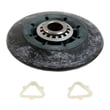
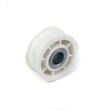
Using the exact model number helps us match the correct Kenmore Elite dryer parts and diagrams for your machine, especially for common repairs involving the drum support rollers, idler pulley, or thermal cut-off fuse kit.
| Location | What you’ll do | When it’s most likely |
|---|---|---|
| Inside door opening (cabinet frame) | Open door and scan the frame edges | Most common location |
| Back of dryer near the top | Pull dryer forward and inspect rear panel | If label isn’t visible inside door |
- Copy the model number exactly as printed (including any dots or suffixes)
- Record the serial number too; it helps confirm production series
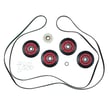
- Use the model number when selecting wear items like the dryer repair kit 4392067 or a replacement dryer heating element WP8544771
Last updated: February 2026
Why is Kenmore Elite dryer not heating?
If our Kenmore Elite dryer model 11087729701 runs but doesn’t heat, the most common causes are a 240-volt power supply issue (the drum can still tumble on 120V), restricted venting, or a failed heating circuit part such as the heating element or thermal cut-off. Use the 11087729701 owner's manual troubleshooting steps to narrow it down.
- Confirm the dryer is on a 240V electric dryer circuit; electric dryers use two fuses or two breakers and one can trip while the motor still runs.
- Run a Timed Dry heated cycle (not Air Only) to rule out cycle settings.
- Clean the lint screen and check for a crushed or blocked vent; some models display an AF code when airflow is restricted.
- If you see an L2 code, focus on the home power supply because the heater may not be getting full voltage.
- If the door isn’t latching firmly, the control can beep and the cycle may not run as expected.
If power and airflow are good, these parts are the usual suspects on this Kenmore Elite dryer:
- Heating element: dryer heating element WP8544771
- Thermal cut-off kit (opens when overheating occurs): dryer thermal cut-off fuse kit 279973
- Thermistor (temperature sensing): dryer thermistor WP8577274
| Symptom | Most likely cause | What to do next |
|---|---|---|
| Tumbles, no heat | One breaker/fuse open (no 240V) | Reset both breakers, check fuses, then retest |
| Long dry times, weak airflow | Vent restriction (AF possible) | Inspect vent run, clean ducting, confirm strong exhaust |
| No heat after airflow is corrected | Heating circuit part failure | Test element, thermal cut-off, thermistor for continuity |
No-heat problems are often caused by airflow restrictions or partial power loss, and continuing to run the dryer can lead to repeated thermal cut-off failures and poor drying performance.
Last updated: February 2026