 Owner’s manual




What's the average lifespan of a Maytag washer?
Most Maytag washers average 10 to 13 years of service life. For your Maytag PAVT244AWW, lifespan depends most on load size, how often you run cycles, and routine care like periodic interior cleaning and replacing water hoses on schedule (see the PAVT244AWW owner's manual).
A washer’s life is mainly driven by mechanical wear (drive system, motor, suspension) and water-related issues (hoses, valves, leaks).
- Longer life: moderate loads, balanced spins, good ventilation, prompt leak fixes
- Shorter life: frequent overloading, chronic unbalanced loads, hard-water buildup, ignored leaks
- High-impact maintenance: replace inlet hoses every 5 years, clean the tub regularly
We recommend these habits for the PAVT244AWW top-load design:
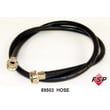
- Replace inlet hoses every 5 years to reduce leak risk; a common replacement is the inlet hose WP89503
- Clean and freshen the interior every 60 to 120 days (hot cycle with detergent and bleach per the manual)
- Use the right detergent amount for soil level and water hardness; too much can cause residue and odors
- Avoid overloading; heavy loads strain the drive motor, suspension, and spin system
- Address draining issues quickly; a restricted drain path can overwork the pump and leave water behind
| Washer age | What’s common | What we recommend |
|---|---|---|
| 0 to 5 years | Minor adjustments, hose checks | Keep loads balanced; inspect hoses and clamps |
| 6 to 10 years | Wear items show up (vibration, slow drain, fill issues) | Deep clean; check inlet screens; inspect drain hose |
| 10 to 13 years | Higher chance of major repairs | Compare repair cost vs. remaining life |
Knowing the typical 10 to 13-year lifespan helps you plan maintenance and decide when a repair (like a motor, valve, or suspension issue) makes sense versus replacing the washer.
For replacement parts for the PAVT244AWW, order from the parts list for this model or search by model number on Sears PartsDirect.
Last updated: February 2026
How do I reset the lid lock on a Maytag washer?
On the Maytag PAVT244AWW washer, there is no electronic “lid lock reset” sequence like newer digital models; the lid safety switch is a mechanical safety feature. We reset it by stopping the cycle, opening and firmly closing the lid, then restarting the cycle; if it still will not run or spin, troubleshoot the lid switch and related wiring.
- Turn the cycle control knob to OFF.
- If the tub or agitator is moving, wait until it fully stops before reaching inside.
- Open the lid for 10 seconds, then close it firmly.
- Select a cycle and pull the knob out to start.
- If the washer stopped mid-cycle, wait briefly; pauses can be normal.
The manual troubleshooting for this style of washer points to the lid needing to be completely closed for operation, especially spin.
- Confirm the lid is fully closed and aligned (hinges not loose).
- Listen for a distinct “click” at the lid switch area when closing.
- Check for a broken lid strike or actuator (if the lid closes but never “clicks”).
- Inspect the lid switch wiring for damage or a loose connector.
- If the washer will fill/agitate but will not spin, the lid switch circuit is still a top suspect.
If the lid is not consistently engaging the safety switch, these parts are commonly involved:
| Symptom | Most likely area | What we typically do |
|---|---|---|
| Won’t spin, acts “dead” with lid closed | Lid switch engagement | Inspect lid alignment and switch actuator; test switch continuity |
| Intermittent start/spin | Loose hardware or worn hinge | Tighten/repair lid hardware; verify lid closes squarely |
| Stops when vibrating | Harness connection issue | Reseat connectors; repair damaged wires |
If you find a loose or damaged connection while inspecting, a replacement fastener can help during reassembly, such as the switch screw WP90767.
This washer is designed not to spin unless the lid is closed; that safety switch helps prevent injury. If opening the lid does not stop action during spin, disconnect power and have the washer serviced.
For model-specific operating and troubleshooting steps, use the PAVT244AWW owner's manual.
Last updated: February 2026
What is the most common problem with a Maytag washer?
For the Maytag PAVT244AWW washer, the most common customer-reported issues are draining or spinning problems, leaks, and unusual noises. These symptoms are often caused by a kinked drain hose, an unbalanced load, a lid-switch related stop, or a water fill problem; our PAVT244AWW owner's manual covers operating tips and troubleshooting.
- Won’t drain or leaves clothes wet: check the drain hose routing for kinks and clogs; confirm the standpipe is not backing up.
- Won’t spin or stops when the lid is opened: the washer is designed to pause for safety; repeated stopping can also relate to the lid switch/actuator.
- Leaking: inspect fill hoses and clamps at the back of the washer and at the valve connections.
- Loud banging or walking: redistribute the load; this model includes an unbalanced spin load compensator.
- Stops mid-cycle: the built-in overload protector can shut the motor off if the load is too heavy or voltage is low; it restarts after the motor cools.
If basic checks do not fix the symptom, these model-compatible parts are common next steps:
- Filling issues or slow fill: washer water inlet valve WP21001932
- Leaks at hose connections: inlet hose WP89503
- Drain hose damage or leaks: washer drain hose WP21001872
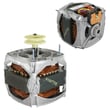
- Motor hums, struggles, or stops under load: washer drive motor WP21001950
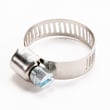
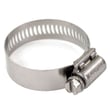
- Loose hose connections: hose clamp WP285655
| Symptom | Most likely cause | First action |
|---|---|---|
| Won’t drain | Drain hose kink/clog, pump restriction | Check hose path and outlet |
| Won’t spin | Lid switch/actuator issue, unbalanced load | Close lid firmly, rebalance load |
| Won’t fill | Inlet screens clogged, valve issue | Check screens, verify water supply |
| Stops repeatedly | Overload protector tripping | Reduce load, let motor cool |
Drain, spin, and fill problems can look like a major failure, but they often come from load size, hose routing, or a single replaceable part. Fixing the root cause prevents repeat shutdowns, leaks, and excessive wear on the drive system.
You can order replacement parts for the Maytag PAVT244AWW from the parts list for this model, or search by model number on Sears PartsDirect.
Last updated: February 2026
Is 4.8 cubic feet a large capacity washer?
Yes; 4.8 cubic feet is a large-capacity washer size. That said, the Maytag PAVT244AWW is a traditional top-load washer, and its usable load size is best managed by loading and water-level selection rather than relying on a cubic-feet number; use the PAVT244AWW owner's manual for the correct loading and water-level guidance.
Capacity labels are commonly grouped like this:
- Standard: about 3.2 to 4.4 cu. ft.
- Large: about 4.5 to 5.0 cu. ft.
- Extra-large: 5.0 cu. ft. and up
| Capacity (cu. ft.) | Common label | Best for |
|---|---|---|
| 3.2 to 4.4 | Standard | Everyday mixed loads |
| 4.5 to 5.0 | Large | Families, towels, bedding |
| 5.0+ | Extra-large | Frequent bulky loads, fewer cycles |
Even on a top-load agitator washer like the Maytag PAVT244AWW, cleaning depends on circulation and correct water level. Follow these practical loading rules:
- Load dry items loosely, not packed down
- Mix large and small items for better movement
- Keep bulky items (blankets, comforters) from dominating the tub; wash them separately when needed
- Select a water level that lets items circulate freely during agitation
- Use the right amount of detergent for soil level and water conditions
A washer can have a big tub, but if the load is overpacked or the water level is set too low, items cannot move freely; that reduces cleaning and can leave detergent residue. The manual’s loading and water-level guidance is the most reliable way to size loads for this model.
Last updated: February 2026


