 Installation guide
 Owner’s manual





What is the most common problem with GE dishwashers?
On the GE ADT521PGJ2WS dishwasher, the most common problems we see are draining issues (water left in the tub), poor cleaning from restricted spray, and start or stop problems caused by the door not latching fully. Many cases are fixed with cleaning and a few quick checks from the ADT521PGJ2WS owner’s manual.
Most common issues and what they usually point to
- Not draining or slow draining: kinked drain hose, clogged sump area, or a failing drain pump
- Not cleaning well: clogged spray arm holes, blocked filters, or weak circulation
- Won’t start or stops mid-cycle: door not fully closed, latch problem, or control issue
- Leaks at the door: worn or mis-seated door seal, door alignment problems
- Not drying: heater circuit issue, rinse aid settings, or cycle selection
Quick checks we recommend first (fast DIY)
- Confirm the door closes smoothly and does not rub the cabinet; misalignment can cause latch and leak symptoms.
- Look under and behind the dishwasher for a kinked drain hose (a common install-related cause of drain complaints).
- Remove the lower rack and inspect the lower spray arm for debris; clean the spray holes.
- Run hot water at the sink for 30 to 60 seconds before starting a cycle to improve wash performance.
Parts that commonly solve these symptoms on ADT521PGJ2WS
| Symptom | Common suspect | Example model-matched part |
|---|---|---|
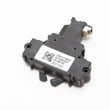
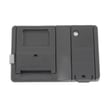
| Won’t start, beeps, or stops | Door latch not engaging | GE dishwasher door latch lock WD21X10490 |
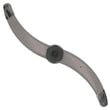
| Poor cleaning, food left behind | Clogged or damaged spray arm | Dishwasher spray arm, lower WD22X33499 |
| Water left in tub | Drain path restriction or pump issue | Dishwasher drain hose WD24X10062 |
| Not drying | Heater not heating | Dishwasher heating element WD05X30818 |
When an error code shows up
If the display is flashing or you see a code, use our GE electronic dishwasher error codes guide to match the code to the most likely cause (drain, fill, heating, or control).
Why it matters
Drain and wash problems often start as simple restrictions (hose kinks, debris in the spray system). Fixing those early helps prevent repeat clogs, odor, and poor cycle results, and it reduces strain on the circulation pump and drain pump.
Last updated: February 2026
What is the average lifespan of a GE dishwasher?
A GE dishwasher typically lasts 10 to 12 years. For your GE ADT521PGJ2WS, consistent cleaning, correct loading, and fixing small leaks or draining issues early are the biggest factors that help it reach (or beat) that average; see the ADT521PGJ2WS owner's manual for model-specific care guidance.
Typical lifespan range (what to expect)
Most residential dishwashers fall into a predictable range based on use and maintenance.
- Typical average: 10 to 12 years
- Common overall range: 8 to 15 years
- Heavy daily use and hard water usually shorten lifespan
- Regular cleaning and prompt repairs usually extend lifespan
| Usage pattern | What we typically see | What helps most |
|---|---|---|
| Light (few loads/week) | Often reaches the high end | Monthly cleaning, avoid overloading |
| Average (1 load/day) | Around the average | Keep spray arms clear, use proper detergent |
| Heavy (2+ loads/day) | Often on the shorter end | Address leaks/drain issues immediately |
What shortens a dishwasher’s life fastest
These are the most common “wear accelerators” we see on GE dishwashers.
- Running with clogged spray arm holes (poor wash performance strains the pump)
- Letting standing water remain after cycles (drain restrictions, sump debris)
- Ignoring door sealing issues (slow leaks damage components)
- Hard water scale buildup on the heating system
- Overloading racks so the door does not close and latch consistently
Parts that commonly affect longevity on ADT521PGJ2WS
If performance drops, these model-matched parts are frequent fixes that can prevent bigger failures.
- Dishwasher spray arm, lower WD22X33499 (clogs or damage reduce cleaning)
- Dishwasher heating element WD05X30818 (poor drying, water not heating as expected)
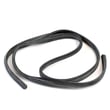
- Dishwasher tub gasket WD08X23476 (leaks at the tub perimeter)
- Dishwasher drain hose WD24X10062 (kinks or restrictions cause poor draining)
Why it matters
A dishwasher that is not cleaning, draining, or drying correctly often runs longer and works harder. Restoring normal wash action, heating, and sealing helps protect the circulation pump, control components, and the tub area over time.
Last updated: February 2026
Can I replace dishwasher parts myself?
Yes. For the GE ADT521PGJ2WS dishwasher, we can replace many common parts ourselves if we shut off power and water first and follow the steps in the ADT521PGJ2WS installation guide. Jobs involving wiring, pumps, or leak protection take more care but are still DIY-friendly with the right tools.
What’s usually DIY-friendly vs. what’s more advanced
Good DIY repairs (typical):
- Spray arms and related wash components (clogs, cracks, poor cleaning)
- Door sealing and minor leak fixes (gaskets, alignment)
- Drain hose routing issues (kinks, pinches)
- Rack and roller issues (racks not sliding smoothly)
More advanced repairs (plan extra time):
- Electrical parts (control panel, wire harnesses)
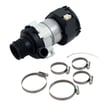
- Water movement parts (circulation pump, drain pump, diverter)
- Heating and drying components
| Repair type | What you’ll do | Skill level |
|---|---|---|
| Spray arm replacement | Twist off, swap, check for debris | Basic |
| Door leak check | Inspect gasket, confirm level, adjust | Basic to moderate |
| Pump or diverter | Access sump area, clamps, wiring, test for leaks | Moderate to advanced |
Safety and prep steps we recommend
- Turn off power at the breaker (dishwashers are often hardwired).
- Turn off the water supply under the sink.
- Pull the dishwasher out carefully; GE notes it must be installed to allow future removal for service.
- Avoid pushing on the front door panel with your knee when sliding it out or in.
- Confirm the drain hose is not kinked or pinched behind the unit.
Model-specific tips that prevent common problems
The installation instructions for this GE dishwasher call out a few items that directly affect performance and leaks:
- Level the dishwasher left-to-right and front-to-back so racks do not roll and the door closes correctly.
- Make sure all 4 legs contact the floor.
- Verify tub trim and door clearance so the door does not rub the tub.
Parts customers commonly replace on this model
- Dishwasher spray arm, lower WD22X33499 (poor cleaning, no spray, cracked arm)
- Dishwasher heating element WD05X30818 (poor drying, water not heating)
- Dishwasher drain hose WD24X10062 (drain leaks, kinks, routing issues)
Why it matters
A dishwasher that is not level, has a kinked drain hose, or has restricted spray can look like a “bad pump” problem. Fixing the basics first saves time and prevents repeat leaks or poor wash results.
Last updated: February 2026
How to fix leaking GE Cafe dishwasher corner baffle replacement?
A “corner baffle” is not typically a separate, orderable part on the GE ADT521PGJ2WS dishwasher; corner leaks are usually fixed by correcting door alignment and leveling, cleaning the sealing surfaces, and replacing the door/tub sealing gasket if it is worn or deformed.
What we check first for a corner leak
- Confirm the dishwasher is level; an out-of-level tub can make one corner drip.
- Make sure the door closes freely and does not rub the tub or adjacent cabinets.
- Clean the tub lip and door sealing area; soap film and grit create a leak path.
- Check for oversudsing (too much detergent or wrong detergent type).
- Inspect the door seal and tub gasket for tears, flattening, or gaps.
Leveling and alignment (most common fix)
The installation instructions for ADT521PGJ2WS call out leveling and door fit as key leak-prevention steps. Use the ADT521PGJ2WS installation guide to level the unit so the door closes without hitting the side of the tub and the racks do not roll on their own.
Quick alignment checklist
- Door closes evenly with consistent resistance
- No contact between door and tub opening
- Racks stay put when pulled halfway out
- Mounting screws are tight and the unit is secured squarely
When a gasket replacement is the right repair
If the leak is still at the door edge after leveling and cleaning, replace the sealing gasket that matches the leak location. For this model, a common seal-related part is the dishwasher tub gasket WD08X23476.
| Leak location | Most likely cause | Best next step |
|---|---|---|
| One front corner | Door not square, tub lip dirty | Relevel, clean sealing surfaces |
| Along the door edge | Worn/warped gasket | Replace tub/door gasket |
| Under the unit | Hose, pump, or connection | Inspect clamps, hoses, pump area |
Why it matters
A small corner drip can quickly swell cabinets and flooring; fixing leveling, door fit, and the tub gasket restores the seal so wash pressure stays in the tub and leaks stop.
Last updated: February 2026





