 Owner’s manual


How many years should a GE washing machine last?
A GE washing machine like model GTW220ACK5WW typically lasts 10 to 14 years with normal household use and basic maintenance. Consistent cleaning, correct detergent use (HE), and avoiding overloads are the biggest factors that help you reach the high end of that range.
What affects lifespan most
- Load habits: Overloading strains the drive system, suspension, and motor.
- Detergent choice and amount: Using HE detergent and not oversudsing helps protect bearings and the drain system.
- Water supply care: Replace fill hoses about every 5 years to reduce leak risk.
- Leveling and vibration: A washer that rocks during spin wears suspension parts faster.
- Drain performance: Slow draining makes the pump work harder and can shorten its life.
Quick maintenance checklist for GTW220ACK5WW
Use these habits to help your washer reach its expected service life:
- Leave the lid open after loads so moisture can evaporate.
- Wipe up spills and clean the basket with mild detergent (no harsh abrasives).
- Measure detergent carefully; more soap is not better.
- Load items loosely around the agitator and keep loads balanced.
- Check hoses and connections periodically for drips.
Typical lifespan expectations (simple comparison)
| Washer type | Typical lifespan | Notes |
|---|---|---|
| Top-load (like GTW220ACK5WW) | 10 to 14 years | Often longer with good leveling and balanced loads |
| Front-load | 10 to 14 years | Door boot and drainage upkeep matter most |
Why it matters
Knowing the expected lifespan helps you decide whether to invest in a repair (such as a belt, pump, or lid lock) versus planning for replacement, especially once the washer is past the 10-year mark.
For model-specific use, care, and troubleshooting guidance, follow the GTW220ACK5WW owner’s manual.
Last updated: January 2026
What are common problems with GE washers?
Common problems we see on the GE GTW220ACK5WW washer include not spinning out water, not draining, not filling, excessive vibration, and unusual noises. Many of these issues are caused by load balance, water supply restrictions, or a worn drive or drain component; start with the checks in the GTW220ACK5WW owner’s manual.
Most common symptoms (and what they usually point to)
- Won’t spin or clothes are too wet: out-of-balance load, lid lock issue, drive system problem
- Won’t drain: kinked drain hose, clogged pump, failed drain pump
- Won’t fill or fills slowly: closed faucets, clogged inlet screens, inlet valve problem
- Vibrates or bangs during spin: unlevel washer, uneven load, worn suspension
- Loud humming or gurgling during drain: drain pump working hard or partially blocked
- Clicking or motor reversing sounds: often normal operation on many cycles
Quick model-specific checks for GTW220ACK5WW
These steps match how this high-efficiency top-load washer is designed to operate.
- Confirm the lid is closed and Start was pressed (the washer will not run with the lid open).
- Redistribute the load if the Spin light blinks or the load ends wet; then run Drain & Spin.
- Check water supply: both hot and cold faucets fully open; clean inlet hose screens if flow is low.
- Inspect the drain setup: drain hose not kinked; standpipe height meets the 30-inch minimum.
Parts that commonly solve these problems
If basic checks do not fix the issue, these model-compatible parts are often involved:
| Symptom | Part to inspect/replace | Why it matters |
|---|---|---|
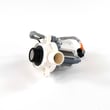
| Won’t drain / water left in tub | Washer drain pump assembly WH23X28418 | Pumps water out; failure or blockage stops draining |
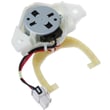
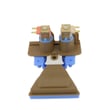
| Won’t fill / slow fill | Washer water inlet valve assembly WH13X26534 | Controls water entering the washer |
| Won’t spin / weak spin | Washer drive belt WH01X27538 | Transfers motor power to the drive system |
| Excessive shaking | Washer suspension rod kit WH16X26908 | Stabilizes the tub during spin |
Why it matters
Catching a drain, spin, or fill problem early helps prevent repeat cycle failures, water left sitting in the tub (odors), and extra strain on the motor, belt, and suspension.
Last updated: January 2026
Is the GTW220ACK7WW high efficiency?
Yes. GE’s GTW220-series washers are high-efficiency (HE) designs; they use less water than older deep-fill top-load washers, so the water level can look lower while still cleaning effectively. For HE operation notes and loading guidance, see the GTW220ACK5WW owner’s manual.
Model-specific note (GTW220ACK7WW vs GTW220ACK5WW)
We’re answering in the context of model GTW220ACK5WW because that’s the model we have documentation for here. GE’s manual for the GTW220 platform states it is a “high efficiency washing machine,” which is the same HE design used across GTW220 variants.
What you’ll notice with an HE top-load washer
- Lower visible water level during wash and rinse
- Best results when you use HE detergent (less oversudsing)
- Load sensing or “Precise Fill” behavior on some versions
- Longer cycle times compared to older traditional washers
- Better spin extraction (clothes may come out less wet)
Quick detergent and option guide
| Situation | What to do | Why it matters |
|---|---|---|
| Everyday loads | Use HE detergent and measure carefully | Prevents suds, residue, and poor rinsing |
| Using fabric softener (if equipped) | Use Deep Rinse | Helps rinse additives out more completely |
| Bulky items | Use the Bulky Items (or Delicates) cycle | Helps control vibration and improves results |
Why it matters
HE washers clean differently than older models. Knowing it’s HE helps you choose the right detergent type, dose, and cycle so you get the performance the washer was designed to deliver.
Last updated: January 2026


