Owner’s manual







How to find chainsaw model number?
On the Craftsman chainsaw model 358341950, the model number is printed on the product identification label attached to the saw. We typically see this label on the side of the engine/motor housing, near the rear handle, or on the underside of the unit; copy every character exactly so you can match the correct parts and diagrams.
Where to look on a gas chainsaw
Check these common label locations first:
- Side of the engine/motor casing (starter side or muffler side)
- Near the rear handle or trigger area
- Under the saw body, close to the bar mount area
- On the chassis/frame near the fuel tank
- On a sticker or metal tag that includes other numbers (serial, type, or code)
What to write down (and why)
The model number is what we use to match the right Craftsman parts, such as fuel system and starting components.
| Item on label | What it does | Example format |
|---|---|---|
| Model number | Identifies the exact chainsaw design | 358341950 |
| Serial number | Tracks the specific unit | Letters and numbers |
| Type/code | Helps narrow variations | Short code |
Tips to avoid ordering the wrong parts
- Write the model number exactly as shown (no missing digits)
- If the label is dirty, wipe it gently so the characters are readable
- Take a clear photo before the label wears further
- Use the model number when selecting parts like a fuel cap, fuel line kit, or carburetor
Why it matters
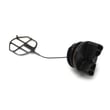
Chainsaws often have multiple versions that look similar. Using the correct model number helps ensure parts like the fuel cap assembly 580940901 seal properly and fit the fuel tank opening as designed.
For diagrams and model identification details specific to this unit, use the 358341950 owner's manual.
Last updated: January 2026
Should I use 40 1 or 50 1 fuel for a chainsaw?
For the Craftsman 358341950 gas chainsaw, we use the fuel-to-oil ratio specified in the 358341950 owner's manual. In general, 50:1 is the most common modern mix for many 2-cycle chainsaws, while 40:1 provides more oil for lubrication but can increase smoke and carbon buildup if the saw is not designed for it.
Quick recommendation
- Use the ratio listed for the Craftsman 358341950 in the 358341950 owner's manual.
- If you are unsure what is currently in the tank, drain it and mix a fresh batch.
- Use fresh, ethanol-free fuel when possible and a quality 2-cycle oil labeled for air-cooled engines.
- Mix accurately; “a little extra oil” is not a safe shortcut.
How much oil do I add?
Here are common mix amounts (always follow the manual if it specifies something different):
| Mix ratio | Oil per 1 gallon gas | Oil per 2.5 gallons gas |
|---|---|---|
| 50:1 | 2.6 oz | 6.4 oz |
| 40:1 | 3.2 oz | 8.0 oz |
Why the ratio matters
Using the correct mix protects the piston, rings, crankshaft bearings, and cylinder from scoring and overheating. Too little oil can cause rapid engine damage; too much oil can foul the spark plug, load up the muffler and spark arrestor, and reduce performance.
If your saw runs poorly after mixing fuel
Check these common fuel-related issues first:
- Old fuel (more than 30 days) or incorrect mix ratio
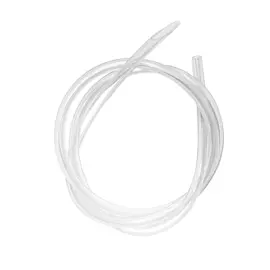
- Clogged fuel pickup or cracked fuel lines (consider the chainsaw fuel line kit 580727101)
- Fuel cap venting problems (consider the fuel cap assembly 580940901)
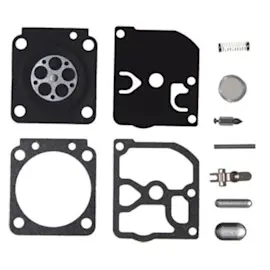
- Dirty carburetor circuits (may require cleaning or replacement)
- Plug fouling from rich mix or extended idling
For symptom-based troubleshooting steps, use tips for a hard to start chainsaw.
Last updated: January 2026
What is the average lifespan of 358341950?
A Craftsman gas chainsaw like model 358341950 typically lasts 10 to 15 years with normal homeowner use and routine maintenance (clean fuel system, sharp chain, proper bar oiling). Heavy cutting, poor fuel storage, and overheating shorten lifespan quickly.
What most affects lifespan
- Fuel quality and storage: fresh, properly mixed fuel; drain or stabilize for storage
- Airflow and cooling: clean cylinder fins and starter cover vents
- Chain sharpness and bar condition: a dull chain forces the engine and clutch to work harder
- Lubrication: consistent bar-and-chain oil flow prevents bar/chain wear
- Vibration and fasteners: loose hardware accelerates wear on mounts and chassis
Quick maintenance schedule (typical)
| Task | Typical interval | Why it matters |
|---|---|---|
| Check chain tension and bar oil | Every use | Prevents derailment and bar damage |
| Clean air intake areas | Every use | Reduces overheating and power loss |
| Inspect fuel lines and cap seal | Monthly | Prevents leaks and hard starting |
| Service recoil starter components | As needed | Prevents no-start due to pull-cord issues |
Parts that commonly limit service life
If the saw is hard to start, leaks fuel, or loses power, these are frequent wear items on 358341950:
- Chainsaw fuel line kit 580727101 (cracked lines cause air leaks and fuel starvation)
- Fuel cap assembly 580940901 (bad seal can leak and affect tank venting)
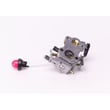
- Ayp chainsaw carburetor 545070601 (varnish or diaphragm wear causes rough running)
- Chainsaw recoil starter repair kit 530071966 (starter spring and pawls wear over time)
Why it matters
Knowing the expected lifespan helps you decide whether to tune up the fuel system and cutting hardware or invest in major engine repairs (like piston/cylinder work). On many gas chainsaws, restoring reliable starting and oiling delivers the biggest real-world improvement.
For model-specific maintenance procedures and safety checks, follow the owner's manual.
Last updated: March 2026