Owner’s manual
 Error Codes


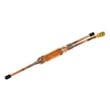
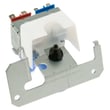
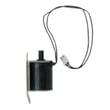
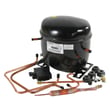
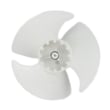
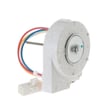
How to remove bottom grille on GE refrigerator?
On your GE PFCF1RKZABB bottom-mount refrigerator, the bottom grille (base grille) typically pulls straight off after you release its retaining clips or remove any mounting screws. Once it is free, lift it away from the cabinet and set it aside.
- Unplug the refrigerator or switch off power at the breaker (safer around wiring and fans).
- Open both fresh food doors for better access.
- Look along the top edge and corners of the grille for screws; remove them with a Phillips screwdriver if present.
- Grip the grille near both ends and pull straight toward you to release the clips.
- If it feels stuck, pull one side loose first, then the other; avoid twisting hard to prevent cracking.
- Reinstall by lining it up with the slots and pushing until it snaps in; reinstall screws if your grille uses them.
With the grille removed, you can quickly spot issues that affect cooling efficiency.
- Dust buildup on the condenser area
- Obstructions around the condenser fan area
- Water on the floor that could indicate a drain or leak issue
| What you notice | What it often means | What to do next |
|---|---|---|
| Grille will not budge | Hidden screws or tight clips | Recheck corners and top edge; pull straight out |
| Grille cracks or flexes | Pulling from one point | Pull evenly from both ends |
| Loud noise from bottom area | Fan or airflow issue | Inspect for debris; consider checking the condenser motor WR60X10209 |
The bottom grille protects the lower compartment and helps direct airflow across the condenser area. Keeping it secure and cleaning behind it helps your GE refrigerator cool more consistently and can reduce run time.
For model-specific illustrations and access points, use the PFCF1RKZABB owner's manual. You can also find replacement parts for this refrigerator on the parts list for this model, or search by model number on Sears PartsDirect.
Last updated: February 2026
Is a top mount or bottom mount fridge better?
A bottom-mount refrigerator like the GE PFCF1RKZABB is better when you want fresh-food items at eye level and more organized refrigerator storage; a top-mount is better when you want the simplest layout and typically the lowest purchase and repair complexity. Use the PFCF1RKZABB owner's manual to confirm features and storage layout for your exact unit.
| Feature | Top-mount (freezer on top) | Bottom-mount (freezer on bottom) |
|---|---|---|
| Everyday access | Freezer is easiest to reach | Refrigerator section is easiest to reach |
| Organization | Usually simpler shelving | Often more bins, drawers, and zones |
| Freezer storage | Fixed shelves, less drawer space | Pull-out baskets, easier sorting |
| Typical cost/complexity | Usually lower | Usually higher |
- Choose bottom-mount if you use the refrigerator section most and want less bending for milk, produce, and leftovers.
- Choose top-mount if you want a straightforward design with fewer moving storage components.
- If you have limited aisle space, compare door swing and drawer clearance; bottom freezers need room for the drawer to pull out.
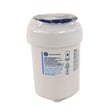
- If you rely on filtered water and ice, plan for routine filter changes (this model uses the GE refrigerator water filter MWFP).
- If you want fewer temperature swings, prioritize good airflow and accurate sensing; issues here often trace back to components like the temperature sensor WR55X10025.
The “better” style is the one that matches how you cook and shop. Most households open the refrigerator section far more than the freezer; that is why bottom-mount designs feel more convenient day to day, even if a top-mount can be simpler.
If your decision is driven by features like alarms and controls, our article how to reset the door alarm on a GE refrigerator helps you understand a common convenience feature found on many GE designs.
Last updated: February 2026
What is the most common problem with GE profile refrigerators?
For the GE PFCF1RKZABB bottom-mount refrigerator, the most common customer-reported problems are ice maker and water dispenser issues (no ice, slow fill, leaks) and cooling complaints (warm fresh-food section, frost buildup, noisy fans). Many of these trace back to airflow, water supply, or sensor/valve faults; see the PFCF1RKZABB owner's manual for model-specific checks.
- Ice maker not making ice or making small/hollow cubes
- Water dispenser slow, sputtering, or leaking
- Fresh-food section warm while freezer seems OK
- Frost/ice buildup on the freezer back wall
- Unusual fan noise or intermittent cooling
- Confirm temperatures: Set refrigerator to about 37°F and freezer to about 0°F; allow 24 hours to stabilize.
- Check door sealing and airflow: Make sure vents are not blocked by food packages and doors close fully.
- Clean condenser area: Dust buildup reduces heat removal and can cause warm temps and longer run times.
- Water supply basics (for dispenser/ice): Verify the shutoff valve is fully open and the supply line is not kinked.
- Replace the water filter on schedule: A restricted filter commonly causes slow dispensing and weak ice maker fill.
If basic checks do not resolve the problem, these parts are frequently involved:
| Symptom | Common cause | Example part for this model |
|---|---|---|
| Slow water, no ice, small cubes | Restricted filter or weak inlet flow | GE refrigerator water filter MWFP or refrigerator water valve WR57X33326 |
| Warm temps, erratic cooling | Sensor feedback or airflow control issues | Temperature sensor WR55X10025 or refrigerator air damper WR17X12456 |
| Frost buildup, warm fridge | Defrost system not clearing ice | Refrigerator defrost bi-metal thermostat WR50X10065 |
Ice/water problems are often early signs of restricted water flow, and cooling problems are often early signs of restricted airflow or heat rejection. Fixing those basics first helps prevent repeat failures and protects food temperatures.
- Use how to replace the water filter in a GE refrigerator for filter selection and replacement steps.
- If the control panel shows a fault, use GE refrigerator error codes to narrow the issue before replacing parts.
You can order replacement parts for GE PFCF1RKZABB from the parts list for this model, or search by model number on Sears PartsDirect.
Last updated: February 2026