Owner’s manual
 Error Codes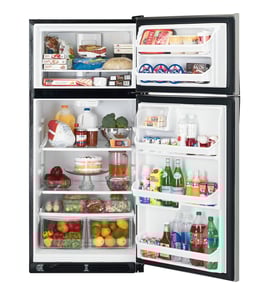







What is the upper part of a fridge called?
On a Kenmore top-mount refrigerator like model 10664252402, the upper section is the freezer compartment. It’s the area designed to keep foods frozen, and it also supplies cold air that circulates to help cool the fresh-food (refrigerator) section.
In this style of refrigerator, the freezer is more than just storage for frozen food; it’s a key part of the cooling system.
- Freezes and stores food long-term
- Provides cold air that moves through vents to the refrigerator section
- Supports ice-making features on models equipped with an ice maker
- Works with airflow paths under the freezer floor and through freezer vents
| Section | Typical location | Main purpose | Common features |
|---|---|---|---|
| Freezer compartment | Top (top-mount) | Freezing and cold-air source | Freezer shelf, pull-out freezer floor, ice maker (some models) |
| Refrigerator section | Bottom | Fresh-food cooling | Shelves, crisper, meat drawer, door bins |
Because air circulates between the freezer and refrigerator sections, blocking vents in the freezer can reduce airflow and cause temperature or moisture problems in both compartments. For vent locations and feature details, use the 10664252402 owner's manual.
Last updated: January 2026
What is a top mount refrigerator?
A top-mount refrigerator is a classic fridge layout with the freezer compartment on top and the fresh-food (refrigerator) compartment below. Your Kenmore 10664252402 uses this design, which helps keep everyday refrigerated items at an easy-to-reach height.
In a top-mount refrigerator, cold air is produced in the freezer area and then shared with the refrigerator section through vents. For proper temperatures, we rely on clear airflow between compartments.
- Freezer is on top; refrigerator section is below
- Cool air moves through vents between sections
- Blocking vents with food can cause warm spots and moisture issues
- Odors can transfer between sections because air circulates
- Controls are typically set to mid-settings when first installed
| Feature | Top-mount refrigerator | Bottom-freezer refrigerator |
|---|---|---|
| Freezer access | Eye level | Lower, often drawer-style |
| Fresh-food access | Mid to low | More at eye level |
| Airflow design | Freezer feeds fridge through vents | Varies by design |
| Typical value | Simple, proven layout | Convenience-focused layout |
Because air circulates between the freezer and refrigerator sections, airflow management is a big deal. If temperatures seem off, one of the first checks is making sure packages are not blocking the vents and that both sections are clean to reduce odor transfer.
- Keep the freezer and refrigerator vents clear of boxes and bags
- Wrap or cover foods tightly to reduce odor transfer
- Start with mid-setting temperature controls after installation
- Allow ventilation space around the cabinet for efficient cooling
- Level the refrigerator so doors close easily and seal well
For model-specific operating details and diagrams, use the 10664252402 owner’s manual.
Last updated: January 2026
How much does a top freezer refrigerator weigh?
A Kenmore top-mount (top-freezer) refrigerator like model 10664252402 typically weighs about 150 to 200 lb. For the exact net weight and shipping weight for your specific configuration, check the specifications section in the 10664252402 owner's manual.
Most top-freezer refrigerators fall into a fairly tight range; size and features (like an ice maker) are what move the number.
- Compact top-freezer units: 100 to 150 lb
- Full-size top-freezer units: 150 to 200 lb
- Full-size units with ice maker and heavier shelving: 180 to 230 lb
- Shipping weight is usually higher than net weight because of packaging
Small configuration differences can add noticeable weight even within the same Kenmore platform.
- Ice maker kit and water line hardware
- Glass shelf count and door bin configuration
- Insulation thickness and liner materials
- Compressor and condenser design
- Added accessories (racks, drawers, trim)
These steps help prevent cabinet damage and reduce the chance of door alignment issues after moving.
- Remove food and take out loose shelves, bins, and crispers
- Tape doors shut and protect the finish with moving blankets
- Keep the refrigerator upright during transport
- Use an appliance dolly rated for at least 300 lb
- Follow clearance and handling guidance in the 10664252402 owner's manual
| Top-freezer type | Typical weight |
|---|---|
| Compact (apartment/garage size) | 100 to 150 lb |
| Full-size (standard kitchen size) | 150 to 200 lb |
| Full-size with ice maker | 180 to 230 lb |
Knowing the weight helps you choose the right dolly rating, protect floors, and plan for enough help at doorways and stairs. It also supports safer handling of the sealed system during transport.
Last updated: January 2026